Ep. 369: Philippa Foot's Naturalistic Ethics (Part One)
Episode
47 min
Read time
2 min
Topics
Investing, Fundraising & VC, Product & Tech Trends
AI-Generated Summary
Key Takeaways
- ✓Aristotelian Categoricals: Foot evaluates individuals against species-level standards of self-maintenance and reproduction, arguing deep oak roots are good because they enable survival, not because survival itself is inherently valuable but because that defines the life cycle.
- ✓Practical Rationality as Virtue: Moral reasons for action need not connect to individual desires or self-interest. Practical rationality functions as one virtue among others, incorporating considerations beyond hypothetical imperatives, challenging both Humean sentiment theory and Kantian categorical imperatives.
- ✓Rejecting Noncognitivism: Expressivists reduce moral claims to attitudes (cheering or booing), but Foot argues moral facts exist independent of feelings. Rudeness reflects objective deficiency in human functioning, not merely disapproval, grounding ethics in natural human capacities rather than subjective preferences.
- ✓Beyond Hypothetical Imperatives: A skilled thief possesses technical knowledge but lacks good practical rationality because goodness of will precedes rational action. Moral considerations integrate with prudential ones in unified practical reasoning, not as separate competing systems requiring special motivation.
What It Covers
Philippa Foot's 2001 book Natural Goodness challenges noncognitivist ethics by arguing moral judgments derive from natural facts about human flourishing, similar to biological evaluations of plants and animals, reviving Aristotelian naturalism.
Key Questions Answered
- •Aristotelian Categoricals: Foot evaluates individuals against species-level standards of self-maintenance and reproduction, arguing deep oak roots are good because they enable survival, not because survival itself is inherently valuable but because that defines the life cycle.
- •Practical Rationality as Virtue: Moral reasons for action need not connect to individual desires or self-interest. Practical rationality functions as one virtue among others, incorporating considerations beyond hypothetical imperatives, challenging both Humean sentiment theory and Kantian categorical imperatives.
- •Rejecting Noncognitivism: Expressivists reduce moral claims to attitudes (cheering or booing), but Foot argues moral facts exist independent of feelings. Rudeness reflects objective deficiency in human functioning, not merely disapproval, grounding ethics in natural human capacities rather than subjective preferences.
- •Beyond Hypothetical Imperatives: A skilled thief possesses technical knowledge but lacks good practical rationality because goodness of will precedes rational action. Moral considerations integrate with prudential ones in unified practical reasoning, not as separate competing systems requiring special motivation.
Notable Moment
Foot argues that asking why you should bother being healthy reveals sickness itself, suggesting the question demonstrates the very deficiency it questions, making human excellence analogous to biological flourishing without requiring external justification for pursuing it.
Episode Transcript
Picture this. You're on a date, and then bad breath happens. Confidence gone. Here's the truth. Most gums and mints are just bad breath band aids, but not Zelleman's minty mouth. The functional breath freshener you swallow, tiny dual action capsules with mint on the outside, parsley seed oil inside, clinically tested to fight the toughest offenders, even garlic and onions. It's only available online. Go to zellman's.com, zelmins, zellman's.com, code fresh for 15% off. Okay. Only 10 more presents to wrap. You're almost at the finish line. But first there. The last one. Enjoy a Coca Cola for a pause that refreshes. You're listening to the partially examined life of podcast by some guys were at one point set on doing philosophy for a living, but then thought better of it. Our question for episode three sixty nine is something like, can we base ethics on the model of biology? And we read the first four chapters or so of Philip Foot's 2,001 book, natural goodness. More information about the text in the podcast. Please see partiallyexaminedlife.com. This is Mark Linton Meyer in Madison, Wisconsin rating myself for different to good when it comes to having developed to maturity, sustained myself to date, and reproduced. This is Seth Paskin, impractically rational in Austin, Texas. This is Wes Ollen depending directly on my relation to my life form in Cambridge, Massachusetts. Alright. We got the classic group. The original? The natural group, we might wanna say. Still in his, vacationing today. It is Memorial Day as we're recording this. And this reading makes me memorialize. Alasdair MacIntyre just died, and we're, again, returning to some Neo Aristotelianism. I thought we were maybe gonna spend some more time in so called modern philosophy back, you know, contemporaries of Hume. But, Wes, your fancy has chased out ahead, and we have the next couple readings picked out in this area of modern, late twentieth century, or in this case, yeah, 2001, ethics, which is a fine thing to have a bunch of episodes on. And she's basically playing in a area that we're familiar with from Aristotle, although the, you know, there are other people she's reacting to. Yeah. Say a little about why this book, why now? Yeah. I don't remember why I started reading this. I just I was looking at different twentieth century classics that I thought were very readable and interesting and related to the some of the issues that have been raised with reading Hume. And I thought that Philippa Fook was just very fun to read. Now my second reading, I have to say, reading her a second time and taking notes, I find it quite difficult. I find her slippery in a way with her arguments in a very analytic philosophy type of way. But in general, you know, I was surprised to find myself enjoying her and then Korsgaard, you know, people I think would be categorized as analytic philosophers. I just found it …
Get the full transcript (8,609 words) + summary by email — free
One-time email with the complete transcript and AI summary of this episode. No account needed.
One email, no spam. We’ll also show you what SignalCast does.

You just read a 3-minute summary of a 44-minute episode.
Get The Partially Examined Life summarized like this every Monday — plus up to 2 more podcasts, free.
Pick Your Podcasts — FreeKeep Reading
More from The Partially Examined Life
Ep. 402: Plato Talks Homer: Hippias Minor and Ion (Part Two)
Oct 19 · 55 min

In Our Time
Philippa Foot
Jun 13
More from The Partially Examined Life
PEL Presents NEM#262: Bruce Cockburn Expands Political/Spiritual Folk
Oct 18 · 66 min

Huberman Lab
What Makes Great Leaders & How to Live an Extraordinary Life | Dr. Jared Diamond
Oct 19
Books, tools, and gear mentioned in this episode
SignalCast may earn commission on purchases via these links. As an Amazon Associate, SignalCast earns from qualifying purchases.
Books
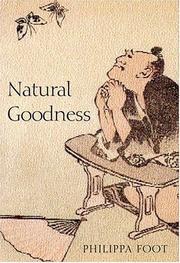 Natural GoodnessBy guest
by Philippa Foot
“Philippa Foot's 2001 book Natural Goodness challenges noncognitivist ethics by arguing moral judgments derive from natural facts about human flourishing, similar to biological evaluations of plants and animals, reviving Aristotelian naturalism.”
More from The Partially Examined Life
We summarize every new episode. Want them in your inbox?
Ep. 402: Plato Talks Homer: Hippias Minor and Ion (Part Two)
PEL Presents NEM#262: Bruce Cockburn Expands Political/Spiritual Folk
PEL Presents PMP#232: Obsession (for Men?)
Ep. 402: Plato Talks Homer: Hippias Minor and Ion (Part One)
PEL Presents Closereads: Gilbert Ryle on Self-Knowledge (Part One)
Similar Episodes
Related episodes from other podcasts

In Our Time
Jun 13
Philippa Foot

Huberman Lab
Oct 19
What Makes Great Leaders & How to Live an Extraordinary Life | Dr. Jared Diamond

Radiolab
Jun 18
Bonus: Wild Animal Dads from Terrestrials

TED Radio Hour
Apr 17
Using ancient philosophy to cope with your modern problems

Planet Money
Mar 26
Our BOOK vs. the global supply chain
Explore Related Topics
This podcast is featured in Best Philosophy Podcasts (2026) — ranked and reviewed with AI summaries.
Read this week's Investing & Markets Podcast Insights — cross-podcast analysis updated weekly.
You're clearly into The Partially Examined Life.
Every Monday, we deliver AI summaries of the latest episodes from The Partially Examined Life and 192+ other podcasts. Free for one show.
Start My Monday DigestNo credit card · Unsubscribe anytime