Morgan Housel on The Illusion of Wealth and Happiness | #599
Episode
56 min
Read time
2 min
Topics
Health & Wellness, Personal Finance, Investing
AI-Generated Summary
Key Takeaways
- ✓Wealth Liability Threshold: Beyond a certain net worth, additional wealth creates social burdens rather than happiness—friends expect dinner payments, kids expect inheritance, neighbors expect donations. The ideal wealth level stops before these liabilities outweigh benefits for most people.
- ✓Money Identity Trap: Declaring "I am a saver" or "I am a gold bug" outsources critical thinking to tribal identity. This prevents rational spending decisions even when money could improve life. Financial advisors struggle most helping wealthy retirees actually spend their savings after decades of saving identity.
- ✓Experience-Based Investing: Investors who started in 2008 crash versus 2009 recovery versus COVID era have dramatically different risk tolerances and asset allocations, regardless of education. Vanguard data shows median equity allocation varies wildly by account tenure, proving lived experience trumps theoretical knowledge.
- ✓Rich and Anonymous Strategy: The optimal financial position combines wealth with anonymity rather than public displays. Wozniak gave away Apple wealth to fund museums and speaks publicly with zero tax optimization, reporting higher happiness than billionaires facing congressional hearings and public scrutiny.
What It Covers
Morgan Housel discusses his 10 million copy bestseller Psychology of Money, exploring how wealth affects happiness, the dangers of money identity, spending philosophies, and why financial independence matters more than net worth accumulation.
Key Questions Answered
- •Wealth Liability Threshold: Beyond a certain net worth, additional wealth creates social burdens rather than happiness—friends expect dinner payments, kids expect inheritance, neighbors expect donations. The ideal wealth level stops before these liabilities outweigh benefits for most people.
- •Money Identity Trap: Declaring "I am a saver" or "I am a gold bug" outsources critical thinking to tribal identity. This prevents rational spending decisions even when money could improve life. Financial advisors struggle most helping wealthy retirees actually spend their savings after decades of saving identity.
- •Experience-Based Investing: Investors who started in 2008 crash versus 2009 recovery versus COVID era have dramatically different risk tolerances and asset allocations, regardless of education. Vanguard data shows median equity allocation varies wildly by account tenure, proving lived experience trumps theoretical knowledge.
- •Rich and Anonymous Strategy: The optimal financial position combines wealth with anonymity rather than public displays. Wozniak gave away Apple wealth to fund museums and speaks publicly with zero tax optimization, reporting higher happiness than billionaires facing congressional hearings and public scrutiny.
Notable Moment
British demographic research revealed wealthiest citizens in the 1600s-1700s had lower life expectancies than poor citizens because only rich people could afford quack doctors peddling poisonous fake medicines before the scientific method existed in healthcare.
Episode Transcript
Welcome to the Meb Faber show, where the focus is on helping you grow and preserve your wealth. Join us as we discuss the craft of investing and uncover new and profitable ideas, all to help you grow wealthier and wiser. Better investing starts here. Matt Faber is the cofounder and chief investment officer at Cambria Investment Management. Due to industry regulations, he will not discuss any of Cambria's funds on this podcast. All opinions expressed by podcast participants are solely their own opinions and do not the opinion of Cambria Investment Management or its affiliates. For more information, visit cambriainvestments.com. Today's show is sponsored by Cambria. Do you hold legacy investment positions with significant gains? What if you could transition into an ETF without facing a large tax bill? You can with the three fifty one ETF exchange. Here's how it works. Investors contribute stocks or other securities to a newly formed ETF in exchange for ETF shares. As long as the special rules and diversification requirements are met, the investor is essentially able to seed the launch of the ETF without an immediate taxable event. Because ETFs typically don't distribute any capital gains, investors don't face taxes until they sell their ETF shares, allowing for better control over the timing of the tax event. Are you ready to explore a three fifty one ETF exchange? Visit cambriafunds.com forward slash three fifty one to take the next step in innovative, tax savvy investing with Cambria today. Cambria Investment Management LP, Cambria is a registered investment adviser. Information set forth herein is for informational purposes only. It does not constitute financial investment, tax, or legal advice. Past performance does not guarantee future results. All investments are subject to risk, including the risk of loss of principle. Welcome back, everybody. Today is another episode. Someone I can't believe is on for the first time, but we're stoked to have him. Today's guest, Morgan Housel, best selling author of The Psychology Money, same as ever. His new book coming out soon, The Art of Spending Money. I got a PhD in that. Morgan is a partner at Collaborative Fund, serves on the board of directors at Markel. Morgan, welcome to the show. Good to see you guys. Thanks for having me. What's the book sales tally up to now? Are you crossed into the 10? Where are we at? It's it's just about 10,000,000. It's actually more difficult to track than you would think because the international sales have such a lag on them. A lot of the international publishers will maybe give you an update once a year or something like that. But it's just about 10,000,000 total now. Yeah. One of my favorite stats you were telling me at one point is you're big in India. Why are you so big in India? What do they like about Morgan over there? What's the secret to your like like, not just bestseller of finances, like, bestseller across the board. What's going …
Get the full transcript (12,310 words) + summary by email — free
One-time email with the complete transcript and AI summary of this episode. No account needed.
One email, no spam. We’ll also show you what SignalCast does.

You just read a 3-minute summary of a 53-minute episode.
Get The Meb Faber Show summarized like this every Monday — plus up to 2 more podcasts, free.
Pick Your Podcasts — FreeKeep Reading
More from The Meb Faber Show
StoneX' Vincent Deluard: The S&P Is Hiding a Bear Market | #655
Oct 23 · 60 min

Modern Wisdom
#1055 - Morgan Housel - Mastering the Art of Spending Money
Feb 5
More from The Meb Faber Show
Meb 654 Dirk
Oct 15 · 46 min

We Study Billionaires
TIP759: The Art of Spending Money w/ Morgan Housel
Oct 10
Books, tools, and gear mentioned in this episode
SignalCast may earn commission on purchases via these links. As an Amazon Associate, SignalCast earns from qualifying purchases.
Books
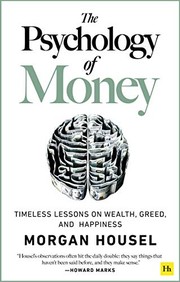 The Psychology of MoneyBy guest
by Morgan Housel
“Morgan Housel discusses his 10 million copy bestseller Psychology of Money, exploring how wealth affects happiness, the dangers of money identity, spending philosophies, and why financial independence matters more than net worth accumulation.”
More from The Meb Faber Show
We summarize every new episode. Want them in your inbox?
StoneX' Vincent Deluard: The S&P Is Hiding a Bear Market | #655
Meb 654 Dirk
Andrew Ang: Should AI Agents Run Your Asset Allocation? | #653
Cambria Fund Profile: Shareholder Yield Suite
Dave Iben: The World Is on Sale While America Trades at a Premium | #652
Similar Episodes
Related episodes from other podcasts

Modern Wisdom
Feb 5
#1055 - Morgan Housel - Mastering the Art of Spending Money

We Study Billionaires
Oct 10
TIP759: The Art of Spending Money w/ Morgan Housel

10% Happier with Dan Harris
Feb 23
How To Handle the Feeling of Never-Enough, Quiet the Comparing Mind, and Reduce Financial Anxiety | Morgan Housel

My First Million
Jan 21
10 Years of Money Wisdom in 51 Minutes | Morgan Housel

The Knowledge Project
Jan 20
Morgan Housel: Wealth is What You Have Minus What You Want
Explore Related Topics
This podcast is featured in Best Investing Podcasts (2026) — ranked and reviewed with AI summaries.
Read this week's Health & Longevity Podcast Insights — cross-podcast analysis updated weekly.
You're clearly into The Meb Faber Show.
Every Monday, we deliver AI summaries of the latest episodes from The Meb Faber Show and 192+ other podcasts. Free for one show.
Start My Monday DigestNo credit card · Unsubscribe anytime