1383: Christopher Ryan | The Dark Side of Civilization and Progress
Episode
101 min
Read time
3 min
Topics
Productivity, Health & Wellness, Remote Work
AI-Generated Summary
Key Takeaways
- ✓Lifespan Myth: The claim that civilization doubled human lifespan is statistically misleading. Archaeological age estimates top out at "35+" because dental eruption measurements cannot distinguish older adults, and high child mortality skews average birth-age calculations downward. Hunter-gatherers who survived childhood routinely lived into their 70s — comparable to modern adults — meaning the dramatic lifespan gap largely disappears once the math is corrected.
- ✓Disease Causation Loop: Most infectious diseases civilization claims credit for defeating were created by civilization itself. Tuberculosis transferred from cattle, smallpox and chickenpox from domesticated birds, and waterborne illness from agricultural runoff and sewage. Antibiotics treat population-density diseases; hunter-gatherers living in dispersed nomadic bands rarely transmitted infectious disease at scale. The pattern: civilization ignites the fire, then sells the extinguisher.
- ✓Disaster Sociology: Decades of academic research in the field of disaster sociology — studying human behavior during earthquakes, floods, and wartime bombardment — consistently finds that people become more generous, cooperative, and community-oriented when state structures collapse, not more violent. Rebecca Solnit's *A Paradise Built in Hell* documents this. The neo-Hobbesian assumption that humans revert to savagery without institutional control is empirically unsupported.
- ✓Agriculture as Emergency Measure: Agriculture did not emerge as a voluntary lifestyle upgrade. Pollen and mud-core data from five independent global origins — the Fertile Crescent, Cambodia, Peru, and others — show the same climatic sequence: unusually high rainfall producing food abundance, followed by sudden drought. Irrigation was the emergency response. Once surplus calories produced population growth, returning to foraging became impossible, locking societies into a ratcheting system of storage, guards, hierarchy, and taxation.
- ✓Surplus Triggers Hierarchy: Surplus resources — not agriculture specifically — reliably produce slavery, warfare, patriarchy, and rigid hierarchy. The Pacific Northwest salmon cultures demonstrate this without farming: massive seasonal harvests created stored surplus, which immediately generated status inequality and reduced women's autonomy. In hunter-gatherer bands where everyone holds survival knowledge, no individual can coerce another. Remove that equality of competence and coercion becomes structurally possible.
What It Covers
Christopher Ryan, author of *Civilized to Death*, challenges the assumption that modern civilization represents unambiguous progress. He argues that diseases, loneliness, overwork, child mental health crises, and ecological destruction are products of civilization itself — not problems it solved — and that honest measurement of human wellbeing reveals a balance sheet civilization would prefer not to publish.
Key Questions Answered
- •Lifespan Myth: The claim that civilization doubled human lifespan is statistically misleading. Archaeological age estimates top out at "35+" because dental eruption measurements cannot distinguish older adults, and high child mortality skews average birth-age calculations downward. Hunter-gatherers who survived childhood routinely lived into their 70s — comparable to modern adults — meaning the dramatic lifespan gap largely disappears once the math is corrected.
- •Disease Causation Loop: Most infectious diseases civilization claims credit for defeating were created by civilization itself. Tuberculosis transferred from cattle, smallpox and chickenpox from domesticated birds, and waterborne illness from agricultural runoff and sewage. Antibiotics treat population-density diseases; hunter-gatherers living in dispersed nomadic bands rarely transmitted infectious disease at scale. The pattern: civilization ignites the fire, then sells the extinguisher.
- •Disaster Sociology: Decades of academic research in the field of disaster sociology — studying human behavior during earthquakes, floods, and wartime bombardment — consistently finds that people become more generous, cooperative, and community-oriented when state structures collapse, not more violent. Rebecca Solnit's *A Paradise Built in Hell* documents this. The neo-Hobbesian assumption that humans revert to savagery without institutional control is empirically unsupported.
- •Agriculture as Emergency Measure: Agriculture did not emerge as a voluntary lifestyle upgrade. Pollen and mud-core data from five independent global origins — the Fertile Crescent, Cambodia, Peru, and others — show the same climatic sequence: unusually high rainfall producing food abundance, followed by sudden drought. Irrigation was the emergency response. Once surplus calories produced population growth, returning to foraging became impossible, locking societies into a ratcheting system of storage, guards, hierarchy, and taxation.
- •Surplus Triggers Hierarchy: Surplus resources — not agriculture specifically — reliably produce slavery, warfare, patriarchy, and rigid hierarchy. The Pacific Northwest salmon cultures demonstrate this without farming: massive seasonal harvests created stored surplus, which immediately generated status inequality and reduced women's autonomy. In hunter-gatherer bands where everyone holds survival knowledge, no individual can coerce another. Remove that equality of competence and coercion becomes structurally possible.
- •ADHD as Mismatch Signal: Diagnosing high activity levels in young children as neurological disorder may misidentify a normal primate response to an abnormal environment. Young primates are evolutionarily wired to wrestle, climb, shout, and move constantly — behaviors that build physical competence and social calibration. Requiring five-year-olds to sit still, obey artificial schedules, and suppress physical impulses for hours daily creates the symptom profile, not necessarily a brain defect.
- •Depression Antidote — Outward Action: The most effective counter to depression is not self-focused intervention but contributing to others. This activates an evolutionary drive tied to group survival: humans are wired to feel rewarded when they are useful to their community. Volunteering at a soup kitchen, helping a neighbor build a greenhouse, or any tangible act of group contribution triggers this instinct more reliably than convenience, comfort, or consumption-based self-improvement strategies.
Notable Moment
Ryan describes Jemmy Button, a Fuegian man brought to England by Captain Fitzroy, shown the best of British civilization including royalty, then returned home. When Darwin's crew came back weeks later, he had abandoned the house they built him and rejoined his tribe. His explanation: the world already contains plenty of fish and birds — why would anyone farm?
Episode Transcript
This episode is sponsored in part by LinkedIn. Running a small business means every hire matters. A bad hire can cost you time, money, and momentum. A good hire that can help you grow your business, this gives me flashbacks to a nightmare hire in my previous company that really stunted the business, and even talking about it now makes my blood pressure go up. But the right hire is the exact opposite, somebody who takes ownership, solves problems, and helps the business grow faster. And when you're small, that kind of impact is massive. But finding great talent isn't easy, especially when you don't have the time or resources to sift through piles of resumes to find the right fit. That's why LinkedIn built Hiring Pro, your new hiring partner that screens candidates for you. So instead of sorting through applications, you spend your time talking to candidates who are actually a good fit. With Hiring Pro, you can hire with confidence knowing you're getting the best talent for your business. In fact, those hiring with LinkedIn are 24% less likely to need to reopen a role within twelve months compared to the leading competitor. Join the 2,700,000 small businesses using LinkedIn to hire. Get started by posting your job for free at linkedin.com/harbinger. Terms and conditions apply. You need something from Lowe's, but your day is already jam packed. Since My Lowe's rewards and My Lowe's Pro Rewards members get free same day delivery, we'll make the run for you. Seriously, just lock in your order, and we'll do the rest. See you soon. Members get more at Lowe's. $25 minimum and loyalty membership required. Order eligible items by 2PM. Subject to weight and size restrictions and availability. Terms at lowes.com/ shipping terms. Coming up next on the Jordan Harbinger show. The best antidote to depression is to go help someone else. It's not to help yourself. It's to go to a soup kitchen. You'll feel better after helping other people. That ties into instinctive appetites that we have because that's how we survive as a species, by taking care of each other. Convenience is the absence of sensation. It's the absence of having to deal with other people. That connects to our innate hunger for being valuable to our group. But we're seeing a lot of evidence of damage to the spirit in modernity. Anxiety, self harm, suicide, depression, these things are all very high among young people, higher than they've ever been. It's a direct result of the conditions in which young people find themselves living. Especially in The US, we live in a culture that's designed to satisfy commercial interests, not human interests. Welcome to the show. I'm Jordan Harbinger. On the Jordan Harbinger show, we decode the stories, secrets, and skills of the world's most fascinating people. Our mission is to help you become a better informed, more critical thinker through long form conversations with a variety of amazing folks from spies to CEOs, …
Get the full transcript (17,998 words) + summary by email — free
One-time email with the complete transcript and AI summary of this episode. No account needed.
One email, no spam. We’ll also show you what SignalCast does.

You just read a 3-minute summary of a 98-minute episode.
Get The Jordan Harbinger Show summarized like this every Monday — plus up to 2 more podcasts, free.
Pick Your Podcasts — FreeKeep Reading
More from The Jordan Harbinger Show
1408: Patric Gagne | How a "Sociopath" Decides Right from Wrong
Nov 3 · 78 min

How to Take Over the World
Nietzsche and the Death of God (Part 1)
Sep 22
More from The Jordan Harbinger Show
1407: Paging Hezbollah | Out of the Loop
Nov 1 · 82 min

Modern Wisdom
Expelled, Arrested & Somehow Winning At Life - James Smith - #1170
Oct 31
Books, tools, and gear mentioned in this episode
SignalCast may earn commission on purchases via these links. As an Amazon Associate, SignalCast earns from qualifying purchases.
Books

by Christopher Ryan
“Christopher Ryan, author of *Civilized to Death*, challenges the assumption that modern civilization represents unambiguous progress.”
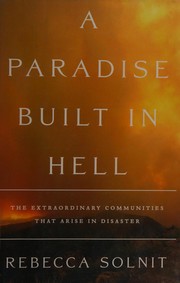
by Rebecca Solnit
“Decades of academic research in the field of disaster sociology... Rebecca Solnit's *A Paradise Built in Hell* documents this.”
More from The Jordan Harbinger Show
We summarize every new episode. Want them in your inbox?
1408: Patric Gagne | How a "Sociopath" Decides Right from Wrong
1407: Paging Hezbollah | Out of the Loop
1406: Chase Forbidden Fruit or Stick with the Galoot? | Feedback Friday
1405: Steven Bridges | How a Card Counter Learned to Beat the Odds
1404: Alex Davies | The Grizzly Truth About How Safety Gets Tested
Similar Episodes
Related episodes from other podcasts

How to Take Over the World
Sep 22
Nietzsche and the Death of God (Part 1)

Modern Wisdom
Oct 31
Expelled, Arrested & Somehow Winning At Life - James Smith - #1170

The Vergecast
Oct 27
Inside the early days of the AI revolution

The Diary of a CEO
Oct 19
The Deathbed Doctor: Weeks Before Death, Patients Start Having Visions! | Dr Christopher Kerr

Software Engineering Daily
Oct 8
Steve Jobs in Exile
Explore Related Topics
This podcast is featured in Best Mindset Podcasts (2026) — ranked and reviewed with AI summaries.
Read this week's Health & Longevity Podcast Insights — cross-podcast analysis updated weekly.
You're clearly into The Jordan Harbinger Show.
Every Monday, we deliver AI summaries of the latest episodes from The Jordan Harbinger Show and 192+ other podcasts. Free for one show.
Start My Monday DigestNo credit card · Unsubscribe anytime