#2547 - Daniel Everett
Episode
163 min
Read time
4 min
Topics
Health & Wellness, Psychology & Behavior, Philosophy & Wisdom
AI-Generated Summary
Key Takeaways
- ✓Language universals are falsifiable: Chomsky's claim that all 8,000 human languages share recursion — the ability to embed one grammatical unit inside another — was directly contradicted by Pirahã. The language has no numbers, no color words, no left/right directional terms, and no embedded clauses. MIT, Stanford, and Columbia researchers independently ran experiments confirming Everett's findings, yet Chomsky's camp largely ignored the data and labeled Everett a charlatan rather than engaging the evidence.
- ✓Subsistence diet produces measurable health outcomes: Pirahã men pulled at random average 155 pounds, a 25–26 inch waist, and roughly 4% body fat with zero deliberate exercise regimen. A dentist who examined every living Pirahã 25 years ago found zero cavities. Within years of Brazilian government introducing rice and sugarcane, obesity and near-universal tooth decay appeared. Removing refined starch and sugar from a diet produces outcomes that mirror what nutritional science recommends but most people fail to implement.
- ✓Identity fluidity as psychological resilience tool: Pirahã people regularly change their names after disorienting or traumatic experiences, and they explicitly deny responsibility for actions taken under a previous name. This functions as a cultural reset mechanism — a structured way to shed past identity and begin fresh. The practice distributes psychological burden across time rather than accumulating it under one continuous self, which may explain their unusually high baseline contentment compared to populations with fixed identity structures.
- ✓Missionary survival training uses real-stakes testing: Wycliffe Bible Translators' jungle preparation in Chiapas, Mexico involved a final solo survival phase of 7–10 days with no food, no fishhooks, roughly 10–15 matches, a machete, and one quart of water. Trainees had to source water from vines, build fire from wet wood, construct improvised fishing tools, and maintain camp without any monitoring. This approach — full immersion with real consequences rather than simulation — produced genuine competence that Everett credited for his later effectiveness in the Amazon.
- ✓Happiness correlates with low work hours and high community density: Everett tracked Pirahã labor and found hunter-gatherer subsistence required approximately 15–20 hours of work per week when fish were abundant. Remaining time was spent in social interaction, play with children, and rest. An MIT researcher who visited proposed that the Pirahã likely ranked among the highest globally on time spent laughing and smiling per day. The data point suggests that reducing obligatory work hours and increasing unstructured social time produces measurable wellbeing gains.
What It Covers
Linguist Daniel Everett spent 40 years with the Pirahã people of the Amazon, arriving as a Christian missionary in 1977 and departing as an atheist. His work challenged Noam Chomsky's universal grammar theory, revealing a language with no numbers, no color terms, no recursion, and no concept of an afterlife — upending core assumptions about human cognition and language.
Key Questions Answered
- •Language universals are falsifiable: Chomsky's claim that all 8,000 human languages share recursion — the ability to embed one grammatical unit inside another — was directly contradicted by Pirahã. The language has no numbers, no color words, no left/right directional terms, and no embedded clauses. MIT, Stanford, and Columbia researchers independently ran experiments confirming Everett's findings, yet Chomsky's camp largely ignored the data and labeled Everett a charlatan rather than engaging the evidence.
- •Subsistence diet produces measurable health outcomes: Pirahã men pulled at random average 155 pounds, a 25–26 inch waist, and roughly 4% body fat with zero deliberate exercise regimen. A dentist who examined every living Pirahã 25 years ago found zero cavities. Within years of Brazilian government introducing rice and sugarcane, obesity and near-universal tooth decay appeared. Removing refined starch and sugar from a diet produces outcomes that mirror what nutritional science recommends but most people fail to implement.
- •Identity fluidity as psychological resilience tool: Pirahã people regularly change their names after disorienting or traumatic experiences, and they explicitly deny responsibility for actions taken under a previous name. This functions as a cultural reset mechanism — a structured way to shed past identity and begin fresh. The practice distributes psychological burden across time rather than accumulating it under one continuous self, which may explain their unusually high baseline contentment compared to populations with fixed identity structures.
- •Missionary survival training uses real-stakes testing: Wycliffe Bible Translators' jungle preparation in Chiapas, Mexico involved a final solo survival phase of 7–10 days with no food, no fishhooks, roughly 10–15 matches, a machete, and one quart of water. Trainees had to source water from vines, build fire from wet wood, construct improvised fishing tools, and maintain camp without any monitoring. This approach — full immersion with real consequences rather than simulation — produced genuine competence that Everett credited for his later effectiveness in the Amazon.
- •Happiness correlates with low work hours and high community density: Everett tracked Pirahã labor and found hunter-gatherer subsistence required approximately 15–20 hours of work per week when fish were abundant. Remaining time was spent in social interaction, play with children, and rest. An MIT researcher who visited proposed that the Pirahã likely ranked among the highest globally on time spent laughing and smiling per day. The data point suggests that reducing obligatory work hours and increasing unstructured social time produces measurable wellbeing gains.
- •Infrastructure decisions create cascading food system collapse: A dam built on the Madeira River roughly 10 years ago — hundreds of miles from the Pirahã's Maici River — dropped dry-season water levels so severely that a river previously too deep to see the bottom can now be walked across. Fish populations collapsed, forcing the Pirahã to hunt deep jungle for the first time in their 300-year recorded history on that river. This demonstrates how upstream infrastructure choices produce irreversible downstream consequences for isolated communities with no political representation.
- •Belief systems erode through evidentiary standards, not argument: Everett's transition from devout missionary to atheist took roughly 18 years, beginning around 1982–83 and becoming public in 2001. The Pirahã's consistent demand — "who has seen this Jesus you describe?" — applied a straightforward epistemological standard he could not meet. He observed that surrounding oneself with a community of shared belief suppresses consideration of alternatives, a dynamic he later recognized operating identically in academic linguistics. Changing belief requires exposure to people who apply different evidentiary thresholds, not just encountering contradictory arguments.
Notable Moment
After Everett spent years translating the Gospel of Luke and showing Jesus film strips to a Pirahã man, the man returned the next morning reporting that Jesus had visited the village overnight — behaving in a sexually aggressive manner that caused the women to reject any further interest in Christianity. The community's response reframed the entire missionary encounter as theater rather than theology.
Episode Transcript
Joe Rogan podcast. Check it out. The Joe Rogan experience. Join my day. Joe Rogan podcast by night, all day. Good to see you, sir. Good to be here. Thank you very much for doing this. I'm really excited to talk to you. I've been looking forward to this a lot. Thanks very much for having me. You have a very very unique life story. So I want we're I wanna start with how did you be you became let's lay lay it out for people. What got me interested in you is you became a Christian missionary and then went to the jungle and met these people let me say this right, the Piraha? Piraha. Piraha. Piraha. And stopped being a missionary and lived with them for how long? Well, the total time that I lived with them is about eight years in the jungle with them over a period, but I've been working with him for forty years. I go back a lot. Wow. And you but you lived with him for eight years and during that eight year time period, you kind of would you is it safe to say you're an atheist? Yes. It's safe to say that. And so, for let's take it back to the beginning. How did you become a missionary? Did you come from a religious family? No. I came from a very unreligious family. I was, in fact, I was standing out in front of a Jimi Hendrix concert in 1968 trying to sell LSD to get in. And, and this guy that I knew from high school that was really straight laced came up with his sister, and she was very cute. And so I went up to try to sell them some LSD. They didn't use drugs. And so I said, well, you got any change? I need to get some money to get into the concert. And I I saw that she went to the same high school that I did. So, after the concert, which she didn't like, but I loved, I I went to see her in high school. I went sat by her during lunchtime and, found out that she was a missionary and had been raised in Brazil. And that really intrigued me because it was the sixties, and I was, you know, didn't wanna have just the typical US life, and living in the Amazon sounded really cool. But then I became, you know, a genuine, strong, believing Christian, went to Bible school. I did my undergraduate degree in Bible and theology, and I was an ordained minister in the Wesleyan church and very active in church and, was preached on street corners and did all that kind of thing. How did you make that this transition from being a guy with a back of acid in front of a a Jimi Hendrix concert to Well, her father, who had been a missionary now for twenty years, was the most influential person outside …
Get the full transcript (30,866 words) + summary by email — free
One-time email with the complete transcript and AI summary of this episode. No account needed.
One email, no spam. We’ll also show you what SignalCast does.

You just read a 3-minute summary of a 160-minute episode.
Get The Joe Rogan Experience summarized like this every Monday — plus up to 2 more podcasts, free.
Pick Your Podcasts — FreeKeep Reading

Books, tools, and gear mentioned in this episode
SignalCast may earn commission on purchases via these links. As an Amazon Associate, SignalCast earns from qualifying purchases.
Books
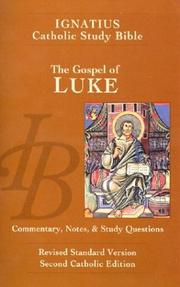
“After Everett spent years translating the Gospel of Luke and showing Jesus film strips to a Pirahã man, the man returned the next morning reporting that Jesus had visited the village overnight.”
More from The Joe Rogan Experience
We summarize every new episode. Want them in your inbox?
Similar Episodes
Related episodes from other podcasts

Everything Everywhere Daily
Sep 24
Chief Joseph
Everything Everywhere Daily
Sep 7
The Pirahã People

David Senra
Jun 7
Gustav Söderström, Spotify

The Diary of a CEO
Feb 2
Your Bones Break First: The Man Who Survived Being Eaten Alive!
The Diary of a CEO
Oct 9
Most Replayed Moment: AI Is Changing How Teams Work Forever
Explore Related Topics
Read this week's Health & Longevity Podcast Insights — cross-podcast analysis updated weekly.
You're clearly into The Joe Rogan Experience.
Every Monday, we deliver AI summaries of the latest episodes from The Joe Rogan Experience and 192+ other podcasts. Free for one show.
Start My Monday DigestNo credit card · Unsubscribe anytime