#2540 - Travis Barker
Episode
155 min
Read time
3 min
Topics
Career Growth, Health & Wellness, Fundraising & VC
AI-Generated Summary
Key Takeaways
- ✓Trauma recovery timeline: Barker avoided flying for exactly 20 years after surviving a plane crash that killed four people and burned 70% of his body. His method for finally breaking the pattern was telling his wife to book a flight without telling him until the night before, then leaving the next morning — removing the extended anticipation window that allowed fear to build and compound over time.
- ✓Survivor's guilt reframe: Barker resolved his survivor's guilt by applying a reciprocity test: if the roles were reversed and his deceased friends had survived instead, would he want them to spend 20 years grounded by guilt? The answer was clearly no. Using this perspective shift — asking what you would genuinely want for someone else in your position — can dissolve self-imposed restrictions rooted in grief rather than rational risk assessment.
- ✓Burn recovery nutrition protocol: After 30 surgeries in six months, Barker's medical team required him to consume 6,000–7,000 calories daily to support healing. When hospital staff discovered he was avoiding the prescribed meat-based diet, they inserted a feeding tube. He ultimately met protein targets through beef jerky and 3,000-calorie peanut butter smoothies, illustrating that extreme physical trauma demands extreme caloric surplus regardless of prior dietary preferences.
- ✓Functional fitness for drummers: Barker structures training around fast-twitch movements, high-rep sets, sprints, boxing, and jump rope rather than heavy compound lifting. He uses tempo training — performing exercises to the beat and duration of a song — to mirror the physical demands of drumming. When he shifted to heavy weight training on one tour, he returned to the kit feeling tight and slow, confirming that sport-specific conditioning must match the exact physical output required in performance.
- ✓Obsession as a prerequisite for mastery: Barker credits his parents' strict rule — no skateboarding or BMX until he completed three hours of daily drum practice — as foundational to his career. He references Tim Grover's book *Relentless*, which categorizes high performers as "cleaners" — people who finish a major achievement and immediately ask "what's next?" rather than celebrating. This mindset, while isolating, is presented as non-negotiable for reaching an outlier level in any discipline.
What It Covers
Joe Rogan and Travis Barker cover Barker's documentary release, his 20-year fear of flying following a 2008 plane crash that killed two friends and left him with burns on 70% of his body, his path to sobriety, the obsessive discipline required to master drumming, MMA analysis, and his collection of 12 classic American vehicles.
Key Questions Answered
- •Trauma recovery timeline: Barker avoided flying for exactly 20 years after surviving a plane crash that killed four people and burned 70% of his body. His method for finally breaking the pattern was telling his wife to book a flight without telling him until the night before, then leaving the next morning — removing the extended anticipation window that allowed fear to build and compound over time.
- •Survivor's guilt reframe: Barker resolved his survivor's guilt by applying a reciprocity test: if the roles were reversed and his deceased friends had survived instead, would he want them to spend 20 years grounded by guilt? The answer was clearly no. Using this perspective shift — asking what you would genuinely want for someone else in your position — can dissolve self-imposed restrictions rooted in grief rather than rational risk assessment.
- •Burn recovery nutrition protocol: After 30 surgeries in six months, Barker's medical team required him to consume 6,000–7,000 calories daily to support healing. When hospital staff discovered he was avoiding the prescribed meat-based diet, they inserted a feeding tube. He ultimately met protein targets through beef jerky and 3,000-calorie peanut butter smoothies, illustrating that extreme physical trauma demands extreme caloric surplus regardless of prior dietary preferences.
- •Functional fitness for drummers: Barker structures training around fast-twitch movements, high-rep sets, sprints, boxing, and jump rope rather than heavy compound lifting. He uses tempo training — performing exercises to the beat and duration of a song — to mirror the physical demands of drumming. When he shifted to heavy weight training on one tour, he returned to the kit feeling tight and slow, confirming that sport-specific conditioning must match the exact physical output required in performance.
- •Obsession as a prerequisite for mastery: Barker credits his parents' strict rule — no skateboarding or BMX until he completed three hours of daily drum practice — as foundational to his career. He references Tim Grover's book *Relentless*, which categorizes high performers as "cleaners" — people who finish a major achievement and immediately ask "what's next?" rather than celebrating. This mindset, while isolating, is presented as non-negotiable for reaching an outlier level in any discipline.
- •Confidence through competence: Barker argues that developing genuine skill in any single domain — music, sports, art, carpentry — provides children and adults with a psychological anchor that buffers against bullying, failure, and identity crises. The mechanism is straightforward: demonstrated competence in one area creates transferable confidence. This applies regardless of the field, making early skill specialization a practical mental health tool rather than purely a career strategy.
- •Environment shapes output: Barker trained with Jean-Jacques Machado after a chance encounter near his Calabasas neighborhood, and Rogan traces Austin's emergence as a jiu-jitsu hub directly to Gordon Ryan and John Danaher relocating there during the pandemic. Both examples support the same principle: proximity to high-performers in your field accelerates development. Deliberately engineering your physical environment — neighborhood, gym, studio location — to include obsessive practitioners produces compounding results over time.
Notable Moment
Barker revealed that during his six-month hospital stay following the crash, medical staff discovered he was secretly avoiding the prescribed meat-heavy diet and responded by inserting a feeding tube down his throat. A nurse later smuggled him beef jerky as a workaround. The episode also marked his first time meeting another person who had survived a comparable crash with severe burns.
Episode Transcript
Joe Rogan podcast. Check it out. The Joe Rogan experience. Join my day. Joe Rogan podcast by night, all day. We're up. What's up? Oh, it's good to see you, brother. What's cracking? Insane, man. Stoked to be here. Stoked to have you, man. Yeah. What a fucking cute kid you have, dude. Thank you. Thank you. He's the best, man. So blessed. You. When you're trying to put him down, he's like, no. I think it's because I just spent we just went to, Utah, and I had three or five days with him, just, like, a lot of time with him, and he has separation anxiety from me, as I do with him. I'm like, that's the best, man. I know people that don't have kids, it's like you don't understand the level of love that you have for them. It's Yeah. It's really crazy. Or people who have kids and don't hang out with their kids like that. I just I don't get it. I don't get it either. I'll spend every second I can with my kids. Yeah. It's weird. It's weird that people maybe it's something that happened to them when they were young or something. I don't know. But Yeah. So what's cracking? What's what's the latest? I mean, my doc came out today. Today? So yeah. Yep. Long time coming. What was that experience like? Well, the beginning of it was was shortly after my book came out. So I kinda understood why people wanted a doc for me at that point. And, I was I was honored and I was flattered, and I was, you know, going down the journey of of filming this doc, but it it didn't really have an ending. I guess the light at the end of the tunnel during that time around 2017 was that I was sober and I survived a plane crash. But, really, I was struggling with ever flying again, struggling with survivor's guilt, struggling with a lot of stuff. And at the time, the directors had mentioned to me, like, can you just look at a plane or act like you're gonna go fly in a plane or walk towards a plane? I was like, fuck no. I would never I can't even consider it. I can't even do it for you for for, like, fantasy purposes for the end of this doc. You know? And I think that set in after a while where I had to acknowledge and and and just understand I was I was afraid to ever fly again. And and this thing had huge power over me to the point where it, you know, it dictated how I got on tour, how many days I'd travel on bus to New York, how many days I'd be on the Queen Mary two going to England. How long would that take? Oh, dude. So long. It The England one's crazy. Comfortably on the bus from here to New York, probably …
Get the full transcript (28,705 words) + summary by email — free
One-time email with the complete transcript and AI summary of this episode. No account needed.
One email, no spam. We’ll also show you what SignalCast does.

You just read a 3-minute summary of a 152-minute episode.
Get The Joe Rogan Experience summarized like this every Monday — plus up to 2 more podcasts, free.
Pick Your Podcasts — FreeKeep Reading
More from The Joe Rogan Experience
#2558 - Tyler Engle
Sep 24 · 149 min

The Diary of a CEO
UFO Roundtable: CIA Physicist Proves Aliens Exist
May 14
More from The Joe Rogan Experience
#2557 - Yakov Smirnoff
Sep 23 · 146 min

All-In with Chamath, Jason, Sacks & Friedberg
Elon Musk & Gwynne Shotwell on AI Risks and Peer Review, Starship, Terafab, SpaceX/Tesla Merger
Sep 15
Books, tools, and gear mentioned in this episode
SignalCast may earn commission on purchases via these links. As an Amazon Associate, SignalCast earns from qualifying purchases.
Books
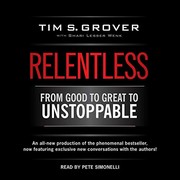 RelentlessRecommended
by Tim Grover
“He references Tim Grover's book *Relentless*, which categorizes high performers as "cleaners" — people who finish a major achievement and immediately ask "what's next?" rather than celebrating.”
More from The Joe Rogan Experience
We summarize every new episode. Want them in your inbox?
Similar Episodes
Related episodes from other podcasts

The Diary of a CEO
May 14
UFO Roundtable: CIA Physicist Proves Aliens Exist

All-In with Chamath, Jason, Sacks & Friedberg
Sep 15
Elon Musk & Gwynne Shotwell on AI Risks and Peer Review, Starship, Terafab, SpaceX/Tesla Merger
All-In with Chamath, Jason, Sacks & Friedberg
Sep 4
GPT-6 Hits AGI? Tech Euphoria 2.0, SF Mansion Shortage, NYC Bans AI in Schools & Venezuela Oil Deal

Pivot
Aug 14
Trump's Catering Truck Escape, MAGA Media, and Chelsea Handler on Joe Rogan's $82M Payday

The Rich Roll Podcast
Aug 6
The Addict Who Won The Bachelorette: Zac Clark On Getting Sober & Staying That Way
Explore Related Topics
Read this week's Health & Longevity Podcast Insights — cross-podcast analysis updated weekly.
You're clearly into The Joe Rogan Experience.
Every Monday, we deliver AI summaries of the latest episodes from The Joe Rogan Experience and 192+ other podcasts. Free for one show.
Start My Monday DigestNo credit card · Unsubscribe anytime