Why Peter Thiel’s Founder Rules Keep Paying Off
Episode
68 min
Read time
2 min
Topics
Career Growth, Personal Finance, Startups
AI-Generated Summary
Key Takeaways
- ✓Monopoly vs Competition: Capitalism and competition are antonyms, not synonyms. Perfect competition eliminates all profits. Great companies create unique value with monopoly pricing power. Start by dominating a small market like Facebook at Harvard or PayPal with eBay power sellers before expanding concentrically outward.
- ✓10x Technology Rule: New products must be ten times better than competitors on a meaningful dimension to succeed. Amazon offered ten times more books than physical stores. Apple iPhone was the first smartphone that actually worked. Incremental improvements of 10-20 percent get competed away and fail to capture value.
- ✓Hiring Prehistory Matters: Ask founders how they met and how long they worked together before starting. Meeting cofounders at slot machines in Las Vegas might work but is probably bad. College roommates who spent years discussing ideas understand each other's strengths, weaknesses, and proper division of labor, preventing destructive conflicts.
- ✓Differentiated Roles Prevent Conflict: Assign each person one clearly defined responsibility with zero overlap. When two people do the exact same thing, they fight. Continuously readjust the org chart as the startup evolves to maintain differentiation. Employees with three close friends at the company almost never leave voluntarily.
- ✓Interdisciplinary Secrets: Universities push arcane specialization, making interdisciplinary work politically dangerous but extremely valuable. The next breakthroughs combine computer science with biology for genomics, transportation for self-driving cars, or finance for new banking models. Explore intersections where talented people are not already crowded.
What It Covers
Peter Thiel explains his contrarian startup philosophy from Zero to One: build monopolies through 10x better technology, avoid competition, start with small markets, hire differentiated teams, and pursue secrets others ignore to create genuine innovation.
Key Questions Answered
- •Monopoly vs Competition: Capitalism and competition are antonyms, not synonyms. Perfect competition eliminates all profits. Great companies create unique value with monopoly pricing power. Start by dominating a small market like Facebook at Harvard or PayPal with eBay power sellers before expanding concentrically outward.
- •10x Technology Rule: New products must be ten times better than competitors on a meaningful dimension to succeed. Amazon offered ten times more books than physical stores. Apple iPhone was the first smartphone that actually worked. Incremental improvements of 10-20 percent get competed away and fail to capture value.
- •Hiring Prehistory Matters: Ask founders how they met and how long they worked together before starting. Meeting cofounders at slot machines in Las Vegas might work but is probably bad. College roommates who spent years discussing ideas understand each other's strengths, weaknesses, and proper division of labor, preventing destructive conflicts.
- •Differentiated Roles Prevent Conflict: Assign each person one clearly defined responsibility with zero overlap. When two people do the exact same thing, they fight. Continuously readjust the org chart as the startup evolves to maintain differentiation. Employees with three close friends at the company almost never leave voluntarily.
- •Interdisciplinary Secrets: Universities push arcane specialization, making interdisciplinary work politically dangerous but extremely valuable. The next breakthroughs combine computer science with biology for genomics, transportation for self-driving cars, or finance for new banking models. Explore intersections where talented people are not already crowded.
Notable Moment
When Yahoo offered Facebook one billion dollars in 2006, both board members initially favored selling. Mark Zuckerberg at age 22 convinced them to refuse by explaining he would just start another social network with his quarter billion, so why sell the one he already liked.
No transcript yet — request it by email, free
We'll transcribe this episode on request and email you the full transcript and AI summary — usually within a day. No account needed.
One email, no spam. We’ll also show you what SignalCast does.

You just read a 3-minute summary of a 65-minute episode.
Get The James Altucher Show summarized like this every Monday — plus up to 2 more podcasts, free.
Pick Your Podcasts — FreeKeep Reading
More from The James Altucher Show
Carlo Rovelli: Nothing Exists Alone
Sep 11 · 57 min

Invest Like the Best with Patrick O'Shaughnessy
Scott Nolan - SpaceX, Founders Fund, and Rebuilding American Uranium Enrichment - [Invest Like the Best, EP.467]
Apr 14
More from The James Altucher Show
Kareem Abdul-Jabbar: Becoming Kareem, the Skyhook, and the Search for a Self [From the Archive]
Sep 5 · 28 min

How to Take Over the World
Zero to One
Oct 31
Books, tools, and gear mentioned in this episode
SignalCast may earn commission on purchases via these links. As an Amazon Associate, SignalCast earns from qualifying purchases.
Books
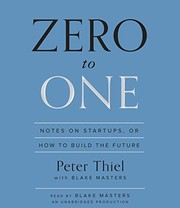 Zero to OneBy guest
by Peter Thiel
“Peter Thiel explains his contrarian startup philosophy from Zero to One: build monopolies through 10x better technology, avoid competition, start with small markets, hire differentiated teams, and pursue secrets others ignore to create genuine innovation.”
More from The James Altucher Show
We summarize every new episode. Want them in your inbox?
Carlo Rovelli: Nothing Exists Alone
Kareem Abdul-Jabbar: Becoming Kareem, the Skyhook, and the Search for a Self [From the Archive]
How You Get Rich Isn't How You Stay Rich: 300 Years of Proof | Joseph Moore
Seth Godin: The Smallest Viable Audience and the Work That Might Not Work [From the Archive]
Arianna Huffington: The Sleep Revolution, Microsteps, and the Joy of Being Awake [From the Archive]
Similar Episodes
Related episodes from other podcasts

Invest Like the Best with Patrick O'Shaughnessy
Apr 14
Scott Nolan - SpaceX, Founders Fund, and Rebuilding American Uranium Enrichment - [Invest Like the Best, EP.467]

How to Take Over the World
Oct 31
Zero to One

The Founders Podcast
Jul 10
#424 Peter Thiel on How to Build a Creative Monopoly

What Bitcoin Did
Mar 12
#156 - Dr Tim Gregory - Why The "Energy Transition" Threatens Modern Civilisation

The Diary of a CEO
Aug 21
Mohnish Pabrai (Billionaire Investor): The $100 Investment Hack That's Disappearing Fast! The Fastest Way To Financial Freedom!
Explore Related Topics
This podcast is featured in Best Startup Podcasts (2026) — ranked and reviewed with AI summaries.
Read this week's Startups & Product Podcast Insights — cross-podcast analysis updated weekly.
You're clearly into The James Altucher Show.
Every Monday, we deliver AI summaries of the latest episodes from The James Altucher Show and 192+ other podcasts. Free for one show.
Start My Monday DigestNo credit card · Unsubscribe anytime