An Unexpected History of Science - Rufus Hound, Matthew Cobb, Victoria Herridge and Keith Moore
Episode
42 min
Read time
2 min
Topics
Personal Finance, Fundraising & VC, Sales & Revenue
AI-Generated Summary
Key Takeaways
- ✓Early microscopy breakthrough: Leeuwenhoek used handmade single-lens microscopes measuring five centimeters to discover bacteria and spermatozoa in 1677, sparking 180 years of debate between ovists and spermists about reproduction before both theories proved wrong.
- ✓Mary Anning's business model: The working-class fossil hunter strategically marketed discoveries to wealthy academics like William Buckland in the 1830s, leveraging competitive interest to maximize prices while being recognized as the most skilled paleontologist of her era.
- ✓Scientific method origins: Royal Society fellows tested folklore claims through repeatable experiments, including whether unicorn horn powder repels spiders and whether ground vipers regenerate new vipers, establishing the principle of empirical verification over accepted wisdom.
- ✓Publishing economics shaped science: The Royal Society's 1685 fish book nearly bankrupted them, forcing Edmund Halley to personally fund Newton's Principia Mathematica and accept payment in fish book copies instead of cash for his publishing work.
What It Covers
The Royal Society archives reveal how early scientists from 1660 onwards tested folklore through experimentation, from Leeuwenhoek discovering sperm cells to Mary Anning selling fossils as a working-class paleontologist.
Key Questions Answered
- •Early microscopy breakthrough: Leeuwenhoek used handmade single-lens microscopes measuring five centimeters to discover bacteria and spermatozoa in 1677, sparking 180 years of debate between ovists and spermists about reproduction before both theories proved wrong.
- •Mary Anning's business model: The working-class fossil hunter strategically marketed discoveries to wealthy academics like William Buckland in the 1830s, leveraging competitive interest to maximize prices while being recognized as the most skilled paleontologist of her era.
- •Scientific method origins: Royal Society fellows tested folklore claims through repeatable experiments, including whether unicorn horn powder repels spiders and whether ground vipers regenerate new vipers, establishing the principle of empirical verification over accepted wisdom.
- •Publishing economics shaped science: The Royal Society's 1685 fish book nearly bankrupted them, forcing Edmund Halley to personally fund Newton's Principia Mathematica and accept payment in fish book copies instead of cash for his publishing work.
Notable Moment
Newton's Principia Mathematica almost went unpublished because the Royal Society spent their entire budget printing an expensive illustrated fish encyclopedia, forcing the astronomer Halley to fund it himself and accept fish books as compensation.
Episode Transcript
This BBC podcast is supported by ads outside The UK. Life's little moments don't wait, and now neither do you. Prime Air gets you exactly what you want at ultra fast speeds. Running low on batteries? Can't find your headphones right before a long flight? Or maybe you just want your stuff right now. Choose from tens of thousands of items delivered at lightning fast speeds. It's simple. Visit amazon.com/shopultrafast to find eligible items and select drone delivery at checkout. We'll get it there ASAP. Prime Air, because time is the luxury you deserve. Spring has sprung, and that means summer is ready to bring the heat. At Thornton and Grooms, we're lowering the price of our comprehensive AC check. Now only $59 for a limited time, so you can cool things down when life starts heating up. Trusted, guaranteed. Thornton and Grooms, schedule your service today. Stay in the game with Michigan orthopedic surgeons. Whether it's a sprained ankle on the soccer field, a broken bone during football practice, or a weekend pickup game injury, we've got you covered. Our fellowship trained surgeons and advanced practice providers deliver expert care for sports injuries. Same day walk in visits at our urgent ortho clinics in Royal Oak and Shelby Township with extended after hours and weekend availability. Visit our after hours urgent ortho clinics in Royal Oak and Shelby Township or go to miortho.care to learn more. BBC Sounds. Music, radio, podcasts. Hello. I'm Robert Hintz. And I'm Brian Cox. And this is Roald Dahl's the infinite monkey cage. Not merely because today's show is recorded inside a giant peach, but because this is the unexpected history of science. Of course, by giant peach, Robin means the Royal Society. It's a very common mistake. Many of you will know that Isaac Newton very often used to see himself as merely the pip with inside a large fleshy fruit. Robin means the Royal Society. The world's oldest scientific society. Established in 1660, the society has counted Isaac Newton, Charles Darwin, Michael Faraday, Dorothy Hodgkin, Stephen Hawking, Jocelyn Bell Burnell, and Brian Cox amongst his many fellows. I I didn't write this. I Now that's not true. Not only yes. He did write that. My only change was I said, why don't we add some other names as well as yours, Brian? I think my name will will really make the point. Anyway, so, Well, today, we're not celebrating the work of the society's most famous names. Rather, we are delving into its extensive archives to explore the unexpected history of the Royal Society. To facilitate our exploration of this unexpected archival realm, we have a collection of artifacts and documents from the Royal Society's vaults, from Robert Boyle's notes on possible futures to a survey of the flora and fauna of the Swiss Alps with added dragons, and experiments detailing the therapeutic properties of powdered unicorn horn. It is weird. When you say dragons, it does actually become believable. And there's …
Get the full transcript (8,473 words) + summary by email — free
One-time email with the complete transcript and AI summary of this episode. No account needed.
One email, no spam. We’ll also show you what SignalCast does.

You just read a 3-minute summary of a 39-minute episode.
Get The Infinite Monkey Cage summarized like this every Monday — plus up to 2 more podcasts, free.
Pick Your Podcasts — FreeKeep Reading
More from The Infinite Monkey Cage
Introducing... Life Without
Mar 6 · 14 min

Cognitive Revolution
RL's a Hell of a Drug: Metagaming, Reward Seeking & Motivated CoT Reasoning – Bronson Schoen, Apollo
Aug 26
More from The Infinite Monkey Cage
The North Pole Unwrapped - Russell Kane, Felicity Aston and Lloyd Peck
Dec 24 · 42 min

The Prof G Pod
The Truth About the Entrepreneurship Boom, and and How to Manage Cash Flow as a Founder
Aug 19
Books, tools, and gear mentioned in this episode
SignalCast may earn commission on purchases via these links. As an Amazon Associate, SignalCast earns from qualifying purchases.
Books
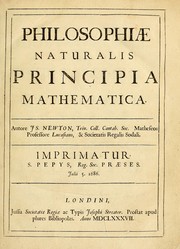 Principia MathematicaBy guest
by Isaac Newton
“forcing Edmund Halley to personally fund Newton's Principia Mathematica and accept payment in fish book copies instead of cash for his publishing work.”
More from The Infinite Monkey Cage
We summarize every new episode. Want them in your inbox?
Introducing... Life Without
The North Pole Unwrapped - Russell Kane, Felicity Aston and Lloyd Peck
Monkey Business - Robin Dunbar, Dave Gorman and Jo Setchell
Head in the Clouds - Owain Wyn Evans, Gavin Pretor-Pinney, Amanda Maycock
Fusion – Ria Lina, Yasmin Andrew and Howard Wilson
Similar Episodes
Related episodes from other podcasts

Cognitive Revolution
Aug 26
RL's a Hell of a Drug: Metagaming, Reward Seeking & Motivated CoT Reasoning – Bronson Schoen, Apollo

The Prof G Pod
Aug 19
The Truth About the Entrepreneurship Boom, and and How to Manage Cash Flow as a Founder

Everything Everywhere Daily
Aug 15
Currencies of the World

The AI Breakdown
Jun 26
Botsitting: The Work Draining AI Gains

Stuff You Should Know
Jun 4
Three Mile Island
Explore Related Topics
This podcast is featured in Best Science Podcasts (2026) — ranked and reviewed with AI summaries.
You're clearly into The Infinite Monkey Cage.
Every Monday, we deliver AI summaries of the latest episodes from The Infinite Monkey Cage and 192+ other podcasts. Free for one show.
Start My Monday DigestNo credit card · Unsubscribe anytime