Why the Pope wants to disarm AI
Episode
8 min
Read time
2 min
Topics
Productivity, Health & Wellness, Relationships
AI-Generated Summary
Key Takeaways
- ✓Historical labor precedent: Pope Leo XIII's 1891 Rerum Novarum rejected socialism but endorsed trade unions, living wages, and mutual benefit associations offering health and life insurance. The American Federation of Labor directly adopted these priorities, demonstrating how moral frameworks can reshape concrete labor policy.
- ✓Living wage as radical doctrine: Rerum Novarum's most consequential claim was that workers deserve more than bare subsistence — a direct challenge to capital accumulation. This principle remains actionable today as a moral framework for evaluating AI-driven worker displacement and compensation structures.
- ✓AI anthropomorphization risk: Pope Leo XIV warns that AI systems designed with human names and emotionally condescending language create false intimacy. Users risk gradually substituting AI interactions for real human relationships, a behavioral pattern tech designers and policymakers should actively counter in product development.
- ✓Data ownership as economic justice: The new encyclical frames data concentration as a structural inequality issue, arguing data must not be sold off or controlled by a select few. This positions data governance as a moral concern, parallel to how Leo XIII framed private property and capital ownership in 1891.
What It Covers
Pope Leo XIV's first encyclical calls for AI to be "disarmed," drawing a direct parallel to Pope Leo XIII's 1891 Rerum Novarum, which shaped labor rights during industrialization and influenced US union movements.
Key Questions Answered
- •Historical labor precedent: Pope Leo XIII's 1891 Rerum Novarum rejected socialism but endorsed trade unions, living wages, and mutual benefit associations offering health and life insurance. The American Federation of Labor directly adopted these priorities, demonstrating how moral frameworks can reshape concrete labor policy.
- •Living wage as radical doctrine: Rerum Novarum's most consequential claim was that workers deserve more than bare subsistence — a direct challenge to capital accumulation. This principle remains actionable today as a moral framework for evaluating AI-driven worker displacement and compensation structures.
- •AI anthropomorphization risk: Pope Leo XIV warns that AI systems designed with human names and emotionally condescending language create false intimacy. Users risk gradually substituting AI interactions for real human relationships, a behavioral pattern tech designers and policymakers should actively counter in product development.
- •Data ownership as economic justice: The new encyclical frames data concentration as a structural inequality issue, arguing data must not be sold off or controlled by a select few. This positions data governance as a moral concern, parallel to how Leo XIII framed private property and capital ownership in 1891.
Notable Moment
Anthropic cofounder Chris Ola was personally invited to the Vatican for the encyclical's release — a signal that the Catholic Church is directly engaging Silicon Valley leadership, not just issuing abstract moral commentary.
Episode Transcript
NPR. In May, pope Leo the fourteenth issued his very first encyclical. Catholic popes have been doing this for hundreds of years. Encyclicals are letters that they write to the Catholic church, often laying out their thoughts on social and moral issues. Kind of like album drops of the Catholic world. And Pope Leo convened a gathering at the Vatican for the release of his encyclical entitled Magnifica Humanitas, Magnificent Humanity. Your brothers and sisters, I want to thank all of you for being here today, for your interest. Popes get to choose their papal names, and Pope Leo the fourteenth picked his name to honor pope Leo the thirteenth. One hundred and thirty five years ago, my venerable predecessor, Leo the thirteenth, observed the situation of factory workers, their families uprooted, and new forms of poverty generated by rapid industrial transformation. He understood that the church could not remain distant. Pope Leo the fourteenth invoked his predecessor to warn against a different kind of technological upheaval. Artificial intelligence needs to be disarmed. This is The Indicator from Planet Money. I'm Whelan Wong. And I'm Darienne Woods. It's not often that we cover religion on this show, but we are in a moment where the pope himself is calling for AI to be reined in for the good of humanity, and he's directly addressing tech leaders. In fact, anthropic cofounder Chris Ola was invited to that event at the Vatican. So today on the show, we look at two populios more than a century apart and their takes on the economic and technological disruptions of their days. This message comes from Fisher Investments. Senior vice president Michael Hosmer shares one way their fiduciary duty comes to life when working with clients. We listen to our clients' goals, their objectives, their personal needs, and we build a plan that puts their needs first. They wanna know what we're truly thinking about and how that thinking is being built into our plan for them because that's how seriously we take our fiduciary responsibility. Learn more at fisherinvestments.com. Investing in securities involves the risk of loss. Support for this NPR podcast and the following message come from Carvana. Selling your car? Carvana has offers so good, they're almost inexplicable. Sell your car 100% online in minutes. Visit carvana.com today. This is Tanya Mosley, cohost of Fresh Air. When I interviewed the screenwriters of The Invite, Rashida Jones and Will McCormick, they called it a sex comedy that's not about sex. It's about wanting to be seen and heard and valued. Get a peek into how the script came to be on Fresh Air on the NPR app or wherever you get your podcasts. Starting in the late eighteen hundreds, an Italian pope named Leo the thirteenth wrote more than 80 encyclicals. Arguably, his most famous one was called Rerum Novarum, which translates to of new things. The new things at that time was socialism and social democratic labor parties. Workers in Europe and …
Get the full transcript (1,632 words) + summary by email — free
One-time email with the complete transcript and AI summary of this episode. No account needed.
One email, no spam. We’ll also show you what SignalCast does.

You just read a 3-minute summary of a 5-minute episode.
Get The Indicator summarized like this every Monday — plus up to 2 more podcasts, free.
Pick Your Podcasts — FreeKeep Reading
More from The Indicator
How did political campaigns get so expensive?
Oct 15 · 8 min

My First Million
Killer marketing secrets that always work (ft. Ogilvy Adman, Rory Sutherland)
Jul 27
More from The Indicator
A rebate runaround, a car rental rip-off and … roaches?!
Oct 14 · 9 min

Odd Lots
Why Soccer Analytics Works Like Volatility Arbitrage Trading
Jul 16
Books, tools, and gear mentioned in this episode
SignalCast may earn commission on purchases via these links. As an Amazon Associate, SignalCast earns from qualifying purchases.
Books
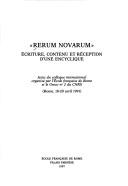 Rerum NovarumBy guest
by Pope Leo XIII
“Pope Leo XIV's first encyclical calls for AI to be "disarmed," drawing a direct parallel to Pope Leo XIII's 1891 Rerum Novarum, which shaped labor rights during industrialization and influenced US union movements.”
More from The Indicator
We summarize every new episode. Want them in your inbox?
How did political campaigns get so expensive?
A rebate runaround, a car rental rip-off and … roaches?!
How did we get a Nobel Prize in economics?
The echo of the bison (Encore)
SNAP strains, youth baseball's class divide, and Meta's bug bounty
Similar Episodes
Related episodes from other podcasts

My First Million
Jul 27
Killer marketing secrets that always work (ft. Ogilvy Adman, Rory Sutherland)

Odd Lots
Jul 16
Why Soccer Analytics Works Like Volatility Arbitrage Trading

Pivot
May 29
Pope Leo’s AI Warning, UFC at the White House, and CBS Shakeups

The AI Breakdown
May 26
What the Pope Actually Said About AI

Invest Like the Best with Patrick O'Shaughnessy
Mar 31
Sergey Levine - Building LLMs for the Physical World - [Invest Like the Best, EP.465]
Explore Related Topics
This podcast is featured in Best Finance Podcasts (2026) — ranked and reviewed with AI summaries.
Read this week's Health & Longevity Podcast Insights — cross-podcast analysis updated weekly.
You're clearly into The Indicator.
Every Monday, we deliver AI summaries of the latest episodes from The Indicator and 192+ other podcasts. Free for one show.
Start My Monday DigestNo credit card · Unsubscribe anytime