Your Attention is Being Stolen — and Here's How to Take it Back | Johann Hari
Episode
50 min
Read time
2 min
Topics
Productivity, Fundraising & VC, Marketing
AI-Generated Summary
Key Takeaways
- ✓Surveillance Capitalism Mechanics: Every scroll generates revenue for platforms, so 10,000 engineers optimize algorithms to maximize time-on-app — not user wellbeing. The fix requires changing the business model entirely: either subscription-based social media (like Netflix) or publicly owned information infrastructure independent of government control, which realigns incentives toward offline connection.
- ✓Three Immediate Attention Tools: Purchase a K Safe (a timed lockbox for phones, starting at 15 minutes daily), install the Freedom app to block specific sites or the entire internet on demand, and buy a Light Phone (~£200) for children — calls and maps only, no internet — to reduce smartphone exposure without full disconnection.
- ✓Values Recalibration Practice: Run a monthly group conversation using two questions: what did you do this month that was meaningful, and what was wasted chasing status or external validation? Research by Nathan Dungan shows that simply naming the social motivation behind material desires — belonging, not the object itself — measurably shifts values and correlates with lower depression and anxiety.
- ✓Negativity Bias Exploitation: Algorithms trained on 3 billion users discovered that anger and distress generate longer engagement than positive content. This is why schools banning smartphones report significant drops in bullying — removing the algorithmic megaphone that amplifies cruel content while suppressing conciliatory voices for at least eight hours daily.
- ✓Depression as Unmet Needs Signal: Framing depression as a brain malfunction causes people to suppress a valid signal. A more accurate definition: hopelessness spreading across an entire life like an oil slick. Treating it as unmet social, psychological, and environmental needs — rather than solely a neurochemical problem — opens structural and community-level interventions beyond individual medication.
What It Covers
Johann Hari, author of *Stolen Focus*, explains how social media platforms systematically harvest human attention through surveillance capitalism, how this fuels depression, anxiety, and political polarization, and outlines three individual tools plus structural reforms — modeled on the leaded petrol ban — to reclaim cognitive autonomy.
Key Questions Answered
- •Surveillance Capitalism Mechanics: Every scroll generates revenue for platforms, so 10,000 engineers optimize algorithms to maximize time-on-app — not user wellbeing. The fix requires changing the business model entirely: either subscription-based social media (like Netflix) or publicly owned information infrastructure independent of government control, which realigns incentives toward offline connection.
- •Three Immediate Attention Tools: Purchase a K Safe (a timed lockbox for phones, starting at 15 minutes daily), install the Freedom app to block specific sites or the entire internet on demand, and buy a Light Phone (~£200) for children — calls and maps only, no internet — to reduce smartphone exposure without full disconnection.
- •Values Recalibration Practice: Run a monthly group conversation using two questions: what did you do this month that was meaningful, and what was wasted chasing status or external validation? Research by Nathan Dungan shows that simply naming the social motivation behind material desires — belonging, not the object itself — measurably shifts values and correlates with lower depression and anxiety.
- •Negativity Bias Exploitation: Algorithms trained on 3 billion users discovered that anger and distress generate longer engagement than positive content. This is why schools banning smartphones report significant drops in bullying — removing the algorithmic megaphone that amplifies cruel content while suppressing conciliatory voices for at least eight hours daily.
- •Depression as Unmet Needs Signal: Framing depression as a brain malfunction causes people to suppress a valid signal. A more accurate definition: hopelessness spreading across an entire life like an oil slick. Treating it as unmet social, psychological, and environmental needs — rather than solely a neurochemical problem — opens structural and community-level interventions beyond individual medication.
Notable Moment
Facebook's own internal data scientists concluded in 2016 that their engagement-maximizing algorithms had massively amplified far-right content — with one-third of Germans who joined extremist groups doing so because the platform directly recommended them. Mark Zuckerberg disbanded the research team and blocked further findings.
Episode Transcript
Attention is your absolute superpower. You can try having self control, but every time you do, there are 10,000 engineers on the other side of the of the screen trying to undermine your self control. Something I kept seeing with people in Silicon Valley, the people who designed this world, is how sick with guilt and shame they feel about what they've done. Know that your attention is being stolen from you by some really big and powerful forces, and know that we can take it back. What if your phone isn't just distracting you, it's actually making you depressed? Our guest today is Johann Hari. He's a New York Times best selling author whose TED Talk has been viewed over 80,000,000 times. He spent years traveling the world investigating depression, anxiety, and why we can't pay attention, interviewing neuroscientists, Silicon Valley insiders, and leading psychiatrists to understand what's really going wrong. And his conclusion is as uncomfortable as it is urgent. Our attention is being systematically stolen. Our values have been corrupted. The society we've built is making us sick. But he also offers solutions, and that's where we want to start this conversation, one that will change how you see your phone, your mind, and your life. Welcome to High Performance, Johann Hari. The first thing is we say to someone who's depressed and anxious, not, there's something wrong with what my doctor said to me. Lovely doctor, by the way. Good person, well intentioned. But my doctor said to me, there's something wrong with your brain. You just need to drug yourself. What that did is it made me doubt the signal I was receiving. Or in fact, not even doubt it. Completely disregard it. So instead of saying something wrong with your brain, start to say, okay. You've got unmet needs. How can we support you? How can we help you to get those deeper needs met? There's lots of ways to do that and lot of lots of levels at which we can do it. So some of them are very local things you can do as an individual, and some things, you know, are bigger things that we have to do as a society. So I'll give you an example of a small thing. So there was a guy called Nathan Dungan who was a financial advisor in Minneapolis. And one day he got approached by a school, kind of middle class school. And they said, look we've got a big problem. Will you come in and talk to the kids? And the problem they had was loads of the kids were getting obsessed with getting the latest Nike sneakers or the latest iPhone. If they weren't getting it they were going mental. And it was causing problems at the school and problems at home. They said, will you just come in and teach these kids about budgeting and what their parents can afford? So he comes in, gives them a lot of lessons …
Get the full transcript (11,191 words) + summary by email — free
One-time email with the complete transcript and AI summary of this episode. No account needed.
One email, no spam. We’ll also show you what SignalCast does.

You just read a 3-minute summary of a 47-minute episode.
Get The High Performance Podcast summarized like this every Monday — plus up to 2 more podcasts, free.
Pick Your Podcasts — FreeKeep Reading
More from The High Performance Podcast
How You Leave Says Everything — Salah, Trent, and the Art of the Exit
Apr 1 · 29 min

TED Radio Hour
How the creator economy is making you talk like the internet
Aug 21
More from The High Performance Podcast
Why The Bravest Leaders Are Afraid All the Time | Brené Brown (E401)
Mar 30 · 77 min

The Indicator
How your phone keeps you scrolling ... even when you want to stop
Jun 19
Books, tools, and gear mentioned in this episode
SignalCast may earn commission on purchases via these links. As an Amazon Associate, SignalCast earns from qualifying purchases.
Books
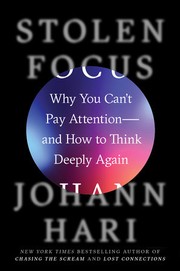
by Johann Hari
“Johann Hari, author of *Stolen Focus*, explains how social media platforms systematically harvest human attention through surveillance capitalism”
Tools
- FreedomRecommended
“install the Freedom app to block specific sites or the entire internet on demand”
Gear
- Light PhoneRecommended
“buy a Light Phone (~£200) for children — calls and maps only, no internet — to reduce smartphone exposure without full disconnection”
More from The High Performance Podcast
We summarize every new episode. Want them in your inbox?
How You Leave Says Everything — Salah, Trent, and the Art of the Exit
Why The Bravest Leaders Are Afraid All the Time | Brené Brown (E401)
How to Think Clearly When It Matters Most: Shane Parrish
What Does Healthy Masculinity Look Like?
Ex-NATO Commander: Why Britain Isn't Ready for the Unthinkable (E400)
Similar Episodes
Related episodes from other podcasts

TED Radio Hour
Aug 21
How the creator economy is making you talk like the internet

The Indicator
Jun 19
How your phone keeps you scrolling ... even when you want to stop

The Jordan Harbinger Show
Apr 14
1312: Andrea Dunlop | How Social Media Fuels Medical Child Abuse

The Peter Attia Drive
Aug 25
#362 ‒ Understanding anxiety: defining, assessing, and treating health anxiety, OCD, and the spectrum of anxiety disorders | Josh Spitalnick, Ph.D., A.B.P.P.

10% Happier with Dan Harris
Sep 7
The Science Of Building The Life You Want | Arthur Brooks
Explore Related Topics
This podcast is featured in Best Mindset Podcasts (2026) — ranked and reviewed with AI summaries.
You're clearly into The High Performance Podcast.
Every Monday, we deliver AI summaries of the latest episodes from The High Performance Podcast and 192+ other podcasts. Free for one show.
Start My Monday DigestNo credit card · Unsubscribe anytime