559: The Hidden Psychology of Happiness and Meaning | Dave Evans
Episode
59 min
Read time
2 min
Topics
Career Growth, Productivity, Relationships
AI-Generated Summary
Key Takeaways
- ✓Job vs. Calling Framework: Evans identifies three distinct work relationships — job (money), career (advancement/mastery), and calling (value expression) — and argues these are different, not hierarchically better or worse. Critically, meaning-making and money-making do not need to overlap. Forcing what you love into a commercial context means operating on the market's terms, not your own, which frequently kills the love for it.
- ✓Four Meaning Access Points: Evans identifies wonder, flow, coherence, and formative community as four present-moment experiences that generate meaning and are accessible to nearly everyone daily. Coherence specifically means catching yourself acting in alignment with your values. These are not outcomes to achieve but experiential states to enter — and they can overlap simultaneously, such as group flow during team sports.
- ✓Prototype-Based Life Design: Rather than analyzing the "right" life path, Evans prescribes iterative prototyping borrowed from design methodology. Run small, low-stakes experiments to learn experientially — shadow someone, attend an event, try a role — then iterate. The goal of each prototype is learning, not success, making failure structurally impossible and accelerating progress toward genuinely aligned work.
- ✓Extrinsic vs. Intrinsic Motivation Atrophy: Citing Harvard psychiatrist Bob Waldinger's 80-year Grant Study findings, Evans warns that lives indexed overwhelmingly on extrinsic motivators — money, outcomes, status — physically atrophy the brain's capacity to register intrinsic rewards like beauty, love, and connection. This is not a philosophical concern but a physiological one: exclusive outcome-focus literally degrades the neural systems that generate human fulfillment.
- ✓Self-Transcendence Over Self-Actualization: Maslow privately concluded before his death that self-transcendence, not self-actualization, sits atop the needs hierarchy. Actualization produces fulfillment centered on the self; transcendence produces meaning through experiences of something larger than oneself. Practically, this means pursuing awe, community, and flow — states where the self temporarily dissolves — rather than optimizing personal achievement metrics.
What It Covers
Dave Evans, cofounder of the Stanford Life Design Lab and coauthor of *Designing Your Life*, applies design thinking principles to meaning-making. He reframes the pursuit of meaning away from impact and fulfillment — both identified as dead ends — toward four present-moment experiences: wonder, flow, coherence, and formative community.
Key Questions Answered
- •Job vs. Calling Framework: Evans identifies three distinct work relationships — job (money), career (advancement/mastery), and calling (value expression) — and argues these are different, not hierarchically better or worse. Critically, meaning-making and money-making do not need to overlap. Forcing what you love into a commercial context means operating on the market's terms, not your own, which frequently kills the love for it.
- •Four Meaning Access Points: Evans identifies wonder, flow, coherence, and formative community as four present-moment experiences that generate meaning and are accessible to nearly everyone daily. Coherence specifically means catching yourself acting in alignment with your values. These are not outcomes to achieve but experiential states to enter — and they can overlap simultaneously, such as group flow during team sports.
- •Prototype-Based Life Design: Rather than analyzing the "right" life path, Evans prescribes iterative prototyping borrowed from design methodology. Run small, low-stakes experiments to learn experientially — shadow someone, attend an event, try a role — then iterate. The goal of each prototype is learning, not success, making failure structurally impossible and accelerating progress toward genuinely aligned work.
- •Extrinsic vs. Intrinsic Motivation Atrophy: Citing Harvard psychiatrist Bob Waldinger's 80-year Grant Study findings, Evans warns that lives indexed overwhelmingly on extrinsic motivators — money, outcomes, status — physically atrophy the brain's capacity to register intrinsic rewards like beauty, love, and connection. This is not a philosophical concern but a physiological one: exclusive outcome-focus literally degrades the neural systems that generate human fulfillment.
- •Self-Transcendence Over Self-Actualization: Maslow privately concluded before his death that self-transcendence, not self-actualization, sits atop the needs hierarchy. Actualization produces fulfillment centered on the self; transcendence produces meaning through experiences of something larger than oneself. Practically, this means pursuing awe, community, and flow — states where the self temporarily dissolves — rather than optimizing personal achievement metrics.
Notable Moment
Evans describes how his wife, upon receiving a terminal cancer diagnosis, reframed the situation as sad rather than tragic — because her life felt complete. He argues that radical acceptance combined with deliberate availability to whatever an experience offers, even dying, is what unlocks meaning within unavoidable circumstances.
Episode Transcript
New Maybelline serum lipstick. Maybe it's not just lipstick, it's lush color with endless possibilities. It's serum infused with a hyaluronic acid and oil blend for eight hour plumping moisture and tone enhancing shades. It's more than the shade. It's who's wearing it. You. New Maybelline serum lipstick. Maybe it's Maybelline. It's the Paradise podcast. I am your host, Ryan Michelle Bathe, with my husband, Sterling. What's up? Join us here on Hulu and Hulu on Disney plus where we'll discuss each episode with the cast and crew of Paradise. I'll be getting all the secrets from Dan Fogelman. James Marsden. Shailene Woodley. Julianne Nicholson. And Sterling Kelby Brown. Paradise, the official podcast, is now streaming. And stream Paradise on Hulu and and Hulu on Disney plus. What's going on, everybody? It's episode 559 of the Genius Life. Let's go. My genius, a full man. Back to the moon. Back to the moon. Back to the moon. Back to the moon. Back to the moon. Back to the moon. The Genius Life. What's going on, everybody? Welcome back to The Genius Life, a show where we dive into the science and art of living healthier, happier, and smarter. I'm your host, Max Lugavere. Today's episode is a bit more philosophical than usual, but I think you're gonna find it incredibly thought provoking. My guest is Dave Evans, coauthor of the best selling book Designing Your Life and cofounder of the Stanford Life Design Lab. For decades, Dave has helped people think more deeply about work, purpose, and what it actually means to live a meaningful life. In this conversation, we explore why so many people feel unfulfilled even when they're doing all the things they thought were supposed to make them happy. Dave shares how principles from design thinking can be applied to life itself, helping us experiment our way toward work, relationships, and experiences that feel more aligned and alive. We talk about the differences between a job, a career, and a calling, why turning what you love into your profession isn't always the dream it seems, and why meaning may have less to do with chasing outcomes and more to do with how we fully participate in the present moment. Listen all the way through to the end. You're not gonna wanna miss a beat. And as always, don't forget to share this episode with friends and loved ones who you think may benefit from it. And if you enjoy the show, please leave a rating and review on your podcast app of choice. Subscribe wherever you listen and follow along on YouTube so that you never miss an episode. And before we dive in, make sure that you're signed up for my free weekly newsletter at maxlugavir.com/newsletter. It's where I share research breakdowns, health tips, and special discounts on products I personally love, all delivered straight to your inbox. And that's at maxlugavir.com/newsletter one more time. And now with all that out of the way, here's episode …
Get the full transcript (12,019 words) + summary by email — free
One-time email with the complete transcript and AI summary of this episode. No account needed.
One email, no spam. We’ll also show you what SignalCast does.

You just read a 3-minute summary of a 56-minute episode.
Get The Genius Life summarized like this every Monday — plus up to 2 more podcasts, free.
Pick Your Podcasts — FreeKeep Reading
More from The Genius Life
593: The Daily Habits That Keep Your Brain Sharp at Any Age | Jim Kwik
Sep 9 · 68 min

The Prof G Pod
Why “Follow Your Passion” Is Bad Advice — with Bill Burnett and Dave Evans
Sep 10
More from The Genius Life
592: The Hidden Cause of Brain Fog, Fatigue and Poor Metabolic Health | Will Cole, DC
Sep 2 · 67 min

The Happiness Lab
How to Design a More Meaningful Life (with Dave Evans and Bill Burnett)
Feb 2
Books, tools, and gear mentioned in this episode
SignalCast may earn commission on purchases via these links. As an Amazon Associate, SignalCast earns from qualifying purchases.
Books
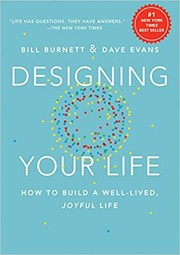 Designing Your LifeBy guest
by Dave Evans
“Dave Evans, cofounder of the Stanford Life Design Lab and coauthor of *Designing Your Life*, applies design thinking principles to meaning-making.”
More from The Genius Life
We summarize every new episode. Want them in your inbox?
593: The Daily Habits That Keep Your Brain Sharp at Any Age | Jim Kwik
592: The Hidden Cause of Brain Fog, Fatigue and Poor Metabolic Health | Will Cole, DC
591: How to Manage ADHD Naturally – A Psychiatrist’s Guide to Focus, Sleep and Emotional Regulation | Sasha Hamdani, MD
590: The Hidden Driver of Alzheimer’s Disease and How to Protect Your Brain | David Perlmutter, MD
589: Are You Trying Too Hard to Be Healthy? How Optimizing Your Health Can Backfire | Lucy McBride, MD
Similar Episodes
Related episodes from other podcasts

The Prof G Pod
Sep 10
Why “Follow Your Passion” Is Bad Advice — with Bill Burnett and Dave Evans

The Happiness Lab
Feb 2
How to Design a More Meaningful Life (with Dave Evans and Bill Burnett)

The Nathan Barry Show
Nov 20
How To Live a Meaningful Life Using Design Thinking | 104

The Rich Roll Podcast
Mar 16
Stanford Professors Bill Burnett & Dave Evans On How To Design A Meaningful Life

The Mel Robbins Podcast
Feb 23
How to Live a Meaningful Life & Design the Future You Want
Explore Related Topics
This podcast is featured in Best Health Podcasts (2026) — ranked and reviewed with AI summaries.
You're clearly into The Genius Life.
Every Monday, we deliver AI summaries of the latest episodes from The Genius Life and 192+ other podcasts. Free for one show.
Start My Monday DigestNo credit card · Unsubscribe anytime