Ross Douthat: The Exit Interview
Episode
73 min
Read time
3 min
Topics
Productivity, Relationships, Leadership
AI-Generated Summary
Key Takeaways
- ✓Persuasion mechanics: To argue across ideological lines, always begin from the strongest version of the opposing argument — not the worst-faith interpretation. Pro-choice writers must start from the premise that pro-lifers genuinely believe unborn lives deserve legal protection. Conservative immigration critics must start from the humanitarian case for immigration. Skipping this step guarantees failure and produces affirmation, not persuasion.
- ✓Blogosphere vs. social media dynamics: Early 2000s blogging built audiences through cross-ideological linking and block-quote debate — writers needed opponents to quote them to gain readers. This structurally incentivized engagement with opposing views. Current platforms reward same-side retweets and dunks, creating an audience-building mechanism that actively punishes genuine cross-partisan dialogue and rewards tribal reinforcement instead.
- ✓Republican working-class realignment: Douthat and co-author Reihan Salam's 2008 book predicted Republican working-class realignment but prescribed family policy and wage subsidies. Trump delivered it instead through trade tariffs and anti-China manufacturing rhetoric — a message that resonated because millions of Midwestern workers were still absorbing the economic shock of China's WTO entry, a factor the policy-focused reformers underestimated.
- ✓Post-religious right formation: As US Christianity declined sharply between the late 1990s and 2020, conservative politics shifted from George W. Bush-era evangelical framing toward what Douthat calls a "post-religious right" — a coalition ranging from libertine amoralists to would-be neo-pagans. The key dividing line runs between figures like Jordan Peterson, who wrestles seriously with Christian texts, and Andrew Tate, who explicitly rejects Christian ethics entirely.
- ✓Catholic intellectual dominance at elite level: Under digital conditions, religious identity polarizes toward strong brands. Catholicism — with its deeper formal intellectual tradition relative to US evangelicalism — has become the dominant attractor for right-leaning intellectual converts, including JD Vance. Evangelicalism retains mass-level strength. This mirrors how Episcopalianism once functioned as the default elite Protestant denomination, though whether elite Catholic conversion trickles into institutional renewal remains unresolved.
What It Covers
Ross Douthat, departing New York Times opinion columnist, speaks with Ezra Klein about 15+ years of political and media transformation — from early 2000s blogging culture through the Republican Party's populist shift, the decline of evangelical Christianity in conservative politics, the rise of Catholic intellectual influence, and Douthat's move to CBS News' 60 Minutes.
Key Questions Answered
- •Persuasion mechanics: To argue across ideological lines, always begin from the strongest version of the opposing argument — not the worst-faith interpretation. Pro-choice writers must start from the premise that pro-lifers genuinely believe unborn lives deserve legal protection. Conservative immigration critics must start from the humanitarian case for immigration. Skipping this step guarantees failure and produces affirmation, not persuasion.
- •Blogosphere vs. social media dynamics: Early 2000s blogging built audiences through cross-ideological linking and block-quote debate — writers needed opponents to quote them to gain readers. This structurally incentivized engagement with opposing views. Current platforms reward same-side retweets and dunks, creating an audience-building mechanism that actively punishes genuine cross-partisan dialogue and rewards tribal reinforcement instead.
- •Republican working-class realignment: Douthat and co-author Reihan Salam's 2008 book predicted Republican working-class realignment but prescribed family policy and wage subsidies. Trump delivered it instead through trade tariffs and anti-China manufacturing rhetoric — a message that resonated because millions of Midwestern workers were still absorbing the economic shock of China's WTO entry, a factor the policy-focused reformers underestimated.
- •Post-religious right formation: As US Christianity declined sharply between the late 1990s and 2020, conservative politics shifted from George W. Bush-era evangelical framing toward what Douthat calls a "post-religious right" — a coalition ranging from libertine amoralists to would-be neo-pagans. The key dividing line runs between figures like Jordan Peterson, who wrestles seriously with Christian texts, and Andrew Tate, who explicitly rejects Christian ethics entirely.
- •Catholic intellectual dominance at elite level: Under digital conditions, religious identity polarizes toward strong brands. Catholicism — with its deeper formal intellectual tradition relative to US evangelicalism — has become the dominant attractor for right-leaning intellectual converts, including JD Vance. Evangelicalism retains mass-level strength. This mirrors how Episcopalianism once functioned as the default elite Protestant denomination, though whether elite Catholic conversion trickles into institutional renewal remains unresolved.
- •Journalism shifting toward conversational formats: Tyler Cowen's argument that AI will raise the premium on live human performance applies directly to media — dialogue and interview formats signal authenticity that AI-generated writing cannot replicate. Douthat cites this as a structural reason to move toward on-camera interviewing at 60 Minutes, arguing that conversational formats allow audiences to sit with uncertainty rather than accept a single authoritative take on an increasingly opaque world.
Notable Moment
Douthat observes that Bill Kristol — now one of Trumpism's fiercest critics — wrote about politics, war, and national greatness in the late 1990s and early 2000s in ways that closely resemble how young nationalist Trump supporters write today. The ideological DNA is nearly identical; only the foreign policy targets differ.
Episode Transcript
You might need midi if you ever hair sprayed your bangs into a waterfall or tried to go for a run with a CD player. If this was you then, you might need midi now. Perimenopause can start ten years before menopause. If you're experiencing symptoms like night sweats, weight gain, or anxiety, speak to the menopause experts at Middi Health. Book a virtual appointment at joinmidi.com. Midlife needs Middi. Results may vary. Medications prescribed clinician. I've known Ross Douthat a long time. We were bloggers back when the Earth was young. Hey, Ross. How are you doing? Good. I'm fine, Ezra. How are you? And then I watched him become a columnist here at the New York Times opinion in 2009, the youngest ever New York Times opinion columnist. About a year ago, he launched Interesting Times, which has been a a great fellow podcast here in the section. What is the Antichrist? How much time do we have? We've got, as long as much time as you have to talk about the Antichrist. And then breaking all of our hearts, he announced he's going to sixty minutes where he's gonna be a correspondent. So I wanted to talk to Ross on his way out here about how he has seen media change, how he has seen politics change, and how maybe he believes it is changing again. Ross Douthat joins me now. Ross Douthat, welcome back to the show. Thanks for having me, Esra. It's a pleasure. What the hell, man? What what do you mean? Going to sixty minutes? You're leaving us? I mean, in spiritually, I you never leave any place that that you love, and all things are gathered in by god for his but, yeah, I'm I'm going to sixty minutes. Alright. We're gonna we're gonna we're gonna get to go into sixty minutes. We're gonna, start with where you came from and get to where you're going. Where do you locate your own spiritual origins as a journalist, as a commentator, a pundit? I was going back. I had always thought you were like me, like an original blogger who gets absorbed by a media borg. Oh, yeah. No, it was the opposite. Yeah. You're the opposite. You started the Atlantic and become a blogger. I, you know, I was a a junior junior junior editor. I edited the letter section at The Atlantic for a while, and I did blogging on the side. I think of myself as someone who was sort of present for both the end of an old dispensation and the beginning of a new one. So I had sort of parallel careers in my early twenties. I had the career inside the Atlantic where I was doing junior editor work and sort of trying to work my way up the masthead at an institution where, you know, you were still doing fact checking and copy editing on these huge sheets of paper that would be printed out and …
Get the full transcript (12,395 words) + summary by email — free
One-time email with the complete transcript and AI summary of this episode. No account needed.
One email, no spam. We’ll also show you what SignalCast does.

You just read a 3-minute summary of a 70-minute episode.
Get The Ezra Klein Show summarized like this every Monday — plus up to 2 more podcasts, free.
Pick Your Podcasts — FreeKeep Reading
More from The Ezra Klein Show
What Does Abdul El-Sayed Believe?
Sep 25 · 93 min

The Rich Roll Podcast
Everything Is A Story: Journalist Nick Bilton Thinks AI Might End Humanity & How Stories Could Save Us
Apr 13
More from The Ezra Klein Show
Jensen Huang Thinks A.I. Alarmism Has Gone Too Far
Sep 23 · 107 min

Pivot
Zuck's Meta Manifesto, Data Center Wars, and AI Slop Pushback
Aug 11
Books, tools, and gear mentioned in this episode
SignalCast may earn commission on purchases via these links. As an Amazon Associate, SignalCast earns from qualifying purchases.
Books
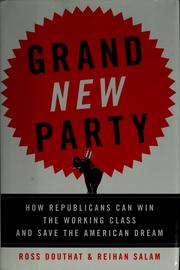 Grand New PartyBy guest
by Ross Douthat and Reihan Salam
“Douthat and co-author Reihan Salam's 2008 book predicted Republican working-class realignment but prescribed family policy and wage subsidies.”
More from The Ezra Klein Show
We summarize every new episode. Want them in your inbox?
What Does Abdul El-Sayed Believe?
Jensen Huang Thinks A.I. Alarmism Has Gone Too Far
We Can't Lose Control of A.I.
The ‘But China!’ Dilemma Driving the A.I. Race
Francis Fukuyama on Trump, China and the Legacy of 9/11
Similar Episodes
Related episodes from other podcasts

The Rich Roll Podcast
Apr 13
Everything Is A Story: Journalist Nick Bilton Thinks AI Might End Humanity & How Stories Could Save Us

Pivot
Aug 11
Zuck's Meta Manifesto, Data Center Wars, and AI Slop Pushback

Odd Lots
Aug 10
NYT CEO Meredith Kopit Levien on Running a Media Brand in the Age of AI

Hard Fork
Jun 26
‘The Daily’ and ‘The Opinions’: How A.I. Is Changing Loneliness and Taste
Hard Fork
May 29
Interesting Times: Why Are We Still Driving?
Explore Related Topics
This podcast is featured in Best Politics Podcasts (2026) — ranked and reviewed with AI summaries.
You're clearly into The Ezra Klein Show.
Every Monday, we deliver AI summaries of the latest episodes from The Ezra Klein Show and 192+ other podcasts. Free for one show.
Start My Monday DigestNo credit card · Unsubscribe anytime