Here’s How You Take Back Your Time | Become Dangerously Persuasive With These Books
Episode
13 min
Read time
2 min
Topics
Software Development, Philosophy & Wisdom, Science & Discovery
AI-Generated Summary
Key Takeaways
- ✓Power literacy via Robert Greene: Read The 48 Laws of Power, The 33 Strategies of War, and The Art of Seduction as a trilogy. Greene synthesizes Sun Tzu, Machiavelli, and military strategists into actionable frameworks for anyone navigating opposition or entrenched institutional resistance.
- ✓Frame control over facts: Frank Luntz's work demonstrates that word choice determines how audiences perceive issues — "undocumented worker" versus "illegal alien" shifts sympathy entirely. Selecting a winning frame matters more than being factually correct when persuading others to support a cause.
- ✓Study adversarial playbooks: Machiavelli, Rules for Radicals, and The 48 Laws of Power are recommended precisely because opponents already use these frameworks. Reading like a spy in enemy territory — Seneca's phrase — builds defensive awareness and offensive strategic capacity simultaneously.
- ✓Civil rights as military campaign: The abolitionist and civil rights movements invented modern activist tools — consumer boycotts, petitions, PR campaigns — through deliberate strategic planning. Civil rights leaders trained at the Highlander School specifically to resist provocation, then engineered arrests to overload the jail system.
What It Covers
Ryan Holiday recommends 20+ books on persuasion, power, and strategic communication — from Robert Greene's 48 Laws of Power to Saul Alinsky's Rules for Radicals — framed through Stoic principles of time, justice, and effective action.
Key Questions Answered
- •Power literacy via Robert Greene: Read The 48 Laws of Power, The 33 Strategies of War, and The Art of Seduction as a trilogy. Greene synthesizes Sun Tzu, Machiavelli, and military strategists into actionable frameworks for anyone navigating opposition or entrenched institutional resistance.
- •Frame control over facts: Frank Luntz's work demonstrates that word choice determines how audiences perceive issues — "undocumented worker" versus "illegal alien" shifts sympathy entirely. Selecting a winning frame matters more than being factually correct when persuading others to support a cause.
- •Study adversarial playbooks: Machiavelli, Rules for Radicals, and The 48 Laws of Power are recommended precisely because opponents already use these frameworks. Reading like a spy in enemy territory — Seneca's phrase — builds defensive awareness and offensive strategic capacity simultaneously.
- •Civil rights as military campaign: The abolitionist and civil rights movements invented modern activist tools — consumer boycotts, petitions, PR campaigns — through deliberate strategic planning. Civil rights leaders trained at the Highlander School specifically to resist provocation, then engineered arrests to overload the jail system.
Notable Moment
Thomas Clarkson, an Oxford student writing a college essay on slavery's immorality, reasoned that if the argument was correct and someone should act, that person had to be himself — launching the entire abolitionist movement.
Episode Transcript
Welcome to the Daily Stoic Podcast designed to help bring those four key stoic virtues, courage, discipline, justice, and wisdom into the real world. As winter fades and spring emerges as we adjust our clocks for daylight savings, it's a good time to pause and reflect. Where did that time go? It seems like only yesterday that we were bundled up against the cold, watching the last leaves fall from the trees. Now the days are getting longer and the air feels warmer. We talked recently about Philip Larkin's beautiful poem about the changing of the seasons, how their circular renewal contains within them a kind of finality. The winter you just had is over forever. Those cold winter afternoons where you didn't wanna go outside, where you didn't do anything, where instead you waited for the temperature to go up a break in the snow, you weren't just killing time, that time was killing you. Seneca reminded himself that death is not this thing in the future, but something that is happening now. It's always happening. It is the ticking hand of the clock. It is the spring flowers. It is the fall harvest. It is the summer rains. It is the first snow of the year. This idea is a reminder that each moment is precious. It tells us to wake up and really live, not just watch the time go by, to embrace the longer days and make the most of it. And if that's speaking to you, if you're feeling like that's something you wanna do, well, I would love to have you join us in the Daily Stoic spring forward challenge. This time of the year, we're supposed to be thinking about spring cleaning, but how many of us get our whole houses in order, not just our physical spaces, but our minds, our routines, our assumptions? Think about how you spent the last week. How many of those days were as efficient and productive as they could be? Where did you waste time? Where did you make things more complicated than necessary? Where have you fallen back on old habits? Where are you, like so many people, still stuck in the doldrums of winter? Well, the Daily Stokes spring forward challenge, which we've been doing for many years now, is set to push you to examine those parts of your life, to examine your choices, to examine your relationships, and move you forward to living your best life to help you seize this new season that is upon us. We'd love to have you join us. It's gonna be 10 challenges delivered every single day. It's not a long challenge. It's a short to the point challenge that packs some punch. There's a gonna be a q and a session with me. You should remember what Mark Srila said. Look. We could be good today, but instead we choose tomorrow. So it's up to you whether you're gonna let those New Year's resolutions dissolve …
Get the full transcript (3,023 words) + summary by email — free
One-time email with the complete transcript and AI summary of this episode. No account needed.
One email, no spam. We’ll also show you what SignalCast does.

You just read a 3-minute summary of a 10-minute episode.
Get The Daily Stoic summarized like this every Monday — plus up to 2 more podcasts, free.
Pick Your Podcasts — FreeKeep Reading
More from The Daily Stoic
This is the Main Thing | Ask Daily Stoic
Apr 2 · 13 min

The AI Breakdown
The 4 AI Team Members Execs Should Hire Right Now
May 25
More from The Daily Stoic
BONUS | Books You Can Finish In One Sitting (And Actually Remember)
Apr 1 · 8 min

The Learning Leader Show
677: Erin McGoff - How to Communicate at Work, Negotiate Your Salary, Write Cold Emails, Overcome Rejection, Run Better Meetings, and Build a Career That Matters
Mar 2
Books, tools, and gear mentioned in this episode
SignalCast may earn commission on purchases via these links. As an Amazon Associate, SignalCast earns from qualifying purchases.
Books
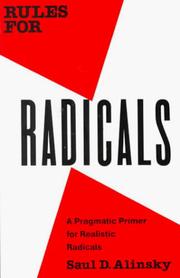 Rules for RadicalsRecommended
by Saul Alinsky
“Ryan Holiday recommends 20+ books on persuasion, power, and strategic communication — from Robert Greene's 48 Laws of Power to Saul Alinsky's Rules for Radicals”
 The Art of SeductionRecommended
by Robert Greene
“Read The 48 Laws of Power, The 33 Strategies of War, and The Art of Seduction as a trilogy.”
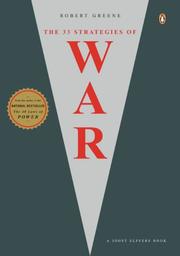 The 33 Strategies of WarRecommended
by Robert Greene
“Read The 48 Laws of Power, The 33 Strategies of War, and The Art of Seduction as a trilogy.”
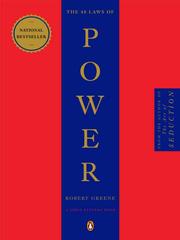 The 48 Laws of PowerRecommended
by Robert Greene
“Ryan Holiday recommends 20+ books on persuasion, power, and strategic communication — from Robert Greene's 48 Laws of Power to Saul Alinsky's Rules for Radicals”
More from The Daily Stoic
We summarize every new episode. Want them in your inbox?
This is the Main Thing | Ask Daily Stoic
BONUS | Books You Can Finish In One Sitting (And Actually Remember)
How Can This Improve Your Life? | The Color of Your Thoughts
The Perspective Shift I Had in Australia (A Stoic Lesson)
Live Now, While You Still Can
Similar Episodes
Related episodes from other podcasts

The AI Breakdown
May 25
The 4 AI Team Members Execs Should Hire Right Now

The Learning Leader Show
Mar 2
677: Erin McGoff - How to Communicate at Work, Negotiate Your Salary, Write Cold Emails, Overcome Rejection, Run Better Meetings, and Build a Career That Matters

The Nathan Barry Show
Dec 11
How Ryan Holiday Built a Million Dollar Content Empire | 107

Masters of Scale
Oct 30
When ‘genius’ becomes a trap, with author Ryan Holiday

10% Happier with Dan Harris
Aug 31
The Science of Habit Change, Why GLP-1s are Disrupting It, and How To Use It To Have Better Conversations | Charles Duhigg
Explore Related Topics
This podcast is featured in Best Philosophy Podcasts (2026) — ranked and reviewed with AI summaries.
Read this week's Software Engineering Podcast Insights — cross-podcast analysis updated weekly.
You're clearly into The Daily Stoic.
Every Monday, we deliver AI summaries of the latest episodes from The Daily Stoic and 192+ other podcasts. Free for one show.
Start My Monday DigestNo credit card · Unsubscribe anytime