498: Season 2 Recap
Episode
37 min
Read time
2 min
Topics
Productivity, Design & UX, Artificial Intelligence
AI-Generated Summary
Key Takeaways
- ✓Code Hospitality Framework: Reframe codebase quality not as "well-documented" or "productive" but as "welcoming." This subtle shift changes how teams structure onboarding, shared ownership, and legacy code decisions. Think of it as hosting someone in your home — new contributors should feel comfortable immediately, and no one should inherit a Monica's closet of untouched, mysterious code.
- ✓TypeScript as a Leveled Game: Approach TypeScript adoption in three stages: first, silence compiler errors; second, eliminate all `any` type shortcuts; third, treat type errors as design signals rather than noise. Reaching level three means asking what an object *actually represents*, not just patching surface errors — a shift that produces more intentional, meaningful type definitions.
- ✓LLM + Git History Workflow: Point LLMs directly at Git commit SHAs to load relevant context instantly before coding sessions. Ask plain-English questions about past changes and receive commit SHAs as sourced receipts. This reduces the time cost of Git spelunking from roughly 20 minutes to 30 seconds, preserving flow state during active development work.
- ✓Write Commit Messages for Future LLM Context: Strong commit messages — explaining *why* a change was made, paths not taken, and implementation gotchas — now serve dual purposes: helping human teammates and providing LLMs with interpretive constraints. Without this framing, automated tools reading raw diffs have too wide a solution space and produce less accurate, less useful responses.
- ✓Extract Open Source from Pain, Not Pride: Sally's gem Michelle, a Rails generator for appointment scheduling materialized views, was built specifically to avoid solving the same hard problem twice. Consultants repeatedly encountering identical domain problems should consider abstraction not when excited about a solution, but when determined never to manually rebuild it again — a more durable motivation for open-source maintenance.
What It Covers
Thoughtbot's Bike Shed hosts Adi Slater, Sally Hall, and Joel Kimville recap Season 2, reflecting on TypeScript adoption journeys, the concept of "welcoming codebases," using LLMs with Git history for workflow efficiency, Sally's open-source gem Michelle for appointment scheduling, and how consulting work drives upstream Rails contributions.
Key Questions Answered
- •Code Hospitality Framework: Reframe codebase quality not as "well-documented" or "productive" but as "welcoming." This subtle shift changes how teams structure onboarding, shared ownership, and legacy code decisions. Think of it as hosting someone in your home — new contributors should feel comfortable immediately, and no one should inherit a Monica's closet of untouched, mysterious code.
- •TypeScript as a Leveled Game: Approach TypeScript adoption in three stages: first, silence compiler errors; second, eliminate all `any` type shortcuts; third, treat type errors as design signals rather than noise. Reaching level three means asking what an object *actually represents*, not just patching surface errors — a shift that produces more intentional, meaningful type definitions.
- •LLM + Git History Workflow: Point LLMs directly at Git commit SHAs to load relevant context instantly before coding sessions. Ask plain-English questions about past changes and receive commit SHAs as sourced receipts. This reduces the time cost of Git spelunking from roughly 20 minutes to 30 seconds, preserving flow state during active development work.
- •Write Commit Messages for Future LLM Context: Strong commit messages — explaining *why* a change was made, paths not taken, and implementation gotchas — now serve dual purposes: helping human teammates and providing LLMs with interpretive constraints. Without this framing, automated tools reading raw diffs have too wide a solution space and produce less accurate, less useful responses.
- •Extract Open Source from Pain, Not Pride: Sally's gem Michelle, a Rails generator for appointment scheduling materialized views, was built specifically to avoid solving the same hard problem twice. Consultants repeatedly encountering identical domain problems should consider abstraction not when excited about a solution, but when determined never to manually rebuild it again — a more durable motivation for open-source maintenance.
Notable Moment
Sally revealed she lives in the same town as Poodr author Sandi Metz, has never met her despite being a self-described fangirl, and used the podcast to publicly invite her to be friends — citing shared interests in Ruby, identity, and geography as sufficient grounds.
Episode Transcript
Hello, and welcome to another episode of The Bike Shed, a weekly podcast from your friends at Thoughtpond about developing great software. I'm Adi Slater. And I'm Sally Hall. And I'm Joel Kimville. And together, we're here to share a bit of what we've learned along the way. And this episode is the recap for our season two of The Bikeshed. Woo. How has the season been for everybody? Good. F I've enjoyed this season. Yeah. You know, we joined season one, which started episode 400 something. So season zero was very long. And I feel like season two, I'm starting to feel like, yeah. I know how to podcast. I can say words. It's working. Getting comfortable. That's true. That's true. I feel like there has been, for myself, a a lot of learning and becoming comfortable and, like, finding a groove to this sort of thing. And it seems like, Sally, that was your experience as well. I'm curious then, Joel, how has this felt for you? I've really enjoyed this. I do think that we've sort of found a little bit more of our our groove. I think the rotating between hosts, which is a format that we introduced late last year when we did our season one, sort of rebooted the format of the podcast has been working really well. So I'm enjoying the way that we're doing this. I'm curious for you two in this past season. Were there episodes that you're sort of feel particularly tied to where you're like, that was one of my favorites or I really enjoyed recording that one that stood out to you? I think for me, there was one with with each of you that really kinda stand out as, highlights for me as far as season two goes with Sally. It was recording our AI episode, and that has started some conversations and different things internally at Thoughtbot as well as, you know, between each other. And also, Joel, with you, the personal bibliography episode was a lot of fun, just kind of, like, sharing things that were meaningful for us in our journey, and that was really great getting to find out some what I found to be a shock that you had never read Pooter that still is etched into my memory. For as much as I absolutely love Sandy Messe's work, I have not read Principles of Object Oriented Design in Ruby. The correct me if I'm wrong. I might be misremembering this, but does Sandy Metz live near you, Sally? Is that right? Yeah. She lives in my town, and I'm a fangirl who've never seen her. And I feel kind of weird admitting this publicly, but, like, Sandy, if you're listening, we both do Ruby. We're both queer women. We both live in Durham. Let's be friends. I love it. I love it. Yeah. I also enjoyed the AI one. Joel, I'm looking through the ones we did together, and I'm trying …
Get the full transcript (6,525 words) + summary by email — free
One-time email with the complete transcript and AI summary of this episode. No account needed.
One email, no spam. We’ll also show you what SignalCast does.

You just read a 3-minute summary of a 34-minute episode.
Get The Bike Shed summarized like this every Monday — plus up to 2 more podcasts, free.
Pick Your Podcasts — FreeKeep Reading
More from The Bike Shed
506: The Muppet Software Team
Jul 14 · 38 min

We Study Billionaires
TIP840: CATL: Powering EVs, Power Grids, and AI w/ Stig Brodersen, Manish Karira & Ralph Summerford
Aug 23
More from The Bike Shed
505: What is a “principal” or “staff” engineer?
Jul 7 · 34 min

Modern Wisdom
Jocko Willink, Matt McCusker & Jeff Dye - Mostly Wise #3 - #1139
Aug 20
Books, tools, and gear mentioned in this episode
SignalCast may earn commission on purchases via these links. As an Amazon Associate, SignalCast earns from qualifying purchases.
Books
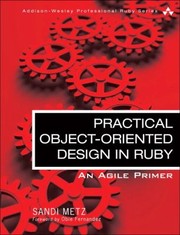
by Sandi Metz
“Sally revealed she lives in the same town as Poodr author Sandi Metz, has never met her despite being a self-described fangirl”
Tools
“Sally's open-source gem Michelle for appointment scheduling, and how consulting work drives upstream Rails contributions... Sally's gem Michelle, a Rails generator for appointment scheduling materialized views, was built specifically to avoid solving the same hard problem twice.”
More from The Bike Shed
We summarize every new episode. Want them in your inbox?
Similar Episodes
Related episodes from other podcasts

We Study Billionaires
Aug 23
TIP840: CATL: Powering EVs, Power Grids, and AI w/ Stig Brodersen, Manish Karira & Ralph Summerford

Modern Wisdom
Aug 20
Jocko Willink, Matt McCusker & Jeff Dye - Mostly Wise #3 - #1139
Accidental Tech Podcast
Aug 6
703: Part of a Healthy Breakfast

The Vergecast
Jul 8
It's still way too hard to switch phones
The Vergecast
Jun 29
Our vibe coded projects that actually work
Explore Related Topics
This podcast is featured in Best Cybersecurity Podcasts (2026) — ranked and reviewed with AI summaries.
Read this week's AI & Machine Learning Podcast Insights — cross-podcast analysis updated weekly.
You're clearly into The Bike Shed.
Every Monday, we deliver AI summaries of the latest episodes from The Bike Shed and 192+ other podcasts. Free for one show.
Start My Monday DigestNo credit card · Unsubscribe anytime