SYSK Gets Weird Playlist: Dragons: As Real as Mermaids
Episode
40 min
Read time
2 min
Topics
Relationships, Leadership, Software Development
AI-Generated Summary
Key Takeaways
- ✓Evolutionary Fear Theory: Anthropologist David E. Jones argues in *An Instinct for Dragons* that humans carry primal fear of three predators — large cats, eagles, and snakes — inherited from primate ancestors. Dragon mythology likely emerged as storytellers merged these three threats into one composite monster, explaining why similar creatures appear across unconnected ancient cultures.
- ✓Etymology Correction: The word "dragon" derives from the ancient Greek *drakon*, used by Homer in the Iliad exclusively to mean ordinary snakes — not fire-breathing monsters. The mythological creature grew gradually as writers exaggerated snake descriptions, conflated behaviors, and layered metaphor onto natural history texts, inflating a simple reptile into a legendary beast.
- ✓Mistranslation as Myth Engine: Medieval and classical translators defaulted to "dragon" whenever source texts described any large, vaguely serpentine, or monstrous creature. This lazy translation practice created the false impression that every world culture independently conceived dragons, when in reality diverse mythological beasts were retroactively relabeled under one Western framework.
- ✓St. George's Dragon Was a Crocodile: The St. George dragon-slaying legend likely traces to a real crocodile guarding a freshwater spring in ancient Anatolia. Townspeople sacrificed sheep — and eventually maidens — to distract it while collecting water. Over centuries of retelling, the crocodile became a dragon, demonstrating how genuine wildlife encounters transform into mythology through oral tradition.
- ✓Eastern vs. Western Dragon Divergence: Chinese dragons, called *lung*, developed independently from Western traditions around 6,000 BC and carry opposite cultural meaning — they represent benevolent rain gods rather than malevolent hoarders. The Western dragon, standardized visually in the 1260 AD manuscript MS Harley 3244, became synonymous with greed and evil, possibly reflecting distinct cultural relationships with nature and scarcity.
What It Covers
Josh and Chuck trace the origins of dragon mythology across Western and Eastern traditions, examining how the word "dragon" evolved from the ancient Greek term for snake, how mistranslations shaped modern conceptions, and why cultures worldwide developed similar mythical creatures through independent evolutionary and psychological pathways.
Key Questions Answered
- •Evolutionary Fear Theory: Anthropologist David E. Jones argues in *An Instinct for Dragons* that humans carry primal fear of three predators — large cats, eagles, and snakes — inherited from primate ancestors. Dragon mythology likely emerged as storytellers merged these three threats into one composite monster, explaining why similar creatures appear across unconnected ancient cultures.
- •Etymology Correction: The word "dragon" derives from the ancient Greek *drakon*, used by Homer in the Iliad exclusively to mean ordinary snakes — not fire-breathing monsters. The mythological creature grew gradually as writers exaggerated snake descriptions, conflated behaviors, and layered metaphor onto natural history texts, inflating a simple reptile into a legendary beast.
- •Mistranslation as Myth Engine: Medieval and classical translators defaulted to "dragon" whenever source texts described any large, vaguely serpentine, or monstrous creature. This lazy translation practice created the false impression that every world culture independently conceived dragons, when in reality diverse mythological beasts were retroactively relabeled under one Western framework.
- •St. George's Dragon Was a Crocodile: The St. George dragon-slaying legend likely traces to a real crocodile guarding a freshwater spring in ancient Anatolia. Townspeople sacrificed sheep — and eventually maidens — to distract it while collecting water. Over centuries of retelling, the crocodile became a dragon, demonstrating how genuine wildlife encounters transform into mythology through oral tradition.
- •Eastern vs. Western Dragon Divergence: Chinese dragons, called *lung*, developed independently from Western traditions around 6,000 BC and carry opposite cultural meaning — they represent benevolent rain gods rather than malevolent hoarders. The Western dragon, standardized visually in the 1260 AD manuscript MS Harley 3244, became synonymous with greed and evil, possibly reflecting distinct cultural relationships with nature and scarcity.
Notable Moment
A journal article on Tolkien studies proposes that dragon mythology originated from bee swarms — the swarm's shape, the burning pain of stings mimicking fire breath, and honey's gold-like value explaining treasure hoarding. The theory reframes an iconic monster as an elaborate metaphor for insects.
Episode Transcript
00:00:03 Speaker 1: Hey everybody, Chuck here with episode 7 of the S-Y-S-K, not S-U-S-K, like we get in emails, Stuff You, Y-O-U, Should Know playlist. Because we're getting weird, everybody. This episode's on dragons. Dragons, colon, as real as mermaids. 00:00:19 Speaker 2: See what we did there? 00:00:24 Speaker 1: Welcome to Stuff You Should Know, a production of iHeartRadio. 00:00:34 Speaker 2: Hey, and welcome to the podcast. I'm Josh. There's Chuck Dragonslayer Bryant. And, well, that's it. It's just the two of us. We can make it if we try, Chuck. Just the two of us. Dragons and us. 00:00:51 Speaker 3: And the great Bill Withers. 00:00:53 Speaker 2: Was that Bill Withers? I can't even say it with a straight say. We just had the same conversation like two months ago. I'm not doing it again. 00:01:01 Speaker 3: Oh, about Bill Withers? 00:01:02 Speaker 2: Yes. Yeah, I didn't realize that that was a Bill Withers song. It was a good song. Lean on Me, though, man, is just, whoa. I cannot take it. 00:01:11 Speaker 3: Grandma's Bed. 00:01:13 Speaker 2: What is that? Is that a Bill Withers song? I did not know that. 00:01:17 Speaker 3: It's good. He's great. And we probably had this exact same conversation. 00:01:21 Speaker 2: I don't know if we had that one or not. But you know who else I like? Who's a little bit like Bill Withers? Not quite as cool, I guess, if you're like a cool person. But George Benson was amazing and still is. I think he's still around. You ever listen to his stuff? 00:01:37 Speaker 3: Yeah, but now I'm realizing that I, maybe I should just not correct myself and let people be, send in a bunch of emails. 00:01:45 Speaker 2: Oh, I love that. I love that. When we get a million of the same emails. 00:01:50 Speaker 3: It's grandma's hands. I was getting it, John Denver's grandma's feather bed kind of just was in the ether. So Gotcha. Because we just talked about John Denver, about karaoke. 00:01:59 Speaker 2: Grandma's bed. Grandma's hands. The follow-up to Use Me Up. 00:02:04 Speaker 3: So dragons. 00:02:05 Speaker 2: Yeah, let's talk about dragons. Let's have a pleasant conversation about dragons, shall we, Chuck? 00:02:10 Speaker 3: Yeah. Dragons aren't real. And you'll notice by the title of this episode, which is dragons colon as real as mermaids. 00:02:22 Speaker 2: Mm, yeah. 00:02:23 Speaker 3: And it's funny because I think the week before this comes out, Mermaids is our pick for the— Selects? The select episode, so it aligns perfectly. 00:02:32 Speaker 2: That is perfect. 00:02:34 Speaker 3: The dragons aren't real. 00:02:35 Speaker 2: Well, okay. Please stop saying that because you're crushing my dreams. Sorry. So when we talk about dragons, we have to say right here at the outset that there's a lot of different kinds of …
Get the full transcript (7,150 words) + summary by email — free
One-time email with the complete transcript and AI summary of this episode. No account needed.
One email, no spam. We’ll also show you what SignalCast does.

You just read a 3-minute summary of a 37-minute episode.
Get Stuff You Should Know summarized like this every Monday — plus up to 2 more podcasts, free.
Pick Your Podcasts — FreeKeep Reading
More from Stuff You Should Know
Selects: Fallout Shelters: Probably Useless (Let’s Never Find Out)
Sep 19 · 47 min

Everything Everywhere Daily
Mythical Creatures: Unicorns, Dragons, and Mermaids
Apr 23
More from Stuff You Should Know
SYSK Gets Weird Playlist: What is Collective Hysteria?
Sep 18 · 42 min

Radiolab
Patient Zero
Aug 21
Books, tools, and gear mentioned in this episode
SignalCast may earn commission on purchases via these links. As an Amazon Associate, SignalCast earns from qualifying purchases.
Books
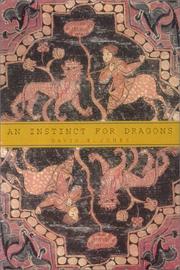 An Instinct for DragonsBy guest
by David E. Jones
“Anthropologist David E. Jones argues in *An Instinct for Dragons* that humans carry primal fear of three predators — large cats, eagles, and snakes — inherited from primate ancestors.”
other
“The Western dragon, standardized visually in the 1260 AD manuscript MS Harley 3244, became synonymous with greed and evil.”
More from Stuff You Should Know
We summarize every new episode. Want them in your inbox?
Selects: Fallout Shelters: Probably Useless (Let’s Never Find Out)
SYSK Gets Weird Playlist: What is Collective Hysteria?
SYSK Gets Weird Playlist: What was the Philadelphia Experiment?
SYSK Gets Weird Playlist: Mermaids: Not a real thing
SYSK Gets Weird Playlist: Will We Find Evidence of Aliens by Their Engineering Projects?
Similar Episodes
Related episodes from other podcasts

Everything Everywhere Daily
Apr 23
Mythical Creatures: Unicorns, Dragons, and Mermaids

Radiolab
Aug 21
Patient Zero

Software Engineering Daily
Jun 18
Biome and the Future of JavaScript Tooling

Odd Lots
May 28
Brendan Greeley on the Real 500-Year History of the Dollar
Everything Everywhere Daily
May 10
Rainbows And How They Work
Explore Related Topics
This podcast is featured in Best Science Podcasts (2026) — ranked and reviewed with AI summaries.
Read this week's Software Engineering Podcast Insights — cross-podcast analysis updated weekly.
You're clearly into Stuff You Should Know.
Every Monday, we deliver AI summaries of the latest episodes from Stuff You Should Know and 192+ other podcasts. Free for one show.
Start My Monday DigestNo credit card · Unsubscribe anytime