Short Stuff: Simple Spelling Movement
Episode
12 min
Read time
2 min
Topics
Fundraising & VC, Leadership, History
AI-Generated Summary
Key Takeaways
- ✓Roosevelt's Failed Mandate: In 1906, Teddy Roosevelt issued an executive order requiring all federal documents to use simplified spellings for 300 specific words. Congress immediately pushed back, passed a bill citing Webster's dictionary as the standard, and Roosevelt withdrew the order before an upcoming election.
- ✓Spelling Bees as English Difficulty Markers: Competitive spelling bees are almost exclusively an English-language phenomenon. Other languages have consistent phonetic rules, making memorization unnecessary. Even countries that hold spelling bees typically run them in English, signaling how irregular English spelling patterns are compared to other languages.
- ✓Organic Simplification Already Happens: English spelling naturally simplifies over centuries without formal boards. Fish was once spelled "fyshe," and American English dropped British spellings like "colour" and "programme" organically. Reformers argue official movements simply accelerate an inevitable process rather than imposing something unnatural.
- ✓Functional Illiteracy Affects 21% of Americans: While 99% of Americans achieve basic literacy, 21%—roughly 71 million people—are functionally illiterate, meaning they struggle with adult tasks like reading tax forms. Reformers like 1970s American Literacy Council chairman Edward Rontheller linked complex English spelling directly to dropout rates and crime.
What It Covers
Josh and Chuck trace the history of English simplified spelling movements, from Teddy Roosevelt's 1906 executive order mandating 300 simplified words in federal documents to modern literacy concerns, revealing why reform attempts repeatedly fail despite logical merit.
Key Questions Answered
- •Roosevelt's Failed Mandate: In 1906, Teddy Roosevelt issued an executive order requiring all federal documents to use simplified spellings for 300 specific words. Congress immediately pushed back, passed a bill citing Webster's dictionary as the standard, and Roosevelt withdrew the order before an upcoming election.
- •Spelling Bees as English Difficulty Markers: Competitive spelling bees are almost exclusively an English-language phenomenon. Other languages have consistent phonetic rules, making memorization unnecessary. Even countries that hold spelling bees typically run them in English, signaling how irregular English spelling patterns are compared to other languages.
- •Organic Simplification Already Happens: English spelling naturally simplifies over centuries without formal boards. Fish was once spelled "fyshe," and American English dropped British spellings like "colour" and "programme" organically. Reformers argue official movements simply accelerate an inevitable process rather than imposing something unnatural.
- •Functional Illiteracy Affects 21% of Americans: While 99% of Americans achieve basic literacy, 21%—roughly 71 million people—are functionally illiterate, meaning they struggle with adult tasks like reading tax forms. Reformers like 1970s American Literacy Council chairman Edward Rontheller linked complex English spelling directly to dropout rates and crime.
Notable Moment
Despite being one of America's most popular presidents with widespread public support, Roosevelt became a target of political cartoons mocking his spelling initiative—depicted unconscious in a boxing ring, knocked out by a personified dictionary.
Episode Transcript
This is an iHeart podcast. Guaranteed human. With no fees or minimums on checking accounts, it's no wonder the Capital One bank guy is so passionate about banking with Capital One. If he were here, he wouldn't just tell you about no fees or minimums. He'd also talk about how most Capital One cafes are open seven days a week to assist with your banking needs. Yep. Even on weekends. It's pretty much all he talks about in a good way. What's in your wallet? Terms apply. See capital1.com/bank. Capital One, n a, member, FDIC. You ever been to the pharmacy counter and your mind goes blank when the pharmacist asks, any questions? Well, that's why you need to listen to Beyond the Script from CVS Pharmacy and iHeartMedia. Hosted by doctor Jake Goodman. Each episode features real conversations with CVS pharmacists, the health experts you see most, breaking down the questions you wish you'd asked, from which meds may not mix well to what vaccines you need before a big trip. They're gonna bust the myths, decode trends, and share practical advice you can actually use. Listen to Beyond the Script on the iHeartRadio app, Apple Podcasts, or wherever you get your podcasts. Hey, and welcome to the Short Stuff. I'm Josh, and there's Chuck, and there's Jerry, and Dave's here in spirit. And this is Short Stuff, which should be spelled exactly like it's spelled right now Yeah. Should another simple spelling movement come along, Chuck. Yeah. Although they may drop an f. Yeah. You're right. Although that could be stuf, but there is no such word as stuf, so I guess it wouldn't be a problem. Yeah. But that's what we're talking about. We're talking about the idea that English is a really tough language to learn and that there have been many movements over the years to simplify things and spell things out a little more phonetically. And back in nineteen o six, none other than Teddy Roosevelt, who was president, got into this idea. And he was a very, very popular president Yeah. Who had some other very famous people on board, at the time as well. Right? Andrew Carnegie, Mark Twain, William James, the father of psychology, an unnamed Supreme Court justice. Basically, a lot of a lot of, thinkers in America came together to basically put their their might behind this what was another progressive movement at the time, and Teddy Roosevelt was an enthusiastic supporter of it. He issued a, what he later called an experiment, a an executive order to the printer of The United States, the official one, and said all federal documents from now on have to be printed using the simplified spelling of these 300 words and gave them a list. And, it ended up not going very well at all. Yeah. I mean, this kinda just goes to show you that you can be super super popular as a public figure or as a even a politician. …
Get the full transcript (2,690 words) + summary by email — free
One-time email with the complete transcript and AI summary of this episode. No account needed.
One email, no spam. We’ll also show you what SignalCast does.

You just read a 3-minute summary of a 9-minute episode.
Get Stuff You Should Know summarized like this every Monday — plus up to 2 more podcasts, free.
Pick Your Podcasts — FreeKeep Reading


Books, tools, and gear mentioned in this episode
SignalCast may earn commission on purchases via these links. As an Amazon Associate, SignalCast earns from qualifying purchases.
Books
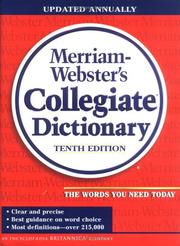
“Congress immediately pushed back, passed a bill citing Webster's dictionary as the standard, and Roosevelt withdrew the order before an upcoming election.”
More from Stuff You Should Know
We summarize every new episode. Want them in your inbox?
Similar Episodes
Related episodes from other podcasts

The Jordan Harbinger Show
Jul 28
1362: Danny Bate | Why English Spelling Is a Beautiful Mess

The Joe Rogan Experience
Feb 26
#2460 - Rachel Wilson

The Daily (NYT)
Sep 18
The Techno-Religion at the Center of the A.I. Debate

Invest Like the Best with Patrick O'Shaughnessy
Sep 16
Michael Moritz - Lessons From 40 Years of Investing and Writing - [Invest Like the Best, EP.491]

Everything Everywhere Daily
Aug 30
The Origin of Words and Phrases: Nautical (Encore)
Explore Related Topics
This podcast is featured in Best Science Podcasts (2026) — ranked and reviewed with AI summaries.
You're clearly into Stuff You Should Know.
Every Monday, we deliver AI summaries of the latest episodes from Stuff You Should Know and 192+ other podcasts. Free for one show.
Start My Monday DigestNo credit card · Unsubscribe anytime