Selects: How Charles Darwin Worked
Episode
50 min
Read time
2 min
Topics
Personal Finance, Software Development, Psychology & Behavior
AI-Generated Summary
Key Takeaways
- ✓Research methodology over speed: Darwin spent forty years studying his property at Down House, leaving one lawn section unmowed for twenty years to observe species competition. Of twenty plant species studied, eleven survived and nine died out, demonstrating natural selection through patient observation. This thoroughness protected his work from the criticism that destroyed similar theories published hastily by others like Robert Chambers in 1844.
- ✓Social standing determines scientific legacy: Alfred Russell Wallace independently developed natural selection theory simultaneously with Darwin and presented jointly at the Linnaean Society in 1858. However, Wallace sold specimens to fund research, marking him as a merchant rather than gentleman scientist. Darwin's aristocratic status and inherited wealth from his grandfather's porcelain fortune gave him credibility that Wallace lacked, demonstrating how class hierarchy shaped scientific recognition regardless of merit.
- ✓Strategic publication timing: Darwin delayed publishing for decades due to anxiety about public reaction, but Wallace's 1858 letter describing identical conclusions forced action. Darwin then condensed his voluminous manuscript over thirteen months, strengthening arguments after witnessing how Vestiges of Natural History of Creation was publicly demolished despite popularity. This defensive preparation proved essential when Origin of Species faced immediate controversy upon 1859 publication.
- ✓Scarcity drives adaptation: Thomas Malthus's Essay on Principle of Population introduced carrying capacity concepts showing how resource scarcity and competition force species adaptation and change. Darwin applied this framework to biology, recognizing that population pressure, not divine intervention, explains why certain traits persist while others disappear. This economic principle became the foundation for understanding natural selection as an ongoing process rather than static creation.
- ✓Compassion predates civilization: Archaeological evidence from 500,000 years ago shows severely disabled individuals living to advanced ages, proving their communities provided care despite inability to contribute. This contradicts social Darwinism's claim that primitive societies abandoned weak members. The fossil record demonstrates compassion as an innate human trait rather than modern cultural development, undermining eugenic arguments that misappropriated Darwin's work for forced sterilization programs.
What It Covers
Charles Darwin's life journey from reluctant medical student to revolutionary naturalist who fundamentally changed humanity's understanding of life on Earth. The episode traces his five-year voyage on HMS Beagle, decades of meticulous research at Down House, and the publication of On the Origin of Species in 1859, which introduced natural selection and sparked an ongoing debate between scientific and religious worldviews.
Key Questions Answered
- •Research methodology over speed: Darwin spent forty years studying his property at Down House, leaving one lawn section unmowed for twenty years to observe species competition. Of twenty plant species studied, eleven survived and nine died out, demonstrating natural selection through patient observation. This thoroughness protected his work from the criticism that destroyed similar theories published hastily by others like Robert Chambers in 1844.
- •Social standing determines scientific legacy: Alfred Russell Wallace independently developed natural selection theory simultaneously with Darwin and presented jointly at the Linnaean Society in 1858. However, Wallace sold specimens to fund research, marking him as a merchant rather than gentleman scientist. Darwin's aristocratic status and inherited wealth from his grandfather's porcelain fortune gave him credibility that Wallace lacked, demonstrating how class hierarchy shaped scientific recognition regardless of merit.
- •Strategic publication timing: Darwin delayed publishing for decades due to anxiety about public reaction, but Wallace's 1858 letter describing identical conclusions forced action. Darwin then condensed his voluminous manuscript over thirteen months, strengthening arguments after witnessing how Vestiges of Natural History of Creation was publicly demolished despite popularity. This defensive preparation proved essential when Origin of Species faced immediate controversy upon 1859 publication.
- •Scarcity drives adaptation: Thomas Malthus's Essay on Principle of Population introduced carrying capacity concepts showing how resource scarcity and competition force species adaptation and change. Darwin applied this framework to biology, recognizing that population pressure, not divine intervention, explains why certain traits persist while others disappear. This economic principle became the foundation for understanding natural selection as an ongoing process rather than static creation.
- •Compassion predates civilization: Archaeological evidence from 500,000 years ago shows severely disabled individuals living to advanced ages, proving their communities provided care despite inability to contribute. This contradicts social Darwinism's claim that primitive societies abandoned weak members. The fossil record demonstrates compassion as an innate human trait rather than modern cultural development, undermining eugenic arguments that misappropriated Darwin's work for forced sterilization programs.
Notable Moment
Darwin married his first cousin Emma Wedgwood, and later became one of the scientists who discovered the genetic problems caused by inbreeding. He worried his research contributed to the early deaths of three of his ten children, creating profound guilt as the man who identified the very phenomenon that may have harmed his own family through his marriage choice.
Episode Transcript
This is an iHeart podcast. Guaranteed human. If you were to try two zero sugar colas with their labels removed and make the decision based on taste alone, do you know which one you'd choose? Well, last year, Pepsi put that to the test for tens of thousands of people across the country in a revival of the iconic Pepsi challenge. And the results were clear. 66% of people preferred the taste of Pepsi zero sugar over Coke zero sugar. That's the idea behind the Pepsi paradox. That when labels and bias disappear, people prefer the taste of Pepsi zero sugar. It really makes you wonder, are you choosing the zero sugar cola that you actually prefer? Or are you settling for the label that you think you prefer? Go out and try Pepsi zero sugar today. You deserve taste. You deserve Pepsi. With no fees or minimums on checking accounts, it's no wonder the Capital One bank guy is so passionate about banking with Capital One. If he were here, he wouldn't just tell you about no fees or minimums. He'd also talk about how most Capital One cafes are open seven days a week to assist with your banking needs. Yep. Even on weekends. It's pretty much all he talks about in a good way. What's in your wallet? Terms apply. See capital1.com/bank. Capital One, n a, member, FDIC. Here's a paradox. We buy insurance for peace of mind, yet the very policies you trust can deliver the biggest financial shocks. Across America, millions of claims are denied every year, not because people did anything wrong, but because their policies quietly excluded the thing that happened. The psychology of trust tells you to assume the contract is fair. But in insurance, the information gap is massive. The insurer knows every detail of what's covered. The policy holder rarely does. And that's where my policy advocate comes in. That's right. For just 27¢ a day, their platform reads your policies and shows you, in plain language, where you're vulnerable. They're not selling insurance. They don't do that. It's about transparency, giving ordinary people the same understanding insurance companies have had for decades. Because when you know what's really in your policy, you can plan, protect, and avoid surprises. So before you trust your policy to protect you, let my policy advocate tell you what it really says. Visit mypolicyadvocate.com today. Peace of mind starts with knowing the truth. Mypolicyadvocate.com. Hi, everyone. Chuck here on a Saturday to introduce this week's Select episode, a curated best of, and this is all about old Chucky Darwin. It's called How Charles Darwin Worked. He's a great person, had a lot of great ideas, and, it was pretty groundbreaking stuff. So I hope you guys enjoy listening to this one either for the first time or all over again. Welcome to Stuff You Should Know, a production of iHeartRadio. Hey, and welcome to the podcast. I'm Josh Clark, and there's Charles w Chuck …
Get the full transcript (10,126 words) + summary by email — free
One-time email with the complete transcript and AI summary of this episode. No account needed.
One email, no spam. We’ll also show you what SignalCast does.

You just read a 3-minute summary of a 47-minute episode.
Get Stuff You Should Know summarized like this every Monday — plus up to 2 more podcasts, free.
Pick Your Podcasts — FreeKeep Reading
More from Stuff You Should Know
Short Stuff: Flappers
Sep 9 · 11 min

ChooseFI
Cognitive Behavioral Tools for FI With Jasper Lee, PhD | Ep 573
Nov 17
More from Stuff You Should Know
Nickelodeon:The Best of Slimes
Sep 8 · 50 min

Sean Carroll's Mindscape
312 | Thomas Levenson on the Mutual History of Humans and Germs
Apr 21
Books, tools, and gear mentioned in this episode
SignalCast may earn commission on purchases via these links. As an Amazon Associate, SignalCast earns from qualifying purchases.
Books
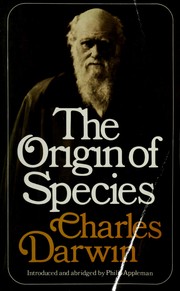 On the Origin of SpeciesBy guest
by Charles Darwin
“the publication of On the Origin of Species in 1859, which introduced natural selection and sparked an ongoing debate between scientific and religious worldviews”

by Robert Chambers
“Darwin then condensed his voluminous manuscript over thirteen months, strengthening arguments after witnessing how Vestiges of Natural History of Creation was publicly demolished despite popularity.”

by Thomas Malthus
“Thomas Malthus's Essay on Principle of Population introduced carrying capacity concepts showing how resource scarcity and competition force species adaptation and change.”
More from Stuff You Should Know
We summarize every new episode. Want them in your inbox?
Similar Episodes
Related episodes from other podcasts

ChooseFI
Nov 17
Cognitive Behavioral Tools for FI With Jasper Lee, PhD | Ep 573

Sean Carroll's Mindscape
Apr 21
312 | Thomas Levenson on the Mutual History of Humans and Germs

Everything Everywhere Daily
Aug 23
The Doctor's Riot of 1788

Huberman Lab
Aug 10
Using AI to Increase Your Intelligence & Enrich Humanity | Dr. Fei-Fei Li
Huberman Lab
Jul 20
Accelerate Learning & Increase Cognitive Capacity | Dr. Tommy Wood
Explore Related Topics
This podcast is featured in Best Science Podcasts (2026) — ranked and reviewed with AI summaries.
Read this week's Software Engineering Podcast Insights — cross-podcast analysis updated weekly.
You're clearly into Stuff You Should Know.
Every Monday, we deliver AI summaries of the latest episodes from Stuff You Should Know and 192+ other podcasts. Free for one show.
Start My Monday DigestNo credit card · Unsubscribe anytime