Let's Go to Camp... David!
Episode
43 min
Read time
2 min
Topics
Science & Discovery, History
AI-Generated Summary
Key Takeaways
- ✓Origins and transformation: Camp David began as a federally purchased 10,000-acre tract of depleted agricultural land in 1936, rehabilitated under the Works Progress Administration. FDR converted one camp within it — originally called Camp Hi-Catoctin — into a presidential retreat in 1942, renaming it Shangri-La after James Hilton's novel about a Himalayan utopia.
- ✓Naming and infrastructure evolution: Eisenhower renamed Shangri-La to Camp David in 1953 after his five-year-old grandson, added a helicopter pad cutting travel time from 55 miles to 30 minutes, installed a one-hole golf course with multiple tee boxes, a bowling alley, and a movie screening room — establishing the template for all future presidential amenities.
- ✓Nuclear preparedness beneath the pool: A presidential relocation facility — a hardened underground bunker capable of housing 50 to 150 defense personnel — was built during Eisenhower's tenure. Nixon later constructed a figure-eight heated swimming pool directly above it, requiring $260,000 in early-1970s dollars to reinforce the shelter's structure to bear the pool's weight.
- ✓Camp David Accords mechanics: Jimmy Carter hosted Israeli Prime Minister Menachem Begin and Egyptian President Anwar Sadat for 13 consecutive days in 1978. Carter deliberately used the smaller Holly Lodge for initial meetings to create intimacy, and the physical isolation prevented either leader from departing during tense moments — a deliberate diplomatic strategy that produced the most significant Arab-Israeli agreement ever reached.
- ✓Naval operational structure: Camp David operates as Naval Support Facility Thurmont, staffed by Navy Seabees on 36-month tours filling roles including cook, hairdresser, horse instructor, and lifeguard. Marines from the 8th and I Street Barracks handle perimeter security on 18-month tours. All personnel hold Yankee White clearance, the most thorough background investigation performed for anyone working near the president.
What It Covers
Camp David, the presidential retreat in Maryland's Catoctin Mountains, traces its history from a 1936 New Deal land rehabilitation project through FDR's wartime refuge, Eisenhower's renaming, and decades of diplomatic summits — including the 1978 Carter-Begin-Sadat peace negotiations — to its current operational structure run by the Navy.
Key Questions Answered
- •Origins and transformation: Camp David began as a federally purchased 10,000-acre tract of depleted agricultural land in 1936, rehabilitated under the Works Progress Administration. FDR converted one camp within it — originally called Camp Hi-Catoctin — into a presidential retreat in 1942, renaming it Shangri-La after James Hilton's novel about a Himalayan utopia.
- •Naming and infrastructure evolution: Eisenhower renamed Shangri-La to Camp David in 1953 after his five-year-old grandson, added a helicopter pad cutting travel time from 55 miles to 30 minutes, installed a one-hole golf course with multiple tee boxes, a bowling alley, and a movie screening room — establishing the template for all future presidential amenities.
- •Nuclear preparedness beneath the pool: A presidential relocation facility — a hardened underground bunker capable of housing 50 to 150 defense personnel — was built during Eisenhower's tenure. Nixon later constructed a figure-eight heated swimming pool directly above it, requiring $260,000 in early-1970s dollars to reinforce the shelter's structure to bear the pool's weight.
- •Camp David Accords mechanics: Jimmy Carter hosted Israeli Prime Minister Menachem Begin and Egyptian President Anwar Sadat for 13 consecutive days in 1978. Carter deliberately used the smaller Holly Lodge for initial meetings to create intimacy, and the physical isolation prevented either leader from departing during tense moments — a deliberate diplomatic strategy that produced the most significant Arab-Israeli agreement ever reached.
- •Naval operational structure: Camp David operates as Naval Support Facility Thurmont, staffed by Navy Seabees on 36-month tours filling roles including cook, hairdresser, horse instructor, and lifeguard. Marines from the 8th and I Street Barracks handle perimeter security on 18-month tours. All personnel hold Yankee White clearance, the most thorough background investigation performed for anyone working near the president.
Notable Moment
During Khrushchev's 1959 visit, workers were actively excavating the underground bomb shelter on-site. To conceal the construction, crews built a temporary deck over the excavation pit that appeared permanent — and Khrushchev was photographed standing and waving on top of it, unaware of what lay directly beneath him.
Episode Transcript
This is an iHeart podcast. Guaranteed human. You ever been to the pharmacy counter and your mind goes blank when the pharmacist asks? Any questions? Well, that's why you need to listen to Beyond the Script from CVS Pharmacy and iHeartMedia hosted by doctor Jake Goodman, each episode features real conversations with CVS pharmacists, the health experts you see most, breaking down the questions you wish you'd asked, from which meds may not mix well to what vaccines you need before a big trip. They're gonna bust the myths, decode trends, and share practical advice you can actually use. Listen to Beyond the Script on the iHeartRadio app, Apple Podcasts, or wherever you get your podcasts. With no fees or minimums on checking accounts, it's no wonder the Capital One bank guy is so passionate about banking with Capital One. In a good way. What in a good way. What's in your wallet? Terms apply. See capital1.com/bankguy. Capital One, n a, member, f d I c. Stuff you should know is brought to you by Grainger. Grainger knows that if you're an HVAC technician and a call comes in, you need a partner that helps you find the right product, fast and hassle free. And you know that when the first problem of the day is a clanking blower motor, there's no need to break a sweat. With Grainger's easy to use website and product details, you can be confident that soon you'll have everything humming right along. Call 1800, click grainger.com, or just stop by. Granger, for the ones who get it done. Welcome to Stuff You Should Know, a production of iHeartRadio. Hey, and welcome to the podcast. I'm Josh, and there's Chuck, and Jerry's here too. And this is Stuff You Should Know about Camp David. That's right. It's about Camp David, but we're going to quickly mention, that we are going on a cruise, everybody, a Virgin cruise. Mhmm. The voyage is the Big Apple to Bermuda. Yeah. And it is an adults only cruise wherein you can cruise with us, hear our live podcast, hear stuff they don't want you to know and some of our other colleagues' live podcast Mhmm. And hang out with us and do there's, like, other events on board. It's gonna be a lot of fun. Yeah. It's gonna be a huge amount of fun. I think you just go to virginvoyages.com or you search stuff at sea, and, it will take you where you need to go to register for this cruise. That's right. October. That is correct. And, I'm already working on my tan and trying to drop a couple of pounds Mhmm. What else? To make to make sure I'm seaworthy. That's about it. Are you practicing shuffleboard? Practicing shuffleboard, and and cards. How many hats will you be bringing? In all seriousness, I will definitely bring my smaller kind of cool straw hat and probably my big, big sunshade straw hat. Okay. Good. And maybe maybe …
Get the full transcript (9,091 words) + summary by email — free
One-time email with the complete transcript and AI summary of this episode. No account needed.
One email, no spam. We’ll also show you what SignalCast does.

You just read a 3-minute summary of a 40-minute episode.
Get Stuff You Should Know summarized like this every Monday — plus up to 2 more podcasts, free.
Pick Your Podcasts — FreeKeep Reading


Books, tools, and gear mentioned in this episode
SignalCast may earn commission on purchases via these links. As an Amazon Associate, SignalCast earns from qualifying purchases.
Books
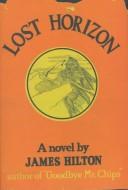
by James Hilton
“FDR converted one camp within it — originally called Camp Hi-Catoctin — into a presidential retreat in 1942, renaming it Shangri-La after James Hilton's novel about a Himalayan utopia.”
More from Stuff You Should Know
We summarize every new episode. Want them in your inbox?
Short Stuff: Mabon
Our Big Fat Dream Episode
Selects: Fallout Shelters: Probably Useless (Let’s Never Find Out)
SYSK Gets Weird Playlist: What is Collective Hysteria?
SYSK Gets Weird Playlist: What was the Philadelphia Experiment?
Similar Episodes
Related episodes from other podcasts

Everything Everywhere Daily
Sep 2
Watergate

The Vergecast
Jun 19
Version History: Harmony remote

The Daily (NYT)
Jun 4
How Trump Was Persuaded to Regulate A.I.

David Senra
Apr 26
David Baszucki, Roblox

All-In with Chamath, Jason, Sacks & Friedberg
Mar 27
Anthropic's Generational Run, OpenAI Panics, AI Moats, Meta Loses Lawsuits
Explore Related Topics
This podcast is featured in Best Science Podcasts (2026) — ranked and reviewed with AI summaries.
You're clearly into Stuff You Should Know.
Every Monday, we deliver AI summaries of the latest episodes from Stuff You Should Know and 192+ other podcasts. Free for one show.
Start My Monday DigestNo credit card · Unsubscribe anytime