Episode 820 | When to Quit Your Day Job, A.I. Feasibility Risk, and More Listener Questions (Rob Solo)
Episode
32 min
Read time
2 min
Topics
Career Growth, Investing, Startups
AI-Generated Summary
Key Takeaways
- ✓Emotional Runway Framework: Bootstrap companies fail when founders run out of motivation, not money. Funded companies fail when they run out of cash. Emotional runway depletes faster during nights-and-weekends grinding and replenishes with traction milestones. Balance financial runway, emotional runway, and risk tolerance when deciding whether to raise funding to quit day jobs faster versus continuing slow capital-efficient growth.
- ✓Late Cofounder Equity Calculation: Someone joining a two-year-old bootstrapped startup should not receive cofounder-level equity. Call them founding engineer or founding employee instead. If the company generates 10k monthly recurring revenue, offer 10-25% equity with four-year vesting and one-year cliff. At 25-50k MRR, reduce to 3-10% range because significant derisking has occurred and the business holds substantial value.
- ✓AI Feasibility Risk Assessment: AI introduces technology risk back into SaaS development because tools overpromise capabilities. Before committing to AI-powered products, build proof-of-concept implementations in a weekend using ChatGPT or similar tools. Train a single GPT to validate core functionality works before hiring developers or investing significant time, following the EMS Soap founder's approach of proving transcription accuracy first.
- ✓Cheapium Plan Strategy: Keep low-priced high-churn plans only if customers upgrade from them to higher tiers. A plan representing 15% of revenue with 1.5x higher churn should be eliminated unless it feeds the upgrade funnel. High-churn plans demoralize teams, inflate overall churn metrics, and reduce company valuation during fundraising or acquisition. Exclude these plans from core metrics if retained.
- ✓TinySeed Application Criteria: TinySeed accepts B2B SaaS founders generating minimum 500 dollars monthly recurring revenue. The accelerator provides funding sized for mostly-bootstrapped startups, access to 325 funded bootstrap founders, world-class SaaS mentors, and guidance to reach next growth stage faster. Applications close on the recording date, targeting founders feeling resource-constrained or isolated on their journey.
What It Covers
Rob Walling answers listener questions about timing day job exits for startup founders with early traction, calculating equity splits for late-joining cofounders in bootstrapped companies, evaluating AI feasibility risk as a new dimension of technology risk, and treating low-priced high-churn plans as marketing channels versus eliminating them entirely.
Key Questions Answered
- •Emotional Runway Framework: Bootstrap companies fail when founders run out of motivation, not money. Funded companies fail when they run out of cash. Emotional runway depletes faster during nights-and-weekends grinding and replenishes with traction milestones. Balance financial runway, emotional runway, and risk tolerance when deciding whether to raise funding to quit day jobs faster versus continuing slow capital-efficient growth.
- •Late Cofounder Equity Calculation: Someone joining a two-year-old bootstrapped startup should not receive cofounder-level equity. Call them founding engineer or founding employee instead. If the company generates 10k monthly recurring revenue, offer 10-25% equity with four-year vesting and one-year cliff. At 25-50k MRR, reduce to 3-10% range because significant derisking has occurred and the business holds substantial value.
- •AI Feasibility Risk Assessment: AI introduces technology risk back into SaaS development because tools overpromise capabilities. Before committing to AI-powered products, build proof-of-concept implementations in a weekend using ChatGPT or similar tools. Train a single GPT to validate core functionality works before hiring developers or investing significant time, following the EMS Soap founder's approach of proving transcription accuracy first.
- •Cheapium Plan Strategy: Keep low-priced high-churn plans only if customers upgrade from them to higher tiers. A plan representing 15% of revenue with 1.5x higher churn should be eliminated unless it feeds the upgrade funnel. High-churn plans demoralize teams, inflate overall churn metrics, and reduce company valuation during fundraising or acquisition. Exclude these plans from core metrics if retained.
- •TinySeed Application Criteria: TinySeed accepts B2B SaaS founders generating minimum 500 dollars monthly recurring revenue. The accelerator provides funding sized for mostly-bootstrapped startups, access to 325 funded bootstrap founders, world-class SaaS mentors, and guidance to reach next growth stage faster. Applications close on the recording date, targeting founders feeling resource-constrained or isolated on their journey.
Notable Moment
Rob references Bill Perkins' Die With Zero concept that humans have two lives, and the second begins when realizing they only have one. This reframes the funding decision: spending years grinding nights and weekends versus selling 10-12% equity to accelerate full-time focus. Rob states he would bet on himself and choose speed over prolonged capital efficiency.
Episode Transcript
Hiring engineers right now is noisy. You post a role and get flooded with AI polished resumes from people who've never actually shipped anything. G two I cuts through all of that. They've pre vetted over 8,000 engineers, all with over five years of experience, and they do live technical interviews with real humans checking for real skills. There's no time wasters, no guesswork, just candidates who can actually get the job done. Meta trust them, Microsoft trust them, and so do bootstrap founders who need to move fast without making expensive mistakes. Check them out at g2i.co/rob. Get a seven day free trial and $1,500 off when you mention start up for the rest of us. That's g2i.co/rob. So if you can nights and weekends for the next couple years and get to the point where you're supporting yours both you and your cofounder full time, or you could sell 10% of your company, 12% of your company now, and you can get there way faster. And whether that means you're going to friends and family or to angels or through an accelerator, I know which bet I would take. I would bet on myself, and I'd want to get there faster. Welcome back to another episode of Startups for the Rest of Us. I'm your host, Rob Walling. In this episode, I answer your listener questions on topics ranging from when do we leave our day jobs for our startup, questions about cofounders and late joining cofounders, how all that works, as well as a question about how AI might be impacting the viability of startups. And, of course, I'll cover another question or two depending on time. Before I dive into that, TinySeed applications close today. As a reminder, Tiny Seed is one of the best b to b SaaS accelerators in the world. It's at tinyseed.com slash apply if you are a SaaS founder doing at least $500 of MRR. We offer the right amount of funding for mostly bootstrapped startups. We have an incredible roster of world class SaaS mentors. We offer community with 325 other ambitious funded bootstrapped SaaS founders, and we offer advice and guidance to get you to that next stage much, much faster. If you've ever felt alone on the journey or like you just don't have enough resources to move as fast as you'd like and you're looking for some guidance and community, head to tinyc.com/apply. And with that, let's dive into my first listener question. Hey, Rob. I'm Glenn. I'm the founder of ten twenty I o. We're a b to b SaaS that targets, first responders. We provide location sharing between agencies. We launched in January. We're growing quickly. We have 15, police and fire departments across two states currently using our platform. We do have revenue coming in, but it's not enough for my founder and I to leave our full time day to day jobs, which we're dying to do. We're so committed to our new …
Get the full transcript (6,473 words) + summary by email — free
One-time email with the complete transcript and AI summary of this episode. No account needed.
One email, no spam. We’ll also show you what SignalCast does.

You just read a 3-minute summary of a 29-minute episode.
Get Startups For the Rest of Us summarized like this every Monday — plus up to 2 more podcasts, free.
Pick Your Podcasts — FreeKeep Reading
More from Startups For the Rest of Us
Episode 855 | The Eight SaaS Moats that Still Work in the Age of AI
Oct 20 · 60 min

This Week in Startups
How to Raise a Seed Round in 2026: Ask Jason | E2294
May 29
More from Startups For the Rest of Us
Episode 854 | How to Find Startup Ideas (Sneak Peek Chapter from My New Book)
Oct 13 · 23 min

The Prof G Pod
Is Homeownership Still Worth It? + Why Work-Life Balance Is a Myth
May 11
Books, tools, and gear mentioned in this episode
SignalCast may earn commission on purchases via these links. As an Amazon Associate, SignalCast earns from qualifying purchases.
Books
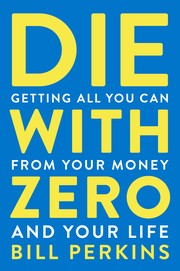 Die With ZeroRecommended
by Bill Perkins
“Rob references Bill Perkins' Die With Zero concept that humans have two lives, and the second begins when realizing they only have one.”
Tools
- ChatGPTRecommended
by OpenAI
“Before committing to AI-powered products, build proof-of-concept implementations in a weekend using ChatGPT or similar tools.”
company
- TinySeedRecommended
“TinySeed accepts B2B SaaS founders generating minimum 500 dollars monthly recurring revenue. The accelerator provides funding sized for mostly-bootstrapped startups, access to 325 funded bootstrap founders, world-class SaaS mentors, and guidance to reach next growth stage faster.”
More from Startups For the Rest of Us
We summarize every new episode. Want them in your inbox?
Episode 855 | The Eight SaaS Moats that Still Work in the Age of AI
Episode 854 | How to Find Startup Ideas (Sneak Peek Chapter from My New Book)
Episode 853 | How to Become the SaaS That AI Recommends
Episode 852 | Getting Big Name Customer Case Studies and More Listener Questions (with Ruben Gamez)
Episode 851 | The Messy Middle of a SaaS Pivot
Similar Episodes
Related episodes from other podcasts

This Week in Startups
May 29
How to Raise a Seed Round in 2026: Ask Jason | E2294

The Prof G Pod
May 11
Is Homeownership Still Worth It? + Why Work-Life Balance Is a Myth
The Prof G Pod
Mar 9
Does Wealth Make You Selfish?, How Scott Stays Informed, and Negotiating Equity Deals
The Prof G Pod
Dec 8
How Introverts Can Succeed in Business, Navigating Class Differences, and Employee Equity

Everything Everywhere Daily
Oct 1
Questions and Answers: Volume 46
Explore Related Topics
This podcast is featured in Best Startup Podcasts (2026) — ranked and reviewed with AI summaries.
Read this week's Investing & Markets Podcast Insights — cross-podcast analysis updated weekly.
You're clearly into Startups For the Rest of Us.
Every Monday, we deliver AI summaries of the latest episodes from Startups For the Rest of Us and 192+ other podcasts. Free for one show.
Start My Monday DigestNo credit card · Unsubscribe anytime