The Limits of Knowing with Elise Crull
Episode
59 min
Read time
2 min
Topics
Investing, Fundraising & VC, Software Development
AI-Generated Summary
Key Takeaways
- ✓Historical Integration: Newton's Principia began with philosophical arguments for absolute space and time before deriving laws of motion. Einstein credited philosophical questioning of simultaneity concepts, not mathematical physics alone, as enabling his breakthrough to special relativity theory.
- ✓Measurement Problem: Quantum mechanics fundamentally challenges objectivity because observers cannot separate themselves from quantum systems being measured. Unlike classical physics where interaction effects can be removed mathematically, quantum measurement irreversibly alters the system, creating the core interpretational challenge physicists face.
- ✓Entanglement Non-Locality: When quantum particles interact and separate, measuring one particle's property instantaneously determines the other's state without communication between them. This correlation exceeds statistical randomness and cannot be explained classically, representing a genuinely new type of physical interaction requiring philosophical frameworks.
- ✓Academic Separation: Post-Manhattan Project, physics became hyper-specialized and pragmatic for national security, creating impermeable disciplinary borders. James Conant at Harvard fought to maintain philosophy of science requirements for physics students, recognizing that conceptual reevaluation drives breakthrough discoveries at physics frontiers.
What It Covers
Neil deGrasse Tyson and philosopher Elise Crull examine how philosophy and physics historically intertwined, why they separated in the twentieth century, and how philosophical thinking remains essential for advancing quantum mechanics and fundamental physics today.
Key Questions Answered
- •Historical Integration: Newton's Principia began with philosophical arguments for absolute space and time before deriving laws of motion. Einstein credited philosophical questioning of simultaneity concepts, not mathematical physics alone, as enabling his breakthrough to special relativity theory.
- •Measurement Problem: Quantum mechanics fundamentally challenges objectivity because observers cannot separate themselves from quantum systems being measured. Unlike classical physics where interaction effects can be removed mathematically, quantum measurement irreversibly alters the system, creating the core interpretational challenge physicists face.
- •Entanglement Non-Locality: When quantum particles interact and separate, measuring one particle's property instantaneously determines the other's state without communication between them. This correlation exceeds statistical randomness and cannot be explained classically, representing a genuinely new type of physical interaction requiring philosophical frameworks.
- •Academic Separation: Post-Manhattan Project, physics became hyper-specialized and pragmatic for national security, creating impermeable disciplinary borders. James Conant at Harvard fought to maintain philosophy of science requirements for physics students, recognizing that conceptual reevaluation drives breakthrough discoveries at physics frontiers.
Notable Moment
Crull reveals that four recent Nobel Prize winners in physics, gathered at the quantum mechanics centennial conference, could not agree on stage about what non-locality actually means regarding physical reality, demonstrating how foundational questions remain unresolved.
No transcript yet — request it by email, free
We'll transcribe this episode on request and email you the full transcript and AI summary — usually within a day. No account needed.
One email, no spam. We’ll also show you what SignalCast does.

You just read a 3-minute summary of a 56-minute episode.
Get StarTalk Radio summarized like this every Monday — plus up to 2 more podcasts, free.
Pick Your Podcasts — FreeKeep Reading
More from StarTalk Radio
Exploring Hidden Dimensions with Brian Greene
Mar 31 · 117 min

The Diary of a CEO
Most Replayed Moment: Neil deGrasse Tyson On The Future Of Humanity! Will We Ever Go To Mars?
May 1
More from StarTalk Radio
Things You Thought You Knew – Sonic BOOM!
Mar 24 · 40 min
The Diary of a CEO
Neil deGrasse Tyson On Aliens, Simulation Theory, and What Happens Inside A Black Hole
Jul 9
Books, tools, and gear mentioned in this episode
SignalCast may earn commission on purchases via these links. As an Amazon Associate, SignalCast earns from qualifying purchases.
Books
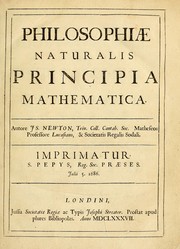 PrincipiaBy guest
by Isaac Newton
“Newton's Principia began with philosophical arguments for absolute space and time before deriving laws of motion.”
More from StarTalk Radio
We summarize every new episode. Want them in your inbox?
Exploring Hidden Dimensions with Brian Greene
Things You Thought You Knew – Sonic BOOM!
Our Burning Questions – Simulation Debate
Dark Universe Decoded with Katherine Freese
True Crime & Forensic Pathology with Patricia Cornwell & Dr. Jonathan Hayes
Similar Episodes
Related episodes from other podcasts

The Diary of a CEO
May 1
Most Replayed Moment: Neil deGrasse Tyson On The Future Of Humanity! Will We Ever Go To Mars?
The Diary of a CEO
Jul 9
Neil deGrasse Tyson On Aliens, Simulation Theory, and What Happens Inside A Black Hole

Stuff You Should Know
Jun 19
How Big Bang Theory Works, with Neil deGrasse Tyson
The Diary of a CEO
Oct 13
Neil deGrasse Tyson: The Brutal Truth About Astrology! Our Breath Contains Molecules Jesus Inhaled!

Odd Lots
Aug 20
Nick Bostrom on What Happens if AI Solves All of Our Problems
Explore Related Topics
This podcast is featured in Best Science Podcasts (2026) — ranked and reviewed with AI summaries.
Read this week's Investing & Markets Podcast Insights — cross-podcast analysis updated weekly.
You're clearly into StarTalk Radio.
Every Monday, we deliver AI summaries of the latest episodes from StarTalk Radio and 192+ other podcasts. Free for one show.
Start My Monday DigestNo credit card · Unsubscribe anytime