1941: Ask Farnoosh: My Best Home Buying Advice, Investing for a "Mid-Term" Goal
Episode
39 min
Read time
2 min
Topics
Productivity, Personal Finance, Relationships
AI-Generated Summary
Key Takeaways
- ✓Mid-term goal investing: For goals 5-10 years out without specific purpose, create a flexible TBD bucket with 50% stocks and 50% bonds allocation, or use laddered five-year CDs. This middle-ground approach provides more growth than liquid savings while maintaining less risk than retirement accounts. Automatically contribute monthly and reassess allocation annually as goals clarify or life circumstances change.
- ✓Business owner retirement strategy: Entrepreneurs running businesses with employees and overhead must invest outside their company despite viewing the business as their retirement plan. The business represents concentrated high risk, requiring diversification through stock market investments with conservative allocations like 50% stocks and 50% bonds. Calculate stock percentage using 110 minus your age formula to balance business risk with portfolio stability.
- ✓Emergency fund structure: Maintain four to six months of fixed living expenses in an accessible account, prioritizing liquidity over yield. With January 2026 layoffs at 108,000 (highest since 2009) and cooling job market affecting consumer confidence and wage growth, this cushion becomes essential. Accessibility matters more than high-yield returns for emergency savings during economic uncertainty.
- ✓Family planning finances: Focus financial preparation on the first year only rather than long-term projections. Research company paid leave policies for both partners, then calculate childcare costs (currently $30-40 per hour for NYC nannies). Build financial cushions for gaps in childcare arrangements, daycare waitlists, and unexpected changes. Simultaneously negotiate work flexibility now to establish time freedom before the baby arrives.
- ✓Home buying mindset: Remove forever home pressure from purchase decisions, recognizing life changes will inform when to move. Before browsing listings, clarify motivations: seeking predictability, building equity, and control versus valuing flexibility and avoiding maintenance responsibility. Talk to lenders early to understand true borrowing power, required down payment, and resolve credit issues before falling in love with properties you cannot afford.
What It Covers
Farnoosh Torabi addresses listener questions about home buying strategy in 2026, investing for mid-term goals without defined timelines, balancing business ownership with retirement investing, and financial preparation for starting a family. She also covers current market conditions including Bitcoin's 50% decline and January 2026 layoffs reaching highest levels since 2009.
Key Questions Answered
- •Mid-term goal investing: For goals 5-10 years out without specific purpose, create a flexible TBD bucket with 50% stocks and 50% bonds allocation, or use laddered five-year CDs. This middle-ground approach provides more growth than liquid savings while maintaining less risk than retirement accounts. Automatically contribute monthly and reassess allocation annually as goals clarify or life circumstances change.
- •Business owner retirement strategy: Entrepreneurs running businesses with employees and overhead must invest outside their company despite viewing the business as their retirement plan. The business represents concentrated high risk, requiring diversification through stock market investments with conservative allocations like 50% stocks and 50% bonds. Calculate stock percentage using 110 minus your age formula to balance business risk with portfolio stability.
- •Emergency fund structure: Maintain four to six months of fixed living expenses in an accessible account, prioritizing liquidity over yield. With January 2026 layoffs at 108,000 (highest since 2009) and cooling job market affecting consumer confidence and wage growth, this cushion becomes essential. Accessibility matters more than high-yield returns for emergency savings during economic uncertainty.
- •Family planning finances: Focus financial preparation on the first year only rather than long-term projections. Research company paid leave policies for both partners, then calculate childcare costs (currently $30-40 per hour for NYC nannies). Build financial cushions for gaps in childcare arrangements, daycare waitlists, and unexpected changes. Simultaneously negotiate work flexibility now to establish time freedom before the baby arrives.
- •Home buying mindset: Remove forever home pressure from purchase decisions, recognizing life changes will inform when to move. Before browsing listings, clarify motivations: seeking predictability, building equity, and control versus valuing flexibility and avoiding maintenance responsibility. Talk to lenders early to understand true borrowing power, required down payment, and resolve credit issues before falling in love with properties you cannot afford.
Notable Moment
Torabi shares how her son's ADHD diagnosis and private school rejection became the catalyst for leaving Brooklyn after years of attachment to city life. Rather than viewing the move as failure, she reframed it using Marie Kondo's philosophy of honoring what served her well while recognizing when circumstances require change, ultimately finding better quality of life and financial relief.
Episode Transcript
Hey. It's Cole Swindell. And when I spend two hundred days a year rolling down the highway, the bus can start to feel smaller than a guitar case. Everyone wonders how I stay chill while the hours crawl by. Truth is, one good luck spent on Chumba, and suddenly the trip goes a whole lot shorter. Finding your space even when there isn't much to spare. Need some chill? Let's Chumba. No purchase necessary. BGW Group void we're prohibited by law. 21 plus TNC supply. Sponsored by Chumba Casino. Hey. It's Cole Swindell. After I give everything I've got to land a perfect vocal, I usually take five before jumping into the next track, and I've learned exactly how to recharge in that time. Some folks grab coffee. I hit a quick good luck spin. Next thing you know, the break is just as fun as laying down the track. A better break makes for a better take. Need a break? Less chumba. No purchase necessary. BGW Group void were prohibited by law. 21 plus TNC supply. Apply. Sponsored by Chumba Casino. Well, the holidays have come and gone once again. But if you've forgotten to get that special someone in your life a gift, well, Mint Mobile is extending their holiday offer of half off unlimited wireless. So here's the idea. You get it now. You call it an early present for next year. What do you have to lose? Give it a try at mint mobile dot com slash switch. Limited time, 50% off regular price for new customers. Upfront payment required, $45 for three months, $90 for six months, or $180 for twelve month plan. Taxes and fees extra. Speeds me slow after 50 gigabytes per month when network is busy. See terms. So Money episode nineteen forty one, ask Farnoosh. You're listening to So Money with award winning money guru, Farnoosh Narabe. Each day, get a thirty minute dose of financial inspiration from the world's top business minds, authors, influencers, and from Farnoosh yourself. Looking for ways to save on gas or double your double coupons? Sorry. You're in the wrong place, seeking profound ways to live a richer, happier life. Welcome to So Money. Welcome to So Money, everybody. I'm Farnoosh Tarabi. It's Friday, February 6, and we're coming to you on Super Bowl weekend. One of the biggest cultural moments in our country is about to happen this Sunday with Super Bowl sixty kicking off in Santa Clara, California, not far from where my parents live. Fans around the world are gonna catch the Seattle Seahawks and the New England Patriots battle it out for the Vince Lombardi trophy. Bad Bunny will be playing the halftime show, a historic performance and coming off his big Grammy win. It's no doubt gonna be quite quite the week for Bad Bunny. Right? Like, I think I had a good week too. I got out of the house. I went to the city. Someone recognized me from …
Get the full transcript (7,975 words) + summary by email — free
One-time email with the complete transcript and AI summary of this episode. No account needed.
One email, no spam. We’ll also show you what SignalCast does.

You just read a 3-minute summary of a 36-minute episode.
Get So Money with Farnoosh Torabi summarized like this every Monday — plus up to 2 more podcasts, free.
Pick Your Podcasts — FreeKeep Reading
More from So Money with Farnoosh Torabi
2033: How to Build a Forever Paycheck in Retirement
Sep 9 · 33 min

The Prof G Pod
Do Ivy League Degrees Actually Matter? Plus, When to Rent vs. Buy
Jul 29
More from So Money with Farnoosh Torabi
2032: How to Get Rich Without Leaving Your Parents Behind
Sep 7 · 33 min

The Vergecast
The Vergecast Vergecast, 2026 edition
Apr 21
Books, tools, and gear mentioned in this episode
SignalCast may earn commission on purchases via these links. As an Amazon Associate, SignalCast earns from qualifying purchases.
Books
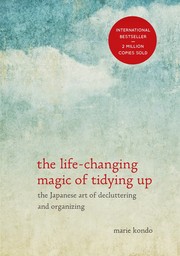
by Marie Kondo
“she reframed it using Marie Kondo's philosophy of honoring what served her well while recognizing when circumstances require change”
More from So Money with Farnoosh Torabi
We summarize every new episode. Want them in your inbox?
2033: How to Build a Forever Paycheck in Retirement
2032: How to Get Rich Without Leaving Your Parents Behind
2031: Ask Farnoosh: Leave More Money to the Child Who Needs It Most? Plus: COBRA, Life Insurance & Inherited 401(k)s
2030: How to Get Rich: 300 Years of Money Lessons
2029: The Bond Market Explained: What It Means For Your Money
Similar Episodes
Related episodes from other podcasts

The Prof G Pod
Jul 29
Do Ivy League Degrees Actually Matter? Plus, When to Rent vs. Buy

The Vergecast
Apr 21
The Vergecast Vergecast, 2026 edition

ChooseFI
Oct 27
State of the Stock Market 2025 Q&A with Brian Feroldi | Ep 570
The Prof G Pod
Sep 2
The Relationship Habit That Makes You Unhappy + Living Far From Aging Parents
The Prof G Pod
Aug 17
Is SpaceX Overvalued? + What to Do When You're Not Getting Promoted
Explore Related Topics
This podcast is featured in Best Finance Podcasts (2026) — ranked and reviewed with AI summaries.
You're clearly into So Money with Farnoosh Torabi.
Every Monday, we deliver AI summaries of the latest episodes from So Money with Farnoosh Torabi and 192+ other podcasts. Free for one show.
Start My Monday DigestNo credit card · Unsubscribe anytime