3475: [Part 1] 5 Steps To Learn To Spend In Retirement by Fritz Gilbert of The Retirement Manifesto
Episode
10 min
Read time
2 min
Topics
Personal Finance, Investing, Fundraising & VC
AI-Generated Summary
Key Takeaways
- ✓Chrometophobia Framework: Habitual savers who averaged 20%+ savings rates during working years frequently struggle to spend in retirement. Recognizing this condition by name is the first step toward consciously dismantling the accumulation mindset that no longer serves a post-retirement financial strategy.
- ✓Redefining the "Why": Retirement requires explicitly updating your financial purpose. The goal shifts from growing net worth to funding active years while avoiding depletion. Writing down this new why creates the psychological permission structure needed to authorize guilt-free discretionary spending.
- ✓Die With Zero Principle: Bill Perkins argues that unspent wealth at death represents unlived experiences. Rather than leaving large inheritances to middle-aged children, transferring assets earlier maximizes impact during recipients' formative financial years when the money carries greater life-changing weight.
- ✓Flexible Spending Architecture: Retirees successfully drawing down portfolios keep fixed costs low and concentrate discretionary spending in easily reducible categories like travel. This structure allows full enjoyment of retirement while preserving a concrete, low-friction mechanism to cut spending if portfolio conditions require it.
What It Covers
Fritz Gilbert of The Retirement Manifesto addresses chrometophobia—the fear of spending money—which causes diligent savers to underspend in retirement after decades of accumulation, and introduces a five-step framework for shifting that mindset.
Key Questions Answered
- •Chrometophobia Framework: Habitual savers who averaged 20%+ savings rates during working years frequently struggle to spend in retirement. Recognizing this condition by name is the first step toward consciously dismantling the accumulation mindset that no longer serves a post-retirement financial strategy.
- •Redefining the "Why": Retirement requires explicitly updating your financial purpose. The goal shifts from growing net worth to funding active years while avoiding depletion. Writing down this new why creates the psychological permission structure needed to authorize guilt-free discretionary spending.
- •Die With Zero Principle: Bill Perkins argues that unspent wealth at death represents unlived experiences. Rather than leaving large inheritances to middle-aged children, transferring assets earlier maximizes impact during recipients' formative financial years when the money carries greater life-changing weight.
- •Flexible Spending Architecture: Retirees successfully drawing down portfolios keep fixed costs low and concentrate discretionary spending in easily reducible categories like travel. This structure allows full enjoyment of retirement while preserving a concrete, low-friction mechanism to cut spending if portfolio conditions require it.
Notable Moment
After losing his father, Gilbert reframed retirement spending as urgency rather than indulgence—recognizing that the window of physically active retirement years is finite and that delaying enjoyment carries its own irreversible cost.
Episode Transcript
Starting a business means juggling a lot, and not just what customers see. There's operating agreements, compliance filings, and legal paperwork that all make up your business identity. That's a lot to manage on your own. Start your business with Northwest Registered Agent. They help you get more for your business, more privacy, more guidance, and more resources. Northwest has been helping small business owners launch and grow their businesses for nearly thirty years. They're the largest registered agent and LLC service in The US, with over 1,500 corporate guides, real people who know your local laws and can help you every step of the way. With Northwest, privacy is automatic. They never sell your data, and they give you free tools like operating agreements, meeting minutes, and thousands of how to guides. Don't wait. Protect your privacy, build your brand, and get your complete business identity in just 10 clicks and ten minutes. Visit northwestregisteredagent.com/ofdfree and start building something amazing. Get more with Northwest Registered Agent at northwestregisteredagent.com/ofdfree. This is Optimal Finance Daily, five steps to learn to spend in retirement, part one, by Fritz Gilbert of the retirementmanifesto.com. There's a common problem that hits many people in retirement. After years of saving in order to achieve their retirement dreams, many retirees have a hard time breaking old habits. This seems to be particularly true of those who have been diligent savers throughout their working years. Many retirees spend too little money. There's actually a name for this problem, chrometophobia. It's a difficult problem to solve, but today we're gonna look at how to encourage folks to exercise their freedom to spend in retirement. You've worked your whole life to reach this point. Don't let fear and anxiety crash your retirement party. My wife and I have been intentional in trying to learn how to spend in retirement without worry, and I'm hoping some of the lessons we've learned will help those of you who are also trying to learn to spend in retirement. Like Brian, who recently sent me this comment in an email. Quote, it's amazing to me that trying to sensibly increase the spend rate actually seems like work. We're going to make a effort to spend more this year with most of it coming from travel, end quote. This post is for all of you Bryans out there, my thoughts and lessons on how to learn to spend in retirement. It's time to enjoy life while we still can. I have a persistent memory from childhood. I was a young man still in elementary school. Between some odd jobs and my weekly allowance, my savings were starting to grow. I remember emptying my piggy bank and counting how much change I had saved. I'd carefully stack the coins into $1 increments and build the piles on a card table in my room. Once they were all stacked, I'd count them up. I enjoyed watching the numbers grow. From the age of 10 until my retirement …
Get the full transcript (1,826 words) + summary by email — free
One-time email with the complete transcript and AI summary of this episode. No account needed.
One email, no spam. We’ll also show you what SignalCast does.

You just read a 3-minute summary of a 7-minute episode.
Get Optimal Finance Daily summarized like this every Monday — plus up to 2 more podcasts, free.
Pick Your Podcasts — FreeKeep Reading
More from Optimal Finance Daily
3511: The Three Most Common Ways To Achieve FIRE by Christina Browning of Our Rich Journey on Early Retirement Paths
Apr 2 · 11 min

ChooseFI
Safe Withdrawal Rates, Drawdown Strategies, RMDs and 50 Year FI Timelines
Sep 8
More from Optimal Finance Daily
3510: 4 Smart Ways to Use Your Tax Refund by Kumiko of The Budget Mom on Smart Refund Use
Apr 1 · 9 min

Lenny's Podcast
Why companies are becoming a series of loops | Anish Acharya (a16z)
Sep 6
Books, tools, and gear mentioned in this episode
SignalCast may earn commission on purchases via these links. As an Amazon Associate, SignalCast earns from qualifying purchases.
Books
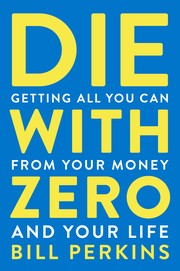
by Bill Perkins
“Die With Zero Principle: Bill Perkins argues that unspent wealth at death represents unlived experiences. Rather than leaving large inheritances to middle-aged children, transferring assets earlier maximizes impact during recipients' formative financial years when the money carries greater life-changing weight.”
other
- The Retirement ManifestoBy guest
by Fritz Gilbert
“Fritz Gilbert of The Retirement Manifesto addresses chrometophobia—the fear of spending money—which causes diligent savers to underspend in retirement”
More from Optimal Finance Daily
We summarize every new episode. Want them in your inbox?
3511: The Three Most Common Ways To Achieve FIRE by Christina Browning of Our Rich Journey on Early Retirement Paths
3510: 4 Smart Ways to Use Your Tax Refund by Kumiko of The Budget Mom on Smart Refund Use
3509: Warren Buffett’s Best Investing Tips by Robert Farrington of The College Investor on Smart Investing
3508: [Part 2] 7 Streams of Income: The Millionaire’s Secret by Dr. Jeff Anzalone with Physician On Fire
3507: [Part 1] 7 Streams of Income: The Millionaire’s Secret by Dr. Jeff Anzalone with Physician On Fire
Similar Episodes
Related episodes from other podcasts

ChooseFI
Sep 8
Safe Withdrawal Rates, Drawdown Strategies, RMDs and 50 Year FI Timelines

Lenny's Podcast
Sep 6
Why companies are becoming a series of loops | Anish Acharya (a16z)

The Tim Ferriss Show
Aug 5
#878: How to Start When You're Stuck, Finish What You Begin, and Stop Waiting for Inspiration — Creative Advice from Elizabeth Gilbert, Seth Godin, Joyce Carol Oates, Anne Lamott and More

The Prof G Pod
Jul 6
Why AI Stocks Are Overvalued + Are Networking Events Actually Worth It?

10% Happier with Dan Harris
Jun 1
The Science of Eating Well Without Losing Your Mind | Jessica Knurick
Explore Related Topics
This podcast is featured in Best Finance Podcasts (2026) — ranked and reviewed with AI summaries.
Read this week's Investing & Markets Podcast Insights — cross-podcast analysis updated weekly.
You're clearly into Optimal Finance Daily.
Every Monday, we deliver AI summaries of the latest episodes from Optimal Finance Daily and 192+ other podcasts. Free for one show.
Start My Monday DigestNo credit card · Unsubscribe anytime