Martin Wolf on the 'Terrifying' Superpower That the US Wields
Episode
65 min
Read time
3 min
Topics
Relationships, Investing, Fundraising & VC
AI-Generated Summary
Key Takeaways
- ✓World Economy Resilience: Since 1950, global GDP has contracted in only two years — 2009 and 2020 — demonstrating that the world economy requires catastrophic shocks to actually shrink. Trade diversion mechanisms, corporate profit resilience, and the declining share of oil in total energy consumption mean that even major geopolitical disruptions like Gulf conflict produce slowdowns, not collapses. Investors and analysts should calibrate crisis responses accordingly, expecting adaptation rather than systemic breakdown.
- ✓Gulf Oil Shock Absorption: A sustained loss of Gulf oil output would damage Europe and China most severely, while the US faces the least exposure among major economies — a structural asymmetry that shapes American willingness to escalate. Wolf estimates world growth could fall to 1–1.5% under a severe scenario, but not zero. Pipeline alternatives exist for much of the affected volume, and global energy systems have already structurally shifted away from oil dependency since the 1970s shocks.
- ✓US Trust Collapse: The Trump administration's core operating mode — deliberate unpredictability in both directions — has permanently eroded international trust in US commitments. No European government, ally, or trading partner can treat any US promise as binding. This matters structurally: Europe built its entire postwar security, technology, and ideological architecture around American reliability. Rebuilding that trust requires not just an election result but proof that the underlying political movement has become unthinkable, which Wolf considers unlikely in the near term.
- ✓Trump Coalition Incoherence: The MAGA coalition contains irreconcilable factions — AI-optimist tech billionaires betting on a transformative future, Christian nationalist crusaders seeking a theocratic past, Vance-style isolationists, and a mass base of economically resentful men. These groups share affinity for Trump personally but no coherent policy vision. Wolf frames Trump's personal goal as unconstrained bilateral dominance — being acknowledged as the boss in every relationship — rather than any ideological program, making policy direction fundamentally unpredictable.
- ✓European Strategic Paralysis: Europe cannot rapidly develop strategic autonomy because its postwar identity was deliberately constructed around rejecting the will-to-power that produced two world wars. The centrist liberal impulse toward greater EU integration competes with right-wing nationalist movements that are nationally, not European, in orientation. Wolf notes there are virtually no European nationalist politicians who identify as European first — making a unified strategic response structurally difficult regardless of external pressure from Washington or ongoing conflicts.
What It Covers
FT chief economics commentator Martin Wolf analyzes the Iran conflict, US geopolitical incoherence, Europe's structural paralysis, and AI's existential risks with Joe Weisenthal and Tracy Alloway in London. Wolf argues that a bewildering superpower is more dangerous than a predictable rival, and that the Trump coalition lacks any unified strategic vision beyond personal loyalty to one individual.
Key Questions Answered
- •World Economy Resilience: Since 1950, global GDP has contracted in only two years — 2009 and 2020 — demonstrating that the world economy requires catastrophic shocks to actually shrink. Trade diversion mechanisms, corporate profit resilience, and the declining share of oil in total energy consumption mean that even major geopolitical disruptions like Gulf conflict produce slowdowns, not collapses. Investors and analysts should calibrate crisis responses accordingly, expecting adaptation rather than systemic breakdown.
- •Gulf Oil Shock Absorption: A sustained loss of Gulf oil output would damage Europe and China most severely, while the US faces the least exposure among major economies — a structural asymmetry that shapes American willingness to escalate. Wolf estimates world growth could fall to 1–1.5% under a severe scenario, but not zero. Pipeline alternatives exist for much of the affected volume, and global energy systems have already structurally shifted away from oil dependency since the 1970s shocks.
- •US Trust Collapse: The Trump administration's core operating mode — deliberate unpredictability in both directions — has permanently eroded international trust in US commitments. No European government, ally, or trading partner can treat any US promise as binding. This matters structurally: Europe built its entire postwar security, technology, and ideological architecture around American reliability. Rebuilding that trust requires not just an election result but proof that the underlying political movement has become unthinkable, which Wolf considers unlikely in the near term.
- •Trump Coalition Incoherence: The MAGA coalition contains irreconcilable factions — AI-optimist tech billionaires betting on a transformative future, Christian nationalist crusaders seeking a theocratic past, Vance-style isolationists, and a mass base of economically resentful men. These groups share affinity for Trump personally but no coherent policy vision. Wolf frames Trump's personal goal as unconstrained bilateral dominance — being acknowledged as the boss in every relationship — rather than any ideological program, making policy direction fundamentally unpredictable.
- •European Strategic Paralysis: Europe cannot rapidly develop strategic autonomy because its postwar identity was deliberately constructed around rejecting the will-to-power that produced two world wars. The centrist liberal impulse toward greater EU integration competes with right-wing nationalist movements that are nationally, not European, in orientation. Wolf notes there are virtually no European nationalist politicians who identify as European first — making a unified strategic response structurally difficult regardless of external pressure from Washington or ongoing conflicts.
- •AI as Faustian Bargain: Wolf frames artificial general intelligence as potentially the single most consequential invention in human history — more transformative than writing, printing, or the internet combined. The core danger is unaccountability: decisions made by systems no individual can be held responsible for, combined with the possibility of AI-directed autonomous military systems capable of controlling human populations. Wolf considers the technology effectively unregulatable given competitive dynamics, and notes that Frank Herbert's fictional Butlerian Jihad — a civilizational ban on thinking machines — may retrospectively appear prescient.
Notable Moment
Wolf argues that a predictable authoritarian rival like China is less destabilizing to global order than a bewildering democratic superpower. The world can price in and adapt to known behavior patterns. What markets and governments cannot manage is a country wielding unmatched power with no coherent or consistent strategic logic driving its decisions.

You just read a 3-minute summary of a 62-minute episode.
Get Odd Lots summarized like this every Monday — plus up to 2 more podcasts, free.
Pick Your Podcasts — FreeKeep Reading
More from Odd Lots
Branko Milanovic on What Comes After Globalization
Jul 27 · 61 min

The Diary of a CEO
URGENT UPDATE - Iran War Expert: 70% Chance US Sends Troops To Iran THIS WEEK! | Robert Pape
Jul 23
More from Odd Lots
How Financial Advisors Can Grow During the Great Wealth Transfer (Sponsored Content)
Jul 26 · 17 min

The Prof G Pod
What Comes After the Iran War? — with Rep. Jim Himes
Jul 2
Books, tools, and gear mentioned in this episode
SignalCast may earn commission on purchases via these links. As an Amazon Associate, SignalCast earns from qualifying purchases.
Books
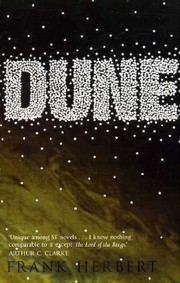
by Frank Herbert
“Frank Herbert's fictional Butlerian Jihad — a civilizational ban on thinking machines — may retrospectively appear prescient.”
More from Odd Lots
We summarize every new episode. Want them in your inbox?
Branko Milanovic on What Comes After Globalization
How Financial Advisors Can Grow During the Great Wealth Transfer (Sponsored Content)
How Franchise Restaurants Opened the Door to the Gig Economy
Why Apple Is Heading Into a Pivotal Moment
The Creator of Claude Code on The Hottest Piece of Software in the World
Similar Episodes
Related episodes from other podcasts

The Diary of a CEO
Jul 23
URGENT UPDATE - Iran War Expert: 70% Chance US Sends Troops To Iran THIS WEEK! | Robert Pape

The Prof G Pod
Jul 2
What Comes After the Iran War? — with Rep. Jim Himes

The Joe Rogan Experience
May 29
#2507 - Harland Williams
The Prof G Pod
Apr 14
China Decode: China Steps In as Trump’s Ceasefire Unravels
The Diary of a CEO
Apr 13
The Iran War Expert: The Most Dangerous Stage Begins Now
Explore Related Topics
This podcast is featured in Best Finance Podcasts (2026) — ranked and reviewed with AI summaries.
Read this week's Investing & Markets Podcast Insights — cross-podcast analysis updated weekly.
You're clearly into Odd Lots.
Every Monday, we deliver AI summaries of the latest episodes from Odd Lots and 192+ other podcasts. Free for one show.
Start My Monday DigestNo credit card · Unsubscribe anytime