The best stuff we’ve read in the last 12 months
Episode
57 min
Read time
2 min
Topics
Personal Finance, Investing, Leadership
AI-Generated Summary
Key Takeaways
- ✓Decision-Making Framework: Write down decisions with one decisive reason for and against, not blended reasons. Include emotional state, alternatives considered, reversibility, upside/downside scenarios, and future predictions. Review decisions quarterly to identify patterns in judgment quality and unexpected high-impact choices that seemed minor initially.
- ✓Investment Timing (Howard Marks): Sell decisions depend on two factors: whether your original investment thesis remains valid with new information, and whether better opportunities exist elsewhere with higher conviction. Position sizing matters more than being right—concentrate heavily on your few best ideas rather than diversifying across mediocre convictions.
- ✓Life Energy vs Money (Die With Zero): Timing matters for experiences—backpacking through Europe works at 25, not 35. Calculate purchases as hours worked, not dollars spent. Schedule life experiences first, then fill gaps with work, not vice versa. Most financial fears among wealthy people are completely irrational based on actual math.
- ✓Hampton Retention Strategy: Switching from digital-only to mandatory monthly in-person meetings increased annual retention from 60% to 85-90%. Real-life belly-to-belly conversations with vetted peers practicing confidentiality, candor, and commitment changes lives. Physical presence does most of the work despite being operationally difficult to scale.
What It Covers
Sam and Shaan share their most impactful readings from the past year, covering decision-making frameworks, investment philosophy, memory techniques, leadership speeches, and the concept of optimizing life energy over money accumulation.
Key Questions Answered
- •Decision-Making Framework: Write down decisions with one decisive reason for and against, not blended reasons. Include emotional state, alternatives considered, reversibility, upside/downside scenarios, and future predictions. Review decisions quarterly to identify patterns in judgment quality and unexpected high-impact choices that seemed minor initially.
- •Investment Timing (Howard Marks): Sell decisions depend on two factors: whether your original investment thesis remains valid with new information, and whether better opportunities exist elsewhere with higher conviction. Position sizing matters more than being right—concentrate heavily on your few best ideas rather than diversifying across mediocre convictions.
- •Life Energy vs Money (Die With Zero): Timing matters for experiences—backpacking through Europe works at 25, not 35. Calculate purchases as hours worked, not dollars spent. Schedule life experiences first, then fill gaps with work, not vice versa. Most financial fears among wealthy people are completely irrational based on actual math.
- •Hampton Retention Strategy: Switching from digital-only to mandatory monthly in-person meetings increased annual retention from 60% to 85-90%. Real-life belly-to-belly conversations with vetted peers practicing confidentiality, candor, and commitment changes lives. Physical presence does most of the work despite being operationally difficult to scale.
Notable Moment
Akon reveals he engineered his entire music career around ringtones after discovering they cost five dollars versus two dollars for full songs, and his record contract had no digital provisions, generating fifty-five million dollars from eleven million ringtone sales.
Episode Transcript
Most people live their life like this. They build a well and they start to pump water. And at the end of their lives, after a lifetime of pumping, they see they are still thirsty. They spent their whole life pumping rather than drinking, which was the reason they started pumping in the first place. What up, Sam? I wanted to do something a little different today. End of the year. I was doing a little Slack clean out, and I was looking at I had this one channel for, like, the best stuff I read this week. I call it my content diet channel. It's basically, what were the vegetables? What were my whole foods that I consumed? Because I consume a lot of junk, but this stuff was actually good. And I was just kinda browsing through what really stood out or resonated with me, and I have a couple. I don't know. I want and I wanted to know yours because you read a lot more than me, and I think we read totally different things. So I I'm curious if anything comes to mind for you on that topic. Yes. For me, it's a lot of books. And so, like, for example, the the topic that I got obsessed with this year was presidential assassinations. I went deep on the four different presidents who were assassinated, and it that interested me. But, you know, I'm a huge history fan. And so I could talk to you all about history, which which I I can, like, say some of the most amazing stuff that I learned. I feel like we did a whole bit when the Trump assassination thing happened on presidential assassination. There's some crazy stories. Right? There's, like, the guy who had a speech in his pocket that, like, blunted the blow, and so he got shot. And he survived. Roosevelt. And he gets shot by his car on his way to a speech, doesn't die because the speech is so thick in his pocket, gives the speech while bleeding. Yeah. That was Roosevelt. There's only been four presidents that have been successfully assassinated, and three of them happened between, like, 1865 and, like, nineteen o five. And, like, pretty much up until Andrew Garfield was assassinated, which I think was, like, around nineteen o four, Any human, any American, it was, like, customary. You can just go to the White House and schedule an appointment with the president. And the idea here was that they were supposed to be, like, a man of the people, and I think that's ridiculous. And the Secret Service, even up up till 1963, 6465 when JFK was shot, it was only, like, 300 people. And so, like, basically, it was nonexistence. And so I'm, like, obsessed with that, about how, like, something became an institution even after four years or sorry. Four deaths happened. And so I've been obsessed with that. I've also been obsessed with leadership and …
Get the full transcript (13,187 words) + summary by email — free
One-time email with the complete transcript and AI summary of this episode. No account needed.
One email, no spam. We’ll also show you what SignalCast does.

You just read a 3-minute summary of a 54-minute episode.
Get My First Million summarized like this every Monday — plus up to 2 more podcasts, free.
Pick Your Podcasts — FreeKeep Reading
More from My First Million
Decoding Tony Hawk’s mindset in 72 minutes
Sep 9 · 73 min

10% Happier with Dan Harris
When You Don't Know What You Actually Want: How To Say No, When To Say Yes, and The One Question That Cuts Through It | Yara Shahidi
Jul 31
More from My First Million
How we scaled to $100M in under a year (ft. IM8 co-founder Danny Yeung)
Sep 7 · 54 min

Odd Lots
What Dan Wang Saw on His Last Trip to China
Jul 2
Books, tools, and gear mentioned in this episode
SignalCast may earn commission on purchases via these links. As an Amazon Associate, SignalCast earns from qualifying purchases.
Books
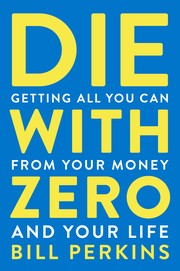 Die With ZeroRecommended
“Life Energy vs Money (Die With Zero): Timing matters for experiences—backpacking through Europe works at 25, not 35. Calculate purchases as hours worked, not dollars spent.”
More from My First Million
We summarize every new episode. Want them in your inbox?
Decoding Tony Hawk’s mindset in 72 minutes
How we scaled to $100M in under a year (ft. IM8 co-founder Danny Yeung)
How to naturally monetize what you love
7 things MrBeast, Bezos & Thiel do that you don’t
How a $5B founder is using AI (3 tutorials)
Similar Episodes
Related episodes from other podcasts

10% Happier with Dan Harris
Jul 31
When You Don't Know What You Actually Want: How To Say No, When To Say Yes, and The One Question That Cuts Through It | Yara Shahidi

Odd Lots
Jul 2
What Dan Wang Saw on His Last Trip to China

The Peter Attia Drive
Jun 22
#397 ‒ Endometriosis and adenomyosis: diagnosis, fertility, reproductive aging, and emerging treatments | Renato Tomioka, M.D., Ph.D.

The Tim Ferriss Show
May 6
#864: How to Simplify Your Life in 2026 — New Tips from Anne Lamott, Claire Hughes Johnson, David Yarrow, and Diana Chapman

Pivot
Apr 24
Tucker Carlson's Rebrand, Apple’s New Era, and SpaceX’s AI Deal
Explore Related Topics
This podcast is featured in Best Startup Podcasts (2026) — ranked and reviewed with AI summaries.
Read this week's Investing & Markets Podcast Insights — cross-podcast analysis updated weekly.
You're clearly into My First Million.
Every Monday, we deliver AI summaries of the latest episodes from My First Million and 192+ other podcasts. Free for one show.
Start My Monday DigestNo credit card · Unsubscribe anytime