What “Invest With a Margin of Safety” Really Means
Episode
48 min
Read time
2 min
Topics
Health & Wellness, Relationships, Investing
AI-Generated Summary
Key Takeaways
- ✓Bridge Engineering Analogy: Graham's margin of safety works like a bridge rated for 10,000 pounds — you drive a 7,500-pound vehicle, not a 9,999-pound one. Apply this to stocks by targeting businesses priced at roughly 75% of estimated intrinsic value, so even if your valuation is optimistic by 10–15%, you still profit.
- ✓Pre-Investment Failure Writing Exercise: Before buying any stock, write down at least three specific ways the company could fail. If you cannot produce three credible failure scenarios, your research is incomplete. This guardrail forces genuine structural analysis rather than emotionally driven optimism, and prevents buying based on brand excitement or recent price momentum.
- ✓Low PE Ratio as a Return Predictor: Andrew's personal portfolio review revealed that his highest-returning stocks were purchased at low price-to-earnings ratios, while high-PE purchases like Domino's and Starbucks underperformed despite strong 20-year track records. Strong historical performance does not guarantee future returns; entry valuation materially shapes actual gains.
- ✓Infrastructure Over Product Quality: Coca-Cola's durability stems from its distribution network — not its flavor. When evaluating a company's longevity, analyze structural competitive advantages like distribution systems, geographic positioning, or proprietary retail relationships rather than brand popularity or consumer sentiment, which shift with generational trends roughly every eight to twelve years.
- ✓Volatility vs. Risk Distinction: Short-term price swings are volatility — the stock market's normal roller coaster. Real risk is permanent: a business losing its competitive advantage or failing to sustain earnings power. Graham defines investment value through a company's future earnings power supported by tangible evidence, not speculation about price direction.
What It Covers
Stephen Morris and Andrew Sather unpack Benjamin Graham's margin of safety concept from The Intelligent Investor, tracing its origins through Graham's Columbia Business School teachings, its influence on Warren Buffett and five other investors who each earned 18–33% annually, and how to apply the framework when evaluating individual stocks today.
Key Questions Answered
- •Bridge Engineering Analogy: Graham's margin of safety works like a bridge rated for 10,000 pounds — you drive a 7,500-pound vehicle, not a 9,999-pound one. Apply this to stocks by targeting businesses priced at roughly 75% of estimated intrinsic value, so even if your valuation is optimistic by 10–15%, you still profit.
- •Pre-Investment Failure Writing Exercise: Before buying any stock, write down at least three specific ways the company could fail. If you cannot produce three credible failure scenarios, your research is incomplete. This guardrail forces genuine structural analysis rather than emotionally driven optimism, and prevents buying based on brand excitement or recent price momentum.
- •Low PE Ratio as a Return Predictor: Andrew's personal portfolio review revealed that his highest-returning stocks were purchased at low price-to-earnings ratios, while high-PE purchases like Domino's and Starbucks underperformed despite strong 20-year track records. Strong historical performance does not guarantee future returns; entry valuation materially shapes actual gains.
- •Infrastructure Over Product Quality: Coca-Cola's durability stems from its distribution network — not its flavor. When evaluating a company's longevity, analyze structural competitive advantages like distribution systems, geographic positioning, or proprietary retail relationships rather than brand popularity or consumer sentiment, which shift with generational trends roughly every eight to twelve years.
- •Volatility vs. Risk Distinction: Short-term price swings are volatility — the stock market's normal roller coaster. Real risk is permanent: a business losing its competitive advantage or failing to sustain earnings power. Graham defines investment value through a company's future earnings power supported by tangible evidence, not speculation about price direction.
Notable Moment
Warren Buffett noted in the 1980s that value investing was already being called outdated — yet investors taught directly by Graham were compounding at 18–33% annually across completely different stocks and strategies. The hosts point out this pattern repeats every market cycle, creating persistent opportunity for disciplined buyers.
Episode Transcript
We say it every week and probably multiple times during some episodes, invest with a margin of safety if it's a sound of safety. But what does it actually mean? Where does it even come from? It actually comes from the book, The Intelligent Investor by Benjamin Graham. And it's one of the most famous books, at least for the stock market of all time. And it's one of the key tools that Warren Buffett used throughout his, journey and his career. Today, Andrew and I are gonna dive into what the catchphrase actually means and how we can apply it to our daily lives. Here we go. The other night, I'm online shopping for printer ink. Yes. I still use a printer. I know. And I'm getting ready to check out when I suddenly realize, yet again, I cannot remember my stupid password. But that's when I noticed they've recently added at the top of the screen that purple shop pay button. One click of my name, done. Address, done. Card info, done. Check out, done. Honestly, it's one of the best things in online shopping right now. That button is Shopify. And if you're running an online business or thinking of starting one, Shopify makes the transaction just as easy on your side. They give you inventory tracking, payment processing, analytics, marketing, and much, much more all in one place. No jumping between platforms, no chaos. And if you get stuck, they have twenty four hour support that genuinely is the best. See less carts go abandoned and more sales go with Shopify and their shop pay button. Sign up for your $1 per month trial at shopify.com/beginners. Go to shopify.com/beginners. That's shopify.com/beginners. This show is sponsored by Lakewood Ivy. Summer is here, and let me tell you, I could not be more excited. From running down to the lake for a early morning fishing trip before work or running my favorite trails or even yard work, you name it. I just love being outdoors when he heats up. But with that heat comes dehydration, and sometimes I feel like water just doesn't cut it. That's exactly why I started throwing LiquidIV's hydration multiplier sugar Free in my bag every day. One stick, 16 ounces of water, and you're hydrating faster than water alone. And the best part is it holds up to four hours powered by their LIV HydroScience formula with electrolytes and essential vitamins. Science backed, clinically researched, and honestly, you can just feel it working. Currently, white peach and rainbow sherbet are my favorites. You just tear them open, you pour them in, simple as that, you're done. Get moving with superior hydration from Liquid IV. Tear, pour, live more. Go to liquidiv.com and get 20% off your first purchase with code investing at checkout. That's 20% off your first purchase with code investing at liquidiv.com. You're tuned in you're tuned in to the investing for beginners podcast investing for beginners podcast, the show for …
Get the full transcript (7,838 words) + summary by email — free
One-time email with the complete transcript and AI summary of this episode. No account needed.
One email, no spam. We’ll also show you what SignalCast does.

You just read a 3-minute summary of a 45-minute episode.
Get Investing for Beginners summarized like this every Monday — plus up to 2 more podcasts, free.
Pick Your Podcasts — FreeKeep Reading
More from Investing for Beginners
The Language of Business, Part 1: Accounting Doesn't Have to Suck
Oct 22 · 45 min

Up First (NPR)
US and Iran Trade Attacks Again, Sen. Lindsay Graham Dies, Congress Returns
Jul 13
More from Investing for Beginners
AAR72 - Financial Tier List
Oct 20 · 50 min

The Bulwark Podcast
Morris Katz: Tax the Billionaires
Mar 4
Books, tools, and gear mentioned in this episode
SignalCast may earn commission on purchases via these links. As an Amazon Associate, SignalCast earns from qualifying purchases.
Books
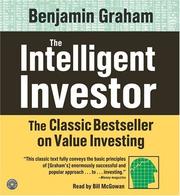 The Intelligent InvestorRecommended
by Benjamin Graham
“Stephen Morris and Andrew Sather unpack Benjamin Graham's margin of safety concept from The Intelligent Investor, tracing its origins through Graham's Columbia Business School teachings”
More from Investing for Beginners
We summarize every new episode. Want them in your inbox?
The Language of Business, Part 1: Accounting Doesn't Have to Suck
AAR72 - Financial Tier List
No Moat, No Problem? What HPE's Moonshot Teaches Value Investors
Path to Confidence Finale: The Habits That Build a Confident Investor
AAR71 - Are You a Financial Green Flag or Red Flag?
Similar Episodes
Related episodes from other podcasts

Up First (NPR)
Jul 13
US and Iran Trade Attacks Again, Sen. Lindsay Graham Dies, Congress Returns

The Bulwark Podcast
Mar 4
Morris Katz: Tax the Billionaires

Pivot
Feb 20
Andrew Arrest Fallout, Colbert Calls BS, Zuck Pushes Back

Stay Tuned with Preet
Nov 13
The 1929 Stock Market Crash: Can It Happen Again? (with Andrew Ross Sorkin)

We Study Billionaires
Oct 19
TIP762: 10 Lessons From Investing Legends w/ Kyle Grieve
Explore Related Topics
This podcast is featured in Best Investing Podcasts (2026) — ranked and reviewed with AI summaries.
Read this week's Health & Longevity Podcast Insights — cross-podcast analysis updated weekly.
You're clearly into Investing for Beginners.
Every Monday, we deliver AI summaries of the latest episodes from Investing for Beginners and 192+ other podcasts. Free for one show.
Start My Monday DigestNo credit card · Unsubscribe anytime