The First Metric Every Investor Must Check Before Buying
Episode
48 min
Read time
2 min
Topics
Relationships, Investing, Fundraising & VC
AI-Generated Summary
Key Takeaways
- ✓Revenue-to-price chain: Revenue growth is the primary driver of stock returns because it feeds directly into earnings per share growth, which correlates strongly with stock price over five-plus year periods — a relationship documented in Peter Lynch's *Beating the Street* and reinforced by McKinsey's "10 Rules of Growth" study. Start every stock analysis here before examining any other metric.
- ✓Growth benchmarks: Michael Mauboussin's base rate research establishes 4–6% as the median long-term revenue growth rate for companies. US nominal GDP has averaged roughly 6% annually for over a century. Any company growing below 6% lags the broader economy, making 7–14% annually a practical target range for identifying steady compounders worth holding long-term.
- ✓Hypergrowth risk: Only 7% of S&P 500 companies sustained revenue growth above 20% annually over the 2014–2023 period, and just 16% exceeded 15%. Projecting above 15% growth for valuation purposes introduces significant error. When high-growth rates normalize, stock prices drop sharply because elevated valuations built on explosive growth assumptions collapse rapidly upon saturation.
- ✓PE ratio as valuation anchor: Price-to-earnings ratio equals stock price divided by earnings per share. At a current market PE near 25, a company growing revenue at 10% annually might justify paying roughly 30 PE — modestly above market average. Comparing PE ratios within the same industry (e.g., two banks at 10 and 12 PE) provides a practical relative valuation shortcut without complex modeling.
- ✓Skewed data detection: Single-year revenue spikes from acquisitions — such as Dick's Sporting Goods absorbing Foot Locker — distort three, five, and ten-year compound growth calculations. To counteract this, calculate the median of all individual year-over-year growth rates across a ten-year period rather than relying on endpoint-to-endpoint calculations, which are vulnerable to outlier starting or ending years.
What It Covers
Hosts Stephen Morris and Andrew Saylor explain how to analyze stocks starting with revenue growth as the foundational metric. They connect revenue growth to earnings per share and stock price appreciation, establish realistic growth benchmarks using McKinsey and Michael Mauboussin research, and demonstrate how PE ratios and stock screeners complement this framework.
Key Questions Answered
- •Revenue-to-price chain: Revenue growth is the primary driver of stock returns because it feeds directly into earnings per share growth, which correlates strongly with stock price over five-plus year periods — a relationship documented in Peter Lynch's *Beating the Street* and reinforced by McKinsey's "10 Rules of Growth" study. Start every stock analysis here before examining any other metric.
- •Growth benchmarks: Michael Mauboussin's base rate research establishes 4–6% as the median long-term revenue growth rate for companies. US nominal GDP has averaged roughly 6% annually for over a century. Any company growing below 6% lags the broader economy, making 7–14% annually a practical target range for identifying steady compounders worth holding long-term.
- •Hypergrowth risk: Only 7% of S&P 500 companies sustained revenue growth above 20% annually over the 2014–2023 period, and just 16% exceeded 15%. Projecting above 15% growth for valuation purposes introduces significant error. When high-growth rates normalize, stock prices drop sharply because elevated valuations built on explosive growth assumptions collapse rapidly upon saturation.
- •PE ratio as valuation anchor: Price-to-earnings ratio equals stock price divided by earnings per share. At a current market PE near 25, a company growing revenue at 10% annually might justify paying roughly 30 PE — modestly above market average. Comparing PE ratios within the same industry (e.g., two banks at 10 and 12 PE) provides a practical relative valuation shortcut without complex modeling.
- •Skewed data detection: Single-year revenue spikes from acquisitions — such as Dick's Sporting Goods absorbing Foot Locker — distort three, five, and ten-year compound growth calculations. To counteract this, calculate the median of all individual year-over-year growth rates across a ten-year period rather than relying on endpoint-to-endpoint calculations, which are vulnerable to outlier starting or ending years.
Notable Moment
Andrew revealed that when analyzing large companies like Amazon, headline dollar figures from AI capital expenditure announcements appear massive, but converting those numbers to percentages of total revenue and cash flow shows the actual impact is far smaller than media coverage suggests — a consistent trap for newer investors.
Episode Transcript
Companies will have explosive growth in their early years, and then it saturates. The problem with this, like, nobody knows when that saturation is going to happen. But once it gets to that growth rate that's more normal, then that's when you see the stock just completely plummet because now the stock's in the real world rather than in this, like, happy land. There's a huge misconception that to start a business, you need to invent some revolutionary product. But the truth is you really don't. Some of the best businesses start as a simple side hustle, like selling a craft you make on the weekends or turning a hobby into extra cash. For a lot of people, the real hurdle isn't the idea. It's the technology. Figuring out how to actually sell online is where a lot of folks just give up. That's exactly why you need Shopify. Shopify is the ecommerce platform responsible for millions of sales worldwide. It handles all facets of your business, your online storefront, your inventory management, and your point of sale so you don't have to juggle 10 different systems. One platform is all you need. You also don't need to be a tech expert. Shopify templates and AI tools get you a stunning site up and running fast. No coding needed. And because Shopify handles the setup and checkout, you have more time to focus on actually growing your business. If you're ready to hear the of your first sale today, head over to shopify.com/beginners to start your free trial. That's right. Start your free trial at shopify.com/beginners. That's shopify.com/beginners. Support comes from Wise, the smart way to manage the currencies you need around the globe. Fed up with losing out to hidden fees when you send money abroad with your everyday bank? Choose the smart way, Wise. You can count on the exchange rate you'd usually find on Google. No unwelcome surprises. Plus, ditch that where's my money feeling. Most transfers arrive in under twenty seconds. Join millions saving billions on hidden fees. Be smart. Get wise. Download the Wyze app today. Ts and Cs apply. You're tuned in. You're tuned in. To the Investing for Beginners podcast. Investing for Beginners podcast. The show for the long term investor. We cut through the noise to focus on what works. Compounding, discipline, and the conviction to buy wonderful businesses and stick with them. Your path to financial freedom. Start now. And welcome back to Investing for Beginners podcast, everybody. My name is Stephen Morris, and he is Andrew Saylor. And, Andrew, I guess we're going to just straight up ask the question. I'm brand new to investing. What is the first thing I should understand or start doing when when I start to analyze a stock for the first time? Yeah. I mean, brand new to investing. Maybe question even if wanna buy a stock because we try to caution people against it. But if you are going down the path of …
Get the full transcript (8,099 words) + summary by email — free
One-time email with the complete transcript and AI summary of this episode. No account needed.
One email, no spam. We’ll also show you what SignalCast does.

You just read a 3-minute summary of a 45-minute episode.
Get Investing for Beginners summarized like this every Monday — plus up to 2 more podcasts, free.
Pick Your Podcasts — FreeKeep Reading
More from Investing for Beginners
The Language of Business, Part 1: Accounting Doesn't Have to Suck
Oct 22 · 45 min

Pivot
Andrew Arrest Fallout, Colbert Calls BS, Zuck Pushes Back
Feb 20
More from Investing for Beginners
AAR72 - Financial Tier List
Oct 20 · 50 min

All-In with Chamath, Jason, Sacks & Friedberg
Mark Cuban on the AI Bubble: Who Actually Gets Wiped Out?
Jul 20
Books, tools, and gear mentioned in this episode
SignalCast may earn commission on purchases via these links. As an Amazon Associate, SignalCast earns from qualifying purchases.
Books
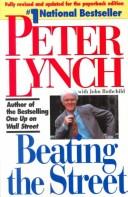 Beating the StreetRecommended
by Peter Lynch
“a relationship documented in Peter Lynch's *Beating the Street* and reinforced by McKinsey's "10 Rules of Growth" study”
More from Investing for Beginners
We summarize every new episode. Want them in your inbox?
The Language of Business, Part 1: Accounting Doesn't Have to Suck
AAR72 - Financial Tier List
No Moat, No Problem? What HPE's Moonshot Teaches Value Investors
Path to Confidence Finale: The Habits That Build a Confident Investor
AAR71 - Are You a Financial Green Flag or Red Flag?
Similar Episodes
Related episodes from other podcasts

Pivot
Feb 20
Andrew Arrest Fallout, Colbert Calls BS, Zuck Pushes Back

All-In with Chamath, Jason, Sacks & Friedberg
Jul 20
Mark Cuban on the AI Bubble: Who Actually Gets Wiped Out?

Mind Pump: Raw Fitness Truth
Mar 2
2805: How To Know When It's The Right Time To Cut

Snacks Daily
Feb 17
🚁 “Unmanned everything” — Olympics drone’s highlight. Stocks’ Grim Reaper. Save the Allbirds. +Ski Job Bonus

Bankless
Feb 12
What’s the Story? AI Stocks, Crypto Downturn, Metals Selloff, SaaSpocalypse | Jim Bianco
Explore Related Topics
This podcast is featured in Best Investing Podcasts (2026) — ranked and reviewed with AI summaries.
Read this week's Investing & Markets Podcast Insights — cross-podcast analysis updated weekly.
You're clearly into Investing for Beginners.
Every Monday, we deliver AI summaries of the latest episodes from Investing for Beginners and 192+ other podcasts. Free for one show.
Start My Monday DigestNo credit card · Unsubscribe anytime