Patrick O’Shaughnessy - Creating on Principle - [Invest Like the Best, EP.455]
Episode
126 min
Read time
3 min
Topics
Career Growth, Productivity, Health & Wellness
AI-Generated Summary
Key Takeaways
- ✓Principle for Invention: Brett Victor's talk "Inventing on Principle" provides a framework where you identify one core principle that when violated, you feel obligated to correct through creation. O'Shaughnessy's principle is discovering unrealized potential in people before others do, then using all available resources to help foster it into existence. This differs from having goals because principles inform every daily decision without limiting peripheral opportunities that goals create through tunnel vision.
- ✓Clean Versus Dirty Fuel: Most successful founders profiled in biographies ran on dirty fuel like revenge, proving doubters wrong, or escaping poverty. This works but consumes the person over time. Clean fuel comes from generative motivation, doing work because you love it and it serves others. Bruce Springsteen's autobiography illustrates this transition, where achieving fame and wealth through dirty fuel led to severe depression in his mid-thirties until he shifted to generative motivations around family and authentic creation.
- ✓Growth Without Goals Framework: O'Shaughnessy wrote his most-read essay at age 28 arguing against traditional goal-setting. His career chain started with loving books, leading to email lists, then podcasts, which built his software business Canvas, enabling angel investments, creating his venture firm Positive Sum, and launching Colossus magazine. None of these outcomes would have appeared on a goal sheet, yet each emerged naturally from following energy and staying open to peripheral opportunities.
- ✓Relationship Investment Strategy: Sam Hinkie's principle that people are power law distributed means the best relationships change everything, requiring ruthless selectivity about access. O'Shaughnessy now prioritizes fewer, deeper relationships over broad networks. He invests hundreds of hours in core relationships, exemplified by his multi-year friendship with Senra that began with an unsolicited tweet promoting Founders podcast when Senra had minimal followers, demonstrating betting on people before external validation exists.
- ✓Profile Writing as Ultimate Spotlight: O'Shaughnessy launched Colossus magazine after discovering an obscure publication where major figures agreed to covers despite the magazine's anonymity. This revealed that magazine covers represent the ultimate form of attention and spotlight you can give someone. He hired Jeremy Stern after reading his Palmer Luckey profile in Tablet, applying the principle of consuming massive volume to identify the single best creator, then recruiting them directly for your project.
What It Covers
Patrick O'Shaughnessy appears as guest on David Senra's show, discussing his organizing principle of identifying undiscovered talent and championing it through media and capital. He traces this worldview to reading the Upanishads at age 26, explains why he avoids goals in favor of principles, and reveals how Colossus magazine profiles may eventually surpass his podcast in importance.
Key Questions Answered
- •Principle for Invention: Brett Victor's talk "Inventing on Principle" provides a framework where you identify one core principle that when violated, you feel obligated to correct through creation. O'Shaughnessy's principle is discovering unrealized potential in people before others do, then using all available resources to help foster it into existence. This differs from having goals because principles inform every daily decision without limiting peripheral opportunities that goals create through tunnel vision.
- •Clean Versus Dirty Fuel: Most successful founders profiled in biographies ran on dirty fuel like revenge, proving doubters wrong, or escaping poverty. This works but consumes the person over time. Clean fuel comes from generative motivation, doing work because you love it and it serves others. Bruce Springsteen's autobiography illustrates this transition, where achieving fame and wealth through dirty fuel led to severe depression in his mid-thirties until he shifted to generative motivations around family and authentic creation.
- •Growth Without Goals Framework: O'Shaughnessy wrote his most-read essay at age 28 arguing against traditional goal-setting. His career chain started with loving books, leading to email lists, then podcasts, which built his software business Canvas, enabling angel investments, creating his venture firm Positive Sum, and launching Colossus magazine. None of these outcomes would have appeared on a goal sheet, yet each emerged naturally from following energy and staying open to peripheral opportunities.
- •Relationship Investment Strategy: Sam Hinkie's principle that people are power law distributed means the best relationships change everything, requiring ruthless selectivity about access. O'Shaughnessy now prioritizes fewer, deeper relationships over broad networks. He invests hundreds of hours in core relationships, exemplified by his multi-year friendship with Senra that began with an unsolicited tweet promoting Founders podcast when Senra had minimal followers, demonstrating betting on people before external validation exists.
- •Profile Writing as Ultimate Spotlight: O'Shaughnessy launched Colossus magazine after discovering an obscure publication where major figures agreed to covers despite the magazine's anonymity. This revealed that magazine covers represent the ultimate form of attention and spotlight you can give someone. He hired Jeremy Stern after reading his Palmer Luckey profile in Tablet, applying the principle of consuming massive volume to identify the single best creator, then recruiting them directly for your project.
- •Simplify With Rhythm and Harmony: Investor Rhys Duca, who remains extremely private, gave O'Shaughnessy this organizing phrase for life design. It means eliminating everything misaligned with what generates energy, maintaining fewer commitments done with excellence, and creating sustainable patterns rather than sporadic intensity. This principle informed O'Shaughnessy's decision to focus time on three domains only: health, work, and relationships, rejecting all other demands regardless of apparent opportunity cost or social pressure.
- •Abiding Joy Versus Worldly Success: The Upanishads concept of abiding joy describes satisfaction that increases with use rather than depleting like resources. Money, power, and fame are intoxicating but create trap dynamics where achievement feels empty. O'Shaughnessy's health problems disappeared not through diet or exercise optimization but when he finally aligned work and relationships correctly. Chasing the feeling of being alive rather than external markers provides sustainable direction that compounds over decades without burnout.
Notable Moment
O'Shaughnessy reveals his grandmother, who lived to 99, consistently dismissed his professional accomplishments during every conversation, instead demanding to know what he was doing for other people. This persistent questioning from someone he deeply respected helped shift his worldview from achievement-focused to service-oriented, ultimately shaping his current principle of championing undiscovered talent as the primary organizing framework for all his work.
Episode Transcript
Here's an interesting question to think about. If your finance team suddenly had an extra week every month, what would you have them work on? Most CFOs don't know because their finance teams are grinding it out on lost expense reports, invoice coding, and tracking down receipts until the last possible minute. That's exactly the problem that Ramp set out to solve. Looking at the parts of finance everyone quietly hates and asking why are humans doing any of this? Turns out they don't need to. Ramp's AI handles 85% of expense reviews automatically with 99% accuracy, which means your finance team stops being the department that processes stuff and starts being the team that thinks about stuff. Here's the real shift. Companies using Ramp aren't just saving time, they're reallocating it. While competitors spend two weeks closing their books, you're already planning next quarter. While they're cleaning up spreadsheets, you're thinking about new pricing strategy, new markets, and where the next dollar of ROI comes from. That difference compounds. Go to ramp.com/invest to try Ramp and see how much leverage your team gains when the work you have to do stops getting in the way of the work that you want to do. Investing is hard. It's an apprenticeship industry with messy data, complicated workflows, and decisions that demand judgment. Investing needs specialized AI, and that's why I'm so excited about Rogo. Rogo is an AI platform purpose built for Wall Street, not a generic chatbot, but a suite of agents designed around how bankers and investors actually work, from sourcing, diligence, and modeling to turning analysis into deliverables. Finance requires deep domain expertise far beyond your average chatbot. As listeners of this podcast know, every investment firm is unique with its own thesis, internal notes, templates, and ways of investing. Generic AI can be impressive, but it doesn't actually understand your process, and that's where the advantage lives. For me, three things set Rogo apart. One, it connects directly to your system so it can work with your actual data internal and external. Two, it understands your workflows, how work really happens across a deal or an investment. And three, it runs end to end and produces real outputs in the way that your best people do. Auditable spreadsheets, investment memos, diligence materials, and slide decks that match your standards. Rogo is built by a deeply technical AI team with real finance DNA, large language models for finance professionals by finance professionals, and it's already being adopted by some of the most demanding institutions in the world. The teams that get this right early won't just move faster, they'll compound better decisions, train their own AI analyst, and the gap will widen. The Rogo team's vision is distinct. Make the most ambitious investors even better, and make finance an AI native industry. I'm fully bought into that vision, and I think their work will fundamentally reshape investing. Learn more at rogo.ai/invest. If you're a long time listener of …
Get the full transcript (25,877 words) + summary by email — free
One-time email with the complete transcript and AI summary of this episode. No account needed.
One email, no spam. We’ll also show you what SignalCast does.
Browse all Invest Like the Best with Patrick O'Shaughnessy transcripts →

You just read a 3-minute summary of a 123-minute episode.
Get Invest Like the Best with Patrick O'Shaughnessy summarized like this every Monday — plus up to 2 more podcasts, free.
Pick Your Podcasts — FreeKeep Reading
More from Invest Like the Best with Patrick O'Shaughnessy
Christina Cacioppo - Building an Enduring Software Company in the Age of AI - [Invest Like the Best, EP.496]
Oct 20 · 57 min

David Senra
Patrick O'Shaughnessy, Colossus & Positive Sum
Dec 21
More from Invest Like the Best with Patrick O'Shaughnessy
David Vélez - Building Nubank and the Future of Global Banking - [Invest Like the Best, EP.495]
Oct 13 · 71 min
David Senra
Dana White, UFC
May 10
Books, tools, and gear mentioned in this episode
SignalCast may earn commission on purchases via these links. As an Amazon Associate, SignalCast earns from qualifying purchases.
Books
 UpanishadsRecommended
“He traces this worldview to reading the Upanishads at age 26”
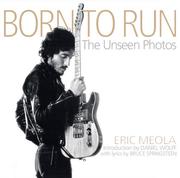 Bruce Springsteen autobiographyRecommended
by Bruce Springsteen
“Bruce Springsteen's autobiography illustrates this transition, where achieving fame and wealth through dirty fuel led to severe depression in his mid-thirties until he shifted to generative motivations around family and authentic creation.”
Tools
“His career chain started with loving books, leading to email lists, then podcasts, which built his software business Canvas, enabling angel investments”
company
“enabling angel investments, creating his venture firm Positive Sum, and launching Colossus magazine”
other
- Inventing on PrincipleRecommended
by Bret Victor
“Brett Victor's talk 'Inventing on Principle' provides a framework where you identify one core principle that when violated, you feel obligated to correct through creation.”
podcast
“This began with an unsolicited tweet promoting Founders podcast when Senra had minimal followers”
newsletter
- ColossusRecommended
“O'Shaughnessy launched Colossus magazine after discovering an obscure publication where major figures agreed to covers despite the magazine's anonymity.”
More from Invest Like the Best with Patrick O'Shaughnessy
We summarize every new episode. Want them in your inbox?
Christina Cacioppo - Building an Enduring Software Company in the Age of AI - [Invest Like the Best, EP.496]
David Vélez - Building Nubank and the Future of Global Banking - [Invest Like the Best, EP.495]
Andrew Huberman - The Frontier of Neurotechnology - [Invest Like the Best, EP.494]
Noah Shinn - Building Instinct: The Personal Agent - [Invest Like the Best, EP.493]
Gabe Stengel - Building Investing Superintelligence - [Invest Like the Best, EP.492]
Similar Episodes
Related episodes from other podcasts

David Senra
Dec 21
Patrick O'Shaughnessy, Colossus & Positive Sum
David Senra
May 10
Dana White, UFC

The Tim Ferriss Show
Sep 24
#828: David Senra — How Extreme Winners Think and Win: Lessons from 400+ of History’s Greatest Founders and Investors (Including Buffett, Munger, Rockefeller, Jobs, Ovitz, Zell, and Names You Don’t Know But Should)

Acquired
Oct 19
Seinfeld
David Senra
Oct 14
Lessons from Napoleon, Steve Jobs, Joan of Arc & Other Leaders | Ben Wilson
Explore Related Topics
This podcast is featured in Best Investing Podcasts (2026) — ranked and reviewed with AI summaries.
Read this week's Health & Longevity Podcast Insights — cross-podcast analysis updated weekly.
You're clearly into Invest Like the Best with Patrick O'Shaughnessy.
Every Monday, we deliver AI summaries of the latest episodes from Invest Like the Best with Patrick O'Shaughnessy and 192+ other podcasts. Free for one show.
Start My Monday DigestNo credit card · Unsubscribe anytime