Dan Loeb - Lessons from 30 Years of Investing - [Invest Like the Best, EP.475]
Episode
63 min
Read time
3 min
Topics
Productivity, Investing, Startups
AI-Generated Summary
Key Takeaways
- ✓Event-Driven Foundation: Joel Greenblatt's *You Can Be a Stock Market Genius* remains the foundational text for identifying mispriced securities created through spin-offs, demutualizations, and post-reorganization equities. The core edge: newly created securities face forced selling from mismatched institutional holders, management teams sandbag earnings to set favorable incentive packages, and underlying operations are sub-optimized within larger conglomerates — creating a repeatable, structural mispricing pattern that still exists in sub-$2B market cap companies today.
- ✓AI Stack Mental Model: Structure AI investment analysis using Jensen Huang's layered framework: power and energy at the base, then chips and infrastructure, then large language models, then software and applications. Loeb narrows focus further to three pivotal entities — NVIDIA, Anthropic, and Elon Musk's collective companies — as prisms through which to evaluate capital flows and competitive positioning across the entire ecosystem rather than analyzing individual companies in isolation.
- ✓Semiconductor Valuation Discipline: Despite the SOX rising 40%, NVIDIA trades at roughly 15x 2027 earnings and 12x 2028 earnings — a multiple Loeb considers attractive for the dominant, fastest-growing large-cap company in the market. The recurring pattern of strong fundamentals paired with declining stock prices (seen at NVIDIA, Micron, and Meta) reflects forced selling by pod shops and CTAs with risk metrics, not deteriorating business quality, creating entry points for fundamental investors.
- ✓Fulcrum Security Framework: When analyzing any company with multiple securities in its capital structure, identify the fulcrum — the security with the best risk-reward, not necessarily the most senior. In the Credit Suisse/UBS acquisition, the HoldCo paper outperformed both OpCo paper and preferred shares, which were wiped out. Applied to Twitter debt purchased near par at a 12% yield and XAI's debt financing, this cross-capital-structure fluency generates alpha unavailable to equity-only or credit-only investors.
- ✓Governance Failure Pattern: Board dysfunction follows a consistent pattern: members prioritize personal status or income over fiduciary duty, loyalty to underperforming CEOs overrides accountability, and boards lack sufficient intellectual or industry diversity to evaluate management effectively. The Sotheby's intervention — buying 9.9%, replacing a CEO with no art expertise, implementing basic operational practices, and ultimately selling the company — demonstrates that social pressure through targeted writing and PR is often more effective than legal or financial levers alone.
What It Covers
Dan Loeb, founder of Third Point managing $25B across equities, credit, and insurance, reflects on 30 years of investing evolution — from event-driven deep value in 1995 to quality investing, thematic tech, and a $7B CLO business — while sharing his current conviction that AI-related semiconductors remain the most attractive sector despite the SOX index rising 40%.
Key Questions Answered
- •Event-Driven Foundation: Joel Greenblatt's *You Can Be a Stock Market Genius* remains the foundational text for identifying mispriced securities created through spin-offs, demutualizations, and post-reorganization equities. The core edge: newly created securities face forced selling from mismatched institutional holders, management teams sandbag earnings to set favorable incentive packages, and underlying operations are sub-optimized within larger conglomerates — creating a repeatable, structural mispricing pattern that still exists in sub-$2B market cap companies today.
- •AI Stack Mental Model: Structure AI investment analysis using Jensen Huang's layered framework: power and energy at the base, then chips and infrastructure, then large language models, then software and applications. Loeb narrows focus further to three pivotal entities — NVIDIA, Anthropic, and Elon Musk's collective companies — as prisms through which to evaluate capital flows and competitive positioning across the entire ecosystem rather than analyzing individual companies in isolation.
- •Semiconductor Valuation Discipline: Despite the SOX rising 40%, NVIDIA trades at roughly 15x 2027 earnings and 12x 2028 earnings — a multiple Loeb considers attractive for the dominant, fastest-growing large-cap company in the market. The recurring pattern of strong fundamentals paired with declining stock prices (seen at NVIDIA, Micron, and Meta) reflects forced selling by pod shops and CTAs with risk metrics, not deteriorating business quality, creating entry points for fundamental investors.
- •Fulcrum Security Framework: When analyzing any company with multiple securities in its capital structure, identify the fulcrum — the security with the best risk-reward, not necessarily the most senior. In the Credit Suisse/UBS acquisition, the HoldCo paper outperformed both OpCo paper and preferred shares, which were wiped out. Applied to Twitter debt purchased near par at a 12% yield and XAI's debt financing, this cross-capital-structure fluency generates alpha unavailable to equity-only or credit-only investors.
- •Governance Failure Pattern: Board dysfunction follows a consistent pattern: members prioritize personal status or income over fiduciary duty, loyalty to underperforming CEOs overrides accountability, and boards lack sufficient intellectual or industry diversity to evaluate management effectively. The Sotheby's intervention — buying 9.9%, replacing a CEO with no art expertise, implementing basic operational practices, and ultimately selling the company — demonstrates that social pressure through targeted writing and PR is often more effective than legal or financial levers alone.
- •Essentialism as Competitive Edge: As information volume grows exponentially, the highest-leverage skill becomes ruthless prioritization rather than comprehensive coverage. Loeb tracks two macro variables above all others — oil prices (driven by geopolitics) and AI infrastructure spending — rather than standard government-reported metrics like unemployment or inflation. For analysts, the modern edge is deep domain expertise in a specific industry or technology, exemplified by an analyst who identified Casey's General Stores as a pizza chain disguised as a convenience store by physically visiting locations in Texas.
Notable Moment
Loeb recounts how Third Point's FTX investment passed standard due diligence — blockchain-verified revenue growth, credible co-investors — yet still resulted in a total loss. The lesson prompted a new protocol: verify actual bank balances as a baseline check. He notes that SBF's underlying venture portfolio picks, including Cursor, Anthropic, and Solana, were genuinely exceptional.
Episode Transcript
I know firsthand how complex the tech stack is for asset managers, and seemingly every new tool and data source makes the problem even worse, adding more complexity, more headcount, and more risk. Ridgeline offers a better way forward, one unified platform that automates away all that complexity across portfolio accounting, reconciliation, reporting, trading, compliance, and more, all at scale. Ridgeline is revolutionizing investment management, helping ambitious firms scale faster, operate smarter, and stay ahead of the curve. See what Ridgeline can unlock for your firm. Schedule a demo at ridgelineapps.com. Felix by Rogo is a personal finance agent that turns a single prompt into finished client ready work using your firm's own templates, context, and standards. Send Felix an email like, take these comments and turn them for me, or update my tracker with the context of these emails, or run the ability to pay math on this buyer, and Felix sends back finished PowerPoint decks, Excel models, and sourced research. Felix works the way your team already does, delivering work quickly and accurately around the clock. Learn more at rogo.ai/felix. OpenAI, Cursor, Anthropic, Perplexity, and Vercel all have something in common. They all use Work OS. And here's why. To achieve enterprise adoption at scale, you have to deliver on core capabilities like SSO, SCIM, RBAC, and audit logs. That's where WorkOS comes in. Instead of spending months building these mission critical capabilities yourself, you can just use WorkOS APIs to gain all of them on day zero. That's why so many of the top AI teams you hear about already run on WorkOS. WorkOS is the fastest way to become enterprise ready and stay focused on what matters most, your product. Visit workos.com to get started. Hello and welcome everyone. I'm Patrick O'Shaughnessy, and this is Invest Like the Best. This show is an open ended exploration of markets, ideas, stories, and strategies that will help you better invest both your time and your money. If you enjoy these conversations and wanna go deeper, check out Colossus, our quarterly publication with in-depth profiles of the people shaping business and investing. You can find Colossus along with all of our podcasts at colossus.com. Patrick O'Shaughnessy is the CEO of Positive Sum. All opinions expressed by Patrick and podcast guests are solely their own opinions and do not reflect the opinion of Positive Sum. This podcast is for informational purposes only and should not be relied upon as a basis for investment decisions. Clients of Positive Sum may maintain positions in the securities discussed in this podcast. To learn more, visit psum.vc. My guest today is Dan Loeb, the founder and CEO of Third Point. Dan started Third Point in 1995 with a few million dollars, and today, the firm manages 400,000,000 across equities, corporate and structured credit, venture, and insurance. He is best known for his activist work at companies like Sotheby's, Sony's, and Yahoo, and for the public letters he has written to boards over the years. …
Get the full transcript (10,850 words) + summary by email — free
One-time email with the complete transcript and AI summary of this episode. No account needed.
One email, no spam. We’ll also show you what SignalCast does.
Browse all Invest Like the Best with Patrick O'Shaughnessy transcripts →

You just read a 3-minute summary of a 60-minute episode.
Get Invest Like the Best with Patrick O'Shaughnessy summarized like this every Monday — plus up to 2 more podcasts, free.
Pick Your Podcasts — FreeKeep Reading
More from Invest Like the Best with Patrick O'Shaughnessy
Andrew Huberman - The Frontier of Neurotechnology - [Invest Like the Best, EP.494]
Oct 6 · 72 min

20VC (20 Minute VC)
20VC: The AI Bubble Will Burst: Half the Neoclouds Will Die | China: Should We Ban Chip Exports & Be Fearful of Chinese Open-Source | Mag7: Who Dies and Who Thrives: Why Meta is Meh and Microsoft is Mega
Aug 22
More from Invest Like the Best with Patrick O'Shaughnessy
Noah Shinn - Building Instinct: The Personal Agent - [Invest Like the Best, EP.493]
Sep 28 · 86 min

All-In with Chamath, Jason, Sacks & Friedberg
Dan Loeb: The Lost Art of Short Selling, and Why Stock Picking is Back
Jun 5
Books, tools, and gear mentioned in this episode
SignalCast may earn commission on purchases via these links. As an Amazon Associate, SignalCast earns from qualifying purchases.
Books
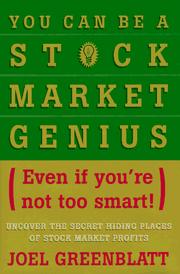 You Can Be a Stock Market GeniusRecommended
by Joel Greenblatt
“Joel Greenblatt's *You Can Be a Stock Market Genius* remains the foundational text for identifying mispriced securities created through spin-offs, demutualizations, and post-reorganization equities.”
Tools
“SPONSORS: Vanta”
“SPONSORS: WorkOS”
“SPONSORS: Ridgeline”
“SPONSORS: Ramp”
Products
company
“Dan Loeb, founder of Third Point managing $25B across equities, credit, and insurance, reflects on 30 years of investing evolution”
“The recurring pattern of strong fundamentals paired with declining stock prices (seen at NVIDIA, Micron, and Meta) reflects forced selling by pod shops and CTAs”
“The Sotheby's intervention — buying 9.9%, replacing a CEO with no art expertise, implementing basic operational practices, and ultimately selling the company”
“He notes that SBF's underlying venture portfolio picks, including Cursor, Anthropic, and Solana, were genuinely exceptional.”
“Loeb narrows focus further to three pivotal entities — NVIDIA, Anthropic, and Elon Musk's collective companies — as prisms through which to evaluate capital flows”
“The recurring pattern of strong fundamentals paired with declining stock prices (seen at NVIDIA, Micron, and Meta) reflects forced selling by pod shops and CTAs”
“Applied to Twitter debt purchased near par at a 12% yield and XAI's debt financing, this cross-capital-structure fluency generates alpha”
“Loeb narrows focus further to three pivotal entities — NVIDIA, Anthropic, and Elon Musk's collective companies — as prisms through which to evaluate capital flows”
More from Invest Like the Best with Patrick O'Shaughnessy
We summarize every new episode. Want them in your inbox?
Andrew Huberman - The Frontier of Neurotechnology - [Invest Like the Best, EP.494]
Noah Shinn - Building Instinct: The Personal Agent - [Invest Like the Best, EP.493]
Gabe Stengel - Building Investing Superintelligence - [Invest Like the Best, EP.492]
Michael Moritz - Lessons From 40 Years of Investing and Writing - [Invest Like the Best, EP.491]
Walter Russell Mead - How America Keeps Winning - [Invest Like the Best, EP.490]
Similar Episodes
Related episodes from other podcasts

20VC (20 Minute VC)
Aug 22
20VC: The AI Bubble Will Burst: Half the Neoclouds Will Die | China: Should We Ban Chip Exports & Be Fearful of Chinese Open-Source | Mag7: Who Dies and Who Thrives: Why Meta is Meh and Microsoft is Mega

All-In with Chamath, Jason, Sacks & Friedberg
Jun 5
Dan Loeb: The Lost Art of Short Selling, and Why Stock Picking is Back

The Prof G Pod
Jul 8
The Fed's Next Move, and How Couples Should Actually Handle Money

The Tim Ferriss Show
Jul 1
#872: Graham Duncan — Talent Is the Best Asset Class (Repost)

This Week in Startups
Jun 27
Why F1 Teams are Replacing Wind Tunnels with Smart Tape | E2305
Explore Related Topics
This podcast is featured in Best Investing Podcasts (2026) — ranked and reviewed with AI summaries.
Read this week's Investing & Markets Podcast Insights — cross-podcast analysis updated weekly.
You're clearly into Invest Like the Best with Patrick O'Shaughnessy.
Every Monday, we deliver AI summaries of the latest episodes from Invest Like the Best with Patrick O'Shaughnessy and 192+ other podcasts. Free for one show.
Start My Monday DigestNo credit card · Unsubscribe anytime