The Fable of the Bees
Episode
50 min
Read time
2 min
Topics
Productivity, Investing, Leadership
AI-Generated Summary
Key Takeaways
- ✓Economic paradox framework: Mandeville demonstrated luxury consumption and vice create employment chains—dishonesty supports lawyers who employ tailors and cooks, while gambling redirects capital to productive investors, challenging mercantilist virtue-based economics of his era.
- ✓Socialization through flattery: Humans domesticate themselves by internalizing others' approval, not innate morality. Parents praise children for small tasks like tying shoelaces, creating self-esteem that drives behavior—virtue becomes constructed social performance rather than inherent goodness across cultures.
- ✓Consumer-driven growth theory: Dutch economy succeeded through luxury trade despite limited natural resources, requiring consumer demand for distant goods. Banning luxury consumption would collapse the economic system that funded national defense, demonstrating consumption's essential role predating Keynesian economics.
- ✓Charity school critique: Educating poor children beyond their labor prospects creates overeducated, resentful workers unable to find suitable positions. Good intentions don't guarantee positive outcomes—analyzing causal mechanisms matters more than moral motivations when evaluating social policy effectiveness.
What It Covers
Bernard Mandeville's 1714 Fable of the Bees argued private vices like greed and vanity drive economic prosperity, scandalizing British society while influencing Adam Smith, Keynes, and Hayek's economic theories about self-interest and markets.
Key Questions Answered
- •Economic paradox framework: Mandeville demonstrated luxury consumption and vice create employment chains—dishonesty supports lawyers who employ tailors and cooks, while gambling redirects capital to productive investors, challenging mercantilist virtue-based economics of his era.
- •Socialization through flattery: Humans domesticate themselves by internalizing others' approval, not innate morality. Parents praise children for small tasks like tying shoelaces, creating self-esteem that drives behavior—virtue becomes constructed social performance rather than inherent goodness across cultures.
- •Consumer-driven growth theory: Dutch economy succeeded through luxury trade despite limited natural resources, requiring consumer demand for distant goods. Banning luxury consumption would collapse the economic system that funded national defense, demonstrating consumption's essential role predating Keynesian economics.
- •Charity school critique: Educating poor children beyond their labor prospects creates overeducated, resentful workers unable to find suitable positions. Good intentions don't guarantee positive outcomes—analyzing causal mechanisms matters more than moral motivations when evaluating social policy effectiveness.
Notable Moment
Mandeville claimed rescuing a child from fire stems from avoiding the discomfort of smelling burning flesh, not altruism—a provocative reduction of apparent virtue to disguised self-interest that outraged moralists while anticipating Freudian psychology.
Episode Transcript
This BBC podcast is supported by ads outside The UK. Make their holiday unforgettable with a gift that says it all from Pandora Jewelry. A gift that tells a story and shows you know theirs. That doesn't just sparkle, but speaks. From new festive charms to forever rings and personal engravings. This season, give a gift that's perfectly theirs. Whether you're shopping for a shiny surprise for your significant other, matching bracelets to celebrate your friendship, or a heartfelt gift for a family member, say more this holiday season with Pandora. Shop now at pandora.net or visit your closest Pandora store. Charitable Giving Stack just called, and it wants a glow up. Wren Technology is used by the top institutions in the country for donor advised funds. They're the fastest growing giving vehicle for a reason. Wren just makes giving a lot less taxing. Learn more at reninc.com. In California, BBC Sounds. Music, radio, podcasts. Thanks for downloading this episode of In Our Time. There's a reading list to go with it on our website, and you can get news about our programs if you follow us on Twitter at BBC In Our Time. I hope you enjoy the programs. Hello. Bernard Mandeville, 1670 to 1733, scandalized the British establishment with his book, Fable of the Bees, in which he argued that private vices were essential to a healthy economy. Those who strive to make the world virtuous would make it poor, he said. Dishonesty supports lawyers, who then support their tailors and their cooks, and gambling diverts money from those who don't know its value to those who do and can invest it wisely. Many of our virtues, he wrote, are in fact disguised vices. Mandeville was one of the first to emphasize the role of the consumer in the economy rather than the state, and he was to influence ideas from Adam Smith in the eighteenth century to Keynes and Hayek in the twentieth. With me to discuss the people of the bizarre, David Wooten, professor of history at the University of York, York, Helen Paul, lecturer in economics and economic history at the University of Southampton, and John Cullinan, senior lecturer in philosophy at King's College London. David Wootton, what do we need to know about Bernard Mandeville's early life in Rotterdam? His father is a doctor. He's raised in a city which is, one of the commercial capitals of the world at the time, and Holland is one of the intellectual capitals of the world at the time. Mandeville goes to the Erasmus School, and he's obviously given lots of Erasmus to read as a young man, refers to Erasmus a lot in his later writings. But what's really important is that a great intellectual, Pierre Bail, is teaching just down the road in the illustrious academy. And and Bail is Why you call him great? Because he's the inventor of the sort of paradox that Mandeville likes to rely on later. But Bale's great paradox, …
Get the full transcript (9,485 words) + summary by email — free
One-time email with the complete transcript and AI summary of this episode. No account needed.
One email, no spam. We’ll also show you what SignalCast does.

You just read a 3-minute summary of a 47-minute episode.
Get In Our Time summarized like this every Monday — plus up to 2 more podcasts, free.
Pick Your Podcasts — FreeKeep Reading


Books, tools, and gear mentioned in this episode
SignalCast may earn commission on purchases via these links. As an Amazon Associate, SignalCast earns from qualifying purchases.
Books
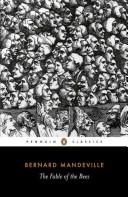 Fable of the BeesBy guest
by Bernard Mandeville
“Bernard Mandeville's 1714 Fable of the Bees argued private vices like greed and vanity drive economic prosperity, scandalizing British society while influencing Adam Smith, Keynes, and Hayek's economic theories about self-interest and markets.”
More from In Our Time
We summarize every new episode. Want them in your inbox?
Similar Episodes
Related episodes from other podcasts

a16z Podcast
Apr 2
Alex Blania on Proof of Human and Building World's Identity Network

Capital Allocators
Feb 2
Jonathan Lewinsohn – Credit Microcycles at Diameter (EP.484)

Marketplace
Jan 22
Here's what kept GDP climbing last summer
Capital Allocators
Jan 19
Scott Kleinman – Apollo's Integrated Alternatives Platform (EP.481)
a16z Podcast
Nov 21
Robinhood CEO: Making Everyone An Owner
Explore Related Topics
This podcast is featured in Best History Podcasts (2026) — ranked and reviewed with AI summaries.
Read this week's Investing & Markets Podcast Insights — cross-podcast analysis updated weekly.
You're clearly into In Our Time.
Every Monday, we deliver AI summaries of the latest episodes from In Our Time and 192+ other podcasts. Free for one show.
Start My Monday DigestNo credit card · Unsubscribe anytime