Sovereignty
Episode
47 min
Read time
2 min
Topics
Personal Finance, Design & UX, Product & Tech Trends
AI-Generated Summary
Key Takeaways
- ✓Bodin's Definition: Sovereignty requires four traits: supremacy with no terrestrial superior, absolute authority beyond any tribunal, indivisibility of legislative power and war-making rights in one body, and perpetual continuity to prevent destabilizing power transfers during religious wars.
- ✓Hobbes' Innovation: The Leviathan represents collective power transferred irrevocably from people to a representative sovereign, creating unity from a disunited multitude. Without this transfer and ongoing disposition to obey through public doctrine, no commonwealth can exist—only competing factions.
- ✓Rousseau's Revolution: Democratic sovereignty must reside with the people's assembly for fundamental laws, but day-to-day administration requires separate government structures. This separation between sovereign authority and administrative power became central to post-revolutionary constitutional design across Europe and America.
- ✓American Application: The 1765 Declaratory Act demonstrated sovereignty versus enforceability—Britain asserted legal authority over colonies while lacking practical power to impose it. Massachusetts' 1778 referendum introduced popular votes on constitutional fundamentals, establishing direct democratic participation beyond representation.
What It Covers
Jean Bodin's 1576 theory of sovereignty established four defining characteristics—supreme, absolute, indivisible, and perpetual authority—that shaped political philosophy through Hobbes, Rousseau, and the American and French revolutions, creating ongoing debates about democratic legitimacy.
Key Questions Answered
- •Bodin's Definition: Sovereignty requires four traits: supremacy with no terrestrial superior, absolute authority beyond any tribunal, indivisibility of legislative power and war-making rights in one body, and perpetual continuity to prevent destabilizing power transfers during religious wars.
- •Hobbes' Innovation: The Leviathan represents collective power transferred irrevocably from people to a representative sovereign, creating unity from a disunited multitude. Without this transfer and ongoing disposition to obey through public doctrine, no commonwealth can exist—only competing factions.
- •Rousseau's Revolution: Democratic sovereignty must reside with the people's assembly for fundamental laws, but day-to-day administration requires separate government structures. This separation between sovereign authority and administrative power became central to post-revolutionary constitutional design across Europe and America.
- •American Application: The 1765 Declaratory Act demonstrated sovereignty versus enforceability—Britain asserted legal authority over colonies while lacking practical power to impose it. Massachusetts' 1778 referendum introduced popular votes on constitutional fundamentals, establishing direct democratic participation beyond representation.
Notable Moment
Thomas Paine's Common Sense pamphlet in 1775 single-handedly eliminated monarchical sovereignty as viable in America by ridiculing the idea that senile or incompetent kings could legitimately exercise power, fundamentally reshaping revolutionary thinking through mockery rather than theory.
Episode Transcript
This BBC podcast is supported by ads outside The UK. When the holidays start to feel a bit repetitive, reach for Sprite Winter Spice Cranberry and put your twist on tradition. A bold cranberry and winter spice flavors fusion, Sprite Winter Spice Cranberry is a refreshing way to shake things up this sipping season, and only for a limited time. Sprite, obey your thirst. Protect your pet with insurance from Pets Fest. Plans start from less than a dollar a day. Visit petsbest.com. Pet insurance products offered and administered by Pets Best Insurance Services, LLC are underwritten by American Pet Insurance Company or Independence American Insurance Company. For terms and conditions, visit www.petsbest.com backslash policy. Products are underwritten by American Pet Insurance Independence American Insurance Company, or MS Transverse Insurance Company, and administered by Pet's Best Insurance Services, LLC. One dollar a day premium based on twenty twenty four average new policyholder data for accident and illness plans, pets age zero to 10. Thank you for downloading this episode of In Our Time. For news about In Our Time and for recommendations about our archive, please follow us on Twitter at BBC In Our Time. I hope you enjoy the program. Hello. In 1576, the French political philosopher Jean Bodin set out his ideas about the nature of sovereignty in what became a landmark work, the six books of the Commonwealth. He was writing in a time of great conflict in France, the wars of religion between Catholics and Protestants, and a few years before the Saint Bartholomew's Day Massacre. With kings, princes, the pope, and aristocrats making overlapping claims for authority, Bonin wanted to find the defining qualities of the one supreme sovereign in a state. His ideas about sovereignty draw on Aristotle and profoundly influenced later thinkers such as Hobbes during the English civil war, Rousseau ahead of the French revolution, the leaders of the American revolution, and we stop short of current affairs. Women to discuss the history of the idea of sovereignty are Melissa Lane, class of 1943, professor of politics at Princeton University, Richard Burke, professor in the history of political thought at Queen Mary, University of London, and Tim Sandton, senior lecturer in the department of politics at the University of York. Melissa Lane, Bonar read about the ancient Greeks. What would you have found there that would have helped him in his political theory? Of course, in ancient Greece and across the ancient world, we have sovereigns in the sense of monarchs. But what Bodin was also very struck by was that in the Greek democracies, we find what we can think of as popular sovereignty where the people are sovereign. And the advantage of the people over monarchs is that they're not underage ever. They don't get senile. So they have more claim in some ways to be absolute, supreme, perpetual, and even indivisible, which were some of the, key marks of sovereignty that Bodin identified. And, also, the Greeks set out …
Get the full transcript (8,374 words) + summary by email — free
One-time email with the complete transcript and AI summary of this episode. No account needed.
One email, no spam. We’ll also show you what SignalCast does.

You just read a 3-minute summary of a 44-minute episode.
Get In Our Time summarized like this every Monday — plus up to 2 more podcasts, free.
Pick Your Podcasts — FreeKeep Reading


Books, tools, and gear mentioned in this episode
SignalCast may earn commission on purchases via these links. As an Amazon Associate, SignalCast earns from qualifying purchases.
Books
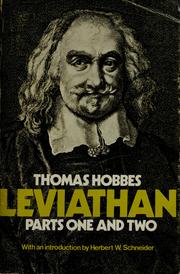 LeviathanBy guest
by Thomas Hobbes
“The Leviathan represents collective power transferred irrevocably from people to a representative sovereign, creating unity from a disunited multitude.”
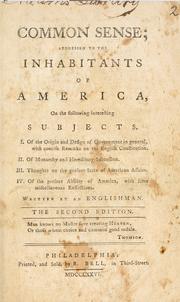 Common SenseBy guest
by Thomas Paine
“Thomas Paine's Common Sense pamphlet in 1775 single-handedly eliminated monarchical sovereignty as viable in America by ridiculing the idea that senile or incompetent kings could legitimately exercise power.”
- Six Books of the CommonwealthBy guest
by Jean Bodin
“Jean Bodin's 1576 theory of sovereignty established four defining characteristics—supreme, absolute, indivisible, and perpetual authority—that shaped political philosophy through Hobbes, Rousseau, and the American and French revolutions.”
More from In Our Time
We summarize every new episode. Want them in your inbox?
Similar Episodes
Related episodes from other podcasts

The AI Breakdown
Oct 2
What the Best Business AI Users Are Doing Different

Odd Lots
Oct 1
Everything in Markets Is Now Moving Incredibly Fast

TED Radio Hour
Sep 25
Life can be so awkward. Here's how to embrace the embarrassing
The AI Breakdown
Sep 6
How to Build an AI-Native Company Today

The Diary of a CEO
Jul 3
Most Replayed Moment: The Mid-Year Reset - Atomic Habits Author On How To Get Back On Track
Explore Related Topics
This podcast is featured in Best History Podcasts (2026) — ranked and reviewed with AI summaries.
You're clearly into In Our Time.
Every Monday, we deliver AI summaries of the latest episodes from In Our Time and 192+ other podcasts. Free for one show.
Start My Monday DigestNo credit card · Unsubscribe anytime