Henry IV Part 1
Episode
51 min
Read time
2 min
Topics
Relationships, Leadership, Psychology & Behavior
AI-Generated Summary
Key Takeaways
- ✓Political legitimacy through performance: Hal's path to kingship in Henry IV Part 1 is explicitly performative — he wins legitimacy by defeating Hotspur in single combat at Shrewsbury, not through birthright. Shakespeare shows that power requires the right language, behavior, and visible chivalric acts, regardless of the underlying political reality of how battles are actually won.
- ✓History plays as political commentary: Elizabethan playwrights used historical drama as a coded mirror for contemporary politics. With Elizabeth I aging and refusing to name a successor by 1596-97, plays depicting unstable succession and civil war allowed writers to explore forbidden questions about power and legitimacy without directly addressing the dangerous present-day situation.
- ✓Falstaff's name change reveals censorship mechanics: Shakespeare originally named Falstaff "Oldcastle," a Protestant martyr figure venerated in Foxe's Book of Martyrs. Living descendants of the Oldcastle family objected to the satirical portrayal, forcing a name change between the first performance and the 1598 publication — demonstrating how aristocratic pressure directly shaped early modern theatrical texts.
- ✓Prose versus verse as identity marker: Characters in Henry IV Part 1 signal their world through language register. Tavern scenes use prose; court and battlefield scenes use verse. Hal's soliloquy in act one scene two is the only verse speech in the tavern sphere, signaling his divided identity and foreshadowing his eventual rejection of Eastcheap life before it happens.
- ✓Hal's three competing self-narratives: Hal simultaneously offers three explanations for his tavern behavior — genuine enjoyment of Falstaff's company, ethnographic study of common people for future political manipulation, and deliberate reputation management to make his eventual reformation more spectacular. Samuel Johnson read the soliloquy as a great mind constructing excuses it does not fully believe.
What It Covers
Professors Lucy Munro, Lawrence Publicova, and Emma Smith analyze Shakespeare's Henry IV Part 1, examining how the 1596 play uses 15th-century civil war to address Tudor succession anxieties, while tracing Prince Hal's calculated transformation from tavern companion to legitimate ruler through his relationships with Falstaff and Hotspur.
Key Questions Answered
- •Political legitimacy through performance: Hal's path to kingship in Henry IV Part 1 is explicitly performative — he wins legitimacy by defeating Hotspur in single combat at Shrewsbury, not through birthright. Shakespeare shows that power requires the right language, behavior, and visible chivalric acts, regardless of the underlying political reality of how battles are actually won.
- •History plays as political commentary: Elizabethan playwrights used historical drama as a coded mirror for contemporary politics. With Elizabeth I aging and refusing to name a successor by 1596-97, plays depicting unstable succession and civil war allowed writers to explore forbidden questions about power and legitimacy without directly addressing the dangerous present-day situation.
- •Falstaff's name change reveals censorship mechanics: Shakespeare originally named Falstaff "Oldcastle," a Protestant martyr figure venerated in Foxe's Book of Martyrs. Living descendants of the Oldcastle family objected to the satirical portrayal, forcing a name change between the first performance and the 1598 publication — demonstrating how aristocratic pressure directly shaped early modern theatrical texts.
- •Prose versus verse as identity marker: Characters in Henry IV Part 1 signal their world through language register. Tavern scenes use prose; court and battlefield scenes use verse. Hal's soliloquy in act one scene two is the only verse speech in the tavern sphere, signaling his divided identity and foreshadowing his eventual rejection of Eastcheap life before it happens.
- •Hal's three competing self-narratives: Hal simultaneously offers three explanations for his tavern behavior — genuine enjoyment of Falstaff's company, ethnographic study of common people for future political manipulation, and deliberate reputation management to make his eventual reformation more spectacular. Samuel Johnson read the soliloquy as a great mind constructing excuses it does not fully believe.
Notable Moment
The play extempore scene, where Hal and Falstaff swap roles playing king and prince, carries the entire play's thematic weight. When Hal, voicing his father, says he will banish Falstaff, the shift from present to future tense signals a genuine moment of self-recognition — Falstaff appears to sense the threat is real.
Episode Transcript
This BBC podcast is supported by ads outside The UK. The best b to b marketing gets wasted on the wrong people. So when you want to reach the right professionals, use LinkedIn ads. LinkedIn has grown to a network of over 1,000,000,000 professionals, including 130,000,000 decision makers, and that's where it stands apart from other ad buys. You can target your buyers by job title, industry, company, roles, seniority, skills, company revenue, so you can stop wasting budget on the wrong audience. It's why LinkedIn ads generates the highest b to b return on ad spend of major ad networks. Spend $250 on your first campaign on LinkedIn ads and get $250 credit for the next one. Just go to linkedin.com/broadcast. That's linkedin.com/broadcast. Terms and conditions apply. It's game time at the Tony Group. This is your shot to score big and save thousands all month long during the Tony Group's Big Shot sales event. Get huge discounts and save big on Hawaii's largest selection of new and used vehicles with over 1,500 cars, trucks, vans, and SUVs to choose from. Looking to trade or sell? We'll pay top dollar for your vehicle. Save even more with financing as low as 0% APR. Inventory is moving fast. Hurry in and win with huge savings during the Tony Group's Big Shot sales event. Visit one of Tony Group's locations in Waipio, Hilo, and Kona today, or shoptonygroup.com. Offerings 3 thirty one twenty six on a group credit to qualify by. See you later for full details. This is In Our Time from BBC Radio four, and this is one of more than a thousand episodes you can find in the In Our Time archive. A reading list for this edition can be found in the episode description wherever you're listening. I hope you enjoy the program. Hello. Shakespeare's Henry the fourth part one asks who will succeed to the throne and why. Now for his Tudor audience, that was a very pressing question because Elizabeth the first had named no successor. So playwrights, who were banned from openly exploring that disturbing fact turned to history to consider themes of power, legitimacy, and succession. And when you add Henry the fourth's relevance for the Tudors to the vivid characters of Falstaff, Hotspur, and Hal, the tensions between noble fathers and sons, it's no wonder this play was one of Shakespeare's most popular then and now. With me to discuss Henry the fourth part one are Lucy Munro, professor of Shakespeare and early modern literature at King's College London, Lawrence Publicova, associate professor in the department of English at the University of Bristol, and Emma Smith, professor of Shakespeare studies at the Hartford College, University of Oxford. Emma, simple question to start. Can you summarize the plot of the play? Absolutely. So shaken as we are, so one with care. So the play begins in a downward beat, a turmoil. And it's all about the attempts of Henry the fourth, the title …
Get the full transcript (9,606 words) + summary by email — free
One-time email with the complete transcript and AI summary of this episode. No account needed.
One email, no spam. We’ll also show you what SignalCast does.

You just read a 3-minute summary of a 48-minute episode.
Get In Our Time summarized like this every Monday — plus up to 2 more podcasts, free.
Pick Your Podcasts — FreeKeep Reading
More from In Our Time
Particle Accelerators
Oct 22 · 52 min

Eye on AI
#336 Professor Mausam: Why India Is Losing the AI Race and What It Will Take to Catch Up
Apr 20
More from In Our Time
Archive: Erasmus
Oct 19 · 42 min

Conversations with Tyler
Henry Oliver on Measure for Measure, Late Bloomers, and the Smartest Writers in English
Mar 4
Books, tools, and gear mentioned in this episode
SignalCast may earn commission on purchases via these links. As an Amazon Associate, SignalCast earns from qualifying purchases.
Books
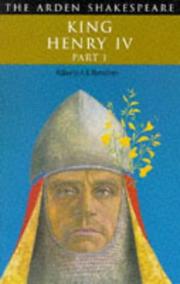
by William Shakespeare
“Professors Lucy Munro, Lawrence Publicova, and Emma Smith analyze Shakespeare's Henry IV Part 1, examining how the 1596 play uses 15th-century civil war to address Tudor succession anxieties”
by John Foxe
“Shakespeare originally named Falstaff "Oldcastle," a Protestant martyr figure venerated in Foxe's Book of Martyrs.”
More from In Our Time
We summarize every new episode. Want them in your inbox?
Similar Episodes
Related episodes from other podcasts

Eye on AI
Apr 20
#336 Professor Mausam: Why India Is Losing the AI Race and What It Will Take to Catch Up

Conversations with Tyler
Mar 4
Henry Oliver on Measure for Measure, Late Bloomers, and the Smartest Writers in English

Pivot
Aug 22
The “Woke” Smithsonian, South Park’s Latest Dig at Trump, and Co-Host Wesley Morris

The Ezra Klein Show
Jun 3
The Emergent Trump Doctrine
Explore Related Topics
This podcast is featured in Best History Podcasts (2026) — ranked and reviewed with AI summaries.
You're clearly into In Our Time.
Every Monday, we deliver AI summaries of the latest episodes from In Our Time and 192+ other podcasts. Free for one show.
Start My Monday DigestNo credit card · Unsubscribe anytime