Hegel's Philosophy of History
Episode
52 min
Read time
2 min
Topics
Leadership, Software Development, Philosophy & Wisdom
AI-Generated Summary
Key Takeaways
- ✓Freedom's dialectical structure: Hegel argues freedom requires necessity—you must will certain things to be free, like respecting rights. A free state must structurally separate civil society from government, and divide government into legislature, executive, and sovereign branches.
- ✓Historical progression framework: History moves through three stages: China embodied patriarchal rule where only the emperor was free; fifth-century Athens granted freedom to citizens but excluded slaves; Christianity established the principle that all humans are free before God.
- ✓Individual identity formation: People do not craft their identities alone—desires, personality, and character emerge from social influences, cultural institutions, and historical context. Understanding freedom requires recognizing how society shapes individual aims and values, not autonomous self-creation.
- ✓Philosophy requires historical study: Philosophy cannot understand itself without examining its history. Studying how concepts like freedom evolved across cultures provides the critical distance needed to evaluate current beliefs and institutions, creating a toolbox for independent analysis.
What It Covers
Hegel's philosophy of history examines how human freedom evolved from ancient China (where one was free) through Greece and Rome (where some were free) to modern Christian Europe (where all are conceptually free).
Key Questions Answered
- •Freedom's dialectical structure: Hegel argues freedom requires necessity—you must will certain things to be free, like respecting rights. A free state must structurally separate civil society from government, and divide government into legislature, executive, and sovereign branches.
- •Historical progression framework: History moves through three stages: China embodied patriarchal rule where only the emperor was free; fifth-century Athens granted freedom to citizens but excluded slaves; Christianity established the principle that all humans are free before God.
- •Individual identity formation: People do not craft their identities alone—desires, personality, and character emerge from social influences, cultural institutions, and historical context. Understanding freedom requires recognizing how society shapes individual aims and values, not autonomous self-creation.
- •Philosophy requires historical study: Philosophy cannot understand itself without examining its history. Studying how concepts like freedom evolved across cultures provides the critical distance needed to evaluate current beliefs and institutions, creating a toolbox for independent analysis.
Notable Moment
Hegel completed his Phenomenology during the Battle of Jena in 1807, hearing cannons from his room. He sent his only manuscript copy through French military lines on horseback, uncertain for days whether it would reach his publisher.
Episode Transcript
This BBC podcast is supported by ads outside The UK. This is Eva Longoria from Hungry for History with Eva Longoria and Maite Gomez Rejon. Like the song says, it's the most wonderful time of the year and also a wonderfully busy one. All that merriment can weigh down even Santa's sleigh, so keep it wonderful by keeping yourself wonderful with a crisp cold Coca Cola. Pause for fizzy joy. Look out for yourself and then look out for everyone else. And together, we'll make this season as wonderful as it's meant to be. Enjoy a Coca Cola. Refresh your holidays. Spring has sprung, and that means summer is ready to bring the heat. At Thornton and Grooms, we're lowering the price of our comprehensive AC check. Now only $59 for a limited time, so you can cool things down when life starts heating up. Trusted, guaranteed. Thornton and Grooms, schedule your service today. BBC Sounds. Music, radio, podcasts. Thanks for downloading this episode of In Our Time. There's a reading list to go with it on our website, and you can get news about our programs if you follow us on Twitter at at bbc in our time. I hope you enjoy the programs. Hello. Hegel, 1770 to 1831, is one of the most influential of modern philosophers. And one of his essential questions was whether we enjoy more freedom now than those who came before us. To explore that, he looked into the past to see when freedom was moving from one to the few to everyone, defining history itself as the progress in the consciousness of freedom. With me to discuss Hegel's philosophy of history are Sally Sedgwick, professor and chair of philosophy at Boston University, Robert Stern, professor of philosophy at the University of Sheffield, and Stephen Hulgate, professor of philosophy at the University of Warwick. Stephen Hulgate, his own history had some bearing on his ideas. So can you tell us about Hegel's early life? Hegel was born in 1770, the same year as Beethoven and Wordsworth. So he was a young man going on 19 when the French Revolution broke out in 1789. And he was initially filled with enthusiasm for it and its ideals of freedom and equality, but then clearly deeply disappointed as, I guess, a lot of people were at the time when the terror, arose. But that prompted Hegel to formulate some thoughts about the intimate connection between certain conceptions of freedom and death. There is a way of conceiving freedom, Hegel thinks, that leads not to freedom but death. And and Hegel was very, interested in that. In eighteen o seven, Hegel published his first major work, The Phenomenology, which is a difficult but fascinating text that contains a number of his most famous sections, the master slave dialectic, the unhappy consciousness, and an account of the French Revolution. Now the phenomenology was famously completed during the Battle of Jena. Hegel could hear the canons from his room as …
Get the full transcript (9,161 words) + summary by email — free
One-time email with the complete transcript and AI summary of this episode. No account needed.
One email, no spam. We’ll also show you what SignalCast does.

You just read a 3-minute summary of a 49-minute episode.
Get In Our Time summarized like this every Monday — plus up to 2 more podcasts, free.
Pick Your Podcasts — FreeKeep Reading


Books, tools, and gear mentioned in this episode
SignalCast may earn commission on purchases via these links. As an Amazon Associate, SignalCast earns from qualifying purchases.
Books
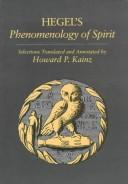
by Georg Wilhelm Friedrich Hegel
“Hegel completed his Phenomenology during the Battle of Jena in 1807, hearing cannons from his room. He sent his only manuscript copy through French military lines on horseback, uncertain for days whether it would reach his publisher.”
More from In Our Time
We summarize every new episode. Want them in your inbox?
Similar Episodes
Related episodes from other podcasts

The Joe Rogan Experience
Aug 26
#2546 - Michael Button

Stuff You Should Know
Jul 4
Selects: Chopsticks > Forks

Everything Everywhere Daily
Jun 2
Yemen's Long and Complicated History

Dwarkesh Podcast
May 8
David Reich – Why the Bronze Age was an inflection point in human evolution

The Vergecast
Mar 8
Version History: Furby
Explore Related Topics
This podcast is featured in Best History Podcasts (2026) — ranked and reviewed with AI summaries.
Read this week's Software Engineering Podcast Insights — cross-podcast analysis updated weekly.
You're clearly into In Our Time.
Every Monday, we deliver AI summaries of the latest episodes from In Our Time and 192+ other podcasts. Free for one show.
Start My Monday DigestNo credit card · Unsubscribe anytime