Archive: Epic of Gilgamesh
Episode
48 min
Read time
2 min
Topics
Health & Wellness, Philosophy & Wisdom, Science & Discovery
AI-Generated Summary
Key Takeaways
- ✓Literary Evolution: The Epic of Gilgamesh exists in versions spanning nearly 4,000 years, from roughly 1900 BCE to 100 BCE, allowing scholars to track its transformation from a celebration of heroic glory into a philosophical meditation on mortality. This makes it uniquely valuable as a document showing how ancient literature was actively revised, not simply preserved.
- ✓Humanization Through Civilization: Enkidu's transition from wild animal to human companion is achieved through six days and seven nights of sexual contact with a temple prostitute, after which he loses the ability to live among animals but gains intelligence and language. The poem frames civilization itself as something transmitted through intimate human contact rather than divine intervention.
- ✓Flood Narrative Precedence: The Gilgamesh flood story, deciphered by George Smith at the British Museum in 1872, predates the Genesis account of Noah by a considerable margin. Clay tablets containing the Mesopotamian version date back approximately 4,000 years, whereas no archaeological evidence places the Genesis flood narrative anywhere near that age.
- ✓Ecological Awareness in Ancient Text: When Enkidu and Gilgamesh destroy the Cedar Forest and kill its guardian Humbaba, Enkidu looks back and explicitly acknowledges they have created a wasteland. The poem frames this destruction as morally wrong, embedding an early ecological critique: humans exist within a balanced natural world they can damage, not one they hold dominion over.
- ✓Immortality as Cautionary Concept: The poem implicitly questions whether immortality is desirable. The flood survivor Utnapishtim, the one mortal granted eternal life, exists in a featureless landscape with only his wife and no company. The poem's resolution reframes legacy: individual humans die like mayflies, but the human community, symbolized by Uruk's walls, persists across generations.
What It Covers
Three Assyriology scholars from London, Oxford, and Cambridge examine the Epic of Gilgamesh, a Mesopotamian poem with roots exceeding 4,000 years. The discussion covers the text's origins on clay tablets, its narrative arc from tyranny to wisdom, its flood narrative predating Genesis, and its enduring literary techniques.
Key Questions Answered
- •Literary Evolution: The Epic of Gilgamesh exists in versions spanning nearly 4,000 years, from roughly 1900 BCE to 100 BCE, allowing scholars to track its transformation from a celebration of heroic glory into a philosophical meditation on mortality. This makes it uniquely valuable as a document showing how ancient literature was actively revised, not simply preserved.
- •Humanization Through Civilization: Enkidu's transition from wild animal to human companion is achieved through six days and seven nights of sexual contact with a temple prostitute, after which he loses the ability to live among animals but gains intelligence and language. The poem frames civilization itself as something transmitted through intimate human contact rather than divine intervention.
- •Flood Narrative Precedence: The Gilgamesh flood story, deciphered by George Smith at the British Museum in 1872, predates the Genesis account of Noah by a considerable margin. Clay tablets containing the Mesopotamian version date back approximately 4,000 years, whereas no archaeological evidence places the Genesis flood narrative anywhere near that age.
- •Ecological Awareness in Ancient Text: When Enkidu and Gilgamesh destroy the Cedar Forest and kill its guardian Humbaba, Enkidu looks back and explicitly acknowledges they have created a wasteland. The poem frames this destruction as morally wrong, embedding an early ecological critique: humans exist within a balanced natural world they can damage, not one they hold dominion over.
- •Immortality as Cautionary Concept: The poem implicitly questions whether immortality is desirable. The flood survivor Utnapishtim, the one mortal granted eternal life, exists in a featureless landscape with only his wife and no company. The poem's resolution reframes legacy: individual humans die like mayflies, but the human community, symbolized by Uruk's walls, persists across generations.
Notable Moment
When George Smith first deciphered the Gilgamesh flood story in 1872, the discovery triggered national and international debate involving heads of state and prime ministers, raising the question of whether an older Mesopotamian flood account undermined or supported the literal truth of the Bible.
Episode Transcript
This BBC podcast is supported by ads outside The UK. Ever wonder how a single court decision will change the direction of The USA? That's the idea behind Let the Record Show, a new podcast from the ACLU hosted by history teacher Matt Beat and journalist Shereen Marisol Miraji. Each episode digs into a landmark ruling and the human story behind the law. From Wong Kim Ark, whose case gave us birthright citizenship, to Paulie Murray, the trailblazing activist, lawyer, and episcopal priest who pushed The USA to take racial and gender equality seriously. Tune in every other week wherever you get your podcasts. Your information may be for sale online. Yeah. I'll take four Social Security numbers and a maiden name. LifeLock finds and removes exposed info from data brokers that could put your identity and finances at risk. Nine email addresses, please. And if those sites put your information back online And a dozen phone numbers. LifeLock will remove that too. Save up to 30% your first year at lifelock.com/specialoffer. Terms apply. Anyone else hot, hormonal, and in need of a two week vacation? Preferably somewhere chilly. Tell the night sweats to cool it with clean, science backed perimenopause support from Ritual designed to support mood, sleep, and hormone balance. Shop the best sale of the season and get 40% off your first month at ritual.com/podcast. These statements have not been evaluated by the Food and Drug Administration. This product is not intended to diagnose, treat, cure, or prevent any disease. Hello. In this week's In Our Time we are discussing Ishtar, the mighty Sumerian or Babylonian goddess of love, sex and war. The choice of an accompaniment from Melvin Bragg's magnificent archive was easy, the Epic of Gilgamesh. I've chosen this partly because I think the first great story in recorded human history is not as well known as it should be, and partly because Ishtar herself plays an important role in the story. Gilgamesh is a king, a demigod, who embarks on a journey into the unknown in his search for immortality. This is an early example of what Aristotle would later define as hubris. In Gilgamesh's case, he repeatedly fails his challenges until finally conceding his goal is unattainable. His adventures with his friend and collaborator Enkiru are heroic, foolhardy and gripping. Oh, and Gilgamesh refuses to have sex with Ishtar, an offer most mortals probably felt they couldn't refuse. I hope you enjoy listening to one of my favorite archive episodes. Hello. He who saw the deep. That's a quotation, the first words of the epic of Gil Gil... Gilgamesh, said to be the first great masterpiece of literature. A poem with roots more than 4,000 years old in Mesopotamia, modern day Iraq, and rediscovered in the nineteenth century. It tells of Gilgamesh, king of Uruk, who with his best friend his friend Enkidu fights a giant and kills the bull of heaven and alone travels across the waters of death to meet the …
Get the full transcript (9,621 words) + summary by email — free
One-time email with the complete transcript and AI summary of this episode. No account needed.
One email, no spam. We’ll also show you what SignalCast does.

You just read a 3-minute summary of a 45-minute episode.
Get In Our Time summarized like this every Monday — plus up to 2 more podcasts, free.
Pick Your Podcasts — FreeKeep Reading


Books, tools, and gear mentioned in this episode
SignalCast may earn commission on purchases via these links. As an Amazon Associate, SignalCast earns from qualifying purchases.
Books
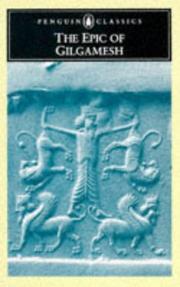
“Three Assyriology scholars from London, Oxford, and Cambridge examine the Epic of Gilgamesh, a Mesopotamian poem with roots exceeding 4,000 years.”
More from In Our Time
We summarize every new episode. Want them in your inbox?
Similar Episodes
Related episodes from other podcasts

Deep Questions with Cal Newport
Mar 19
AI Reality Check: Did AI Just Become Sentient?

The Intelligence (Economist)
Mar 5
Spars and strikes: Who backs Iran war?

The Rest is History
Feb 4
The Arnolfini Portrait, with Laura Cumming

The Peter Attia Drive
Nov 16
#416 ‒ The science of mitochondria: their role in health, aging, and disease, and what the evidence says about drugs and supplements aimed at improving their function | Navdeep Chandel, Ph.D.

The Daily (NYT)
Nov 14
Olivia Wilde Hit Bottom. Here's How She Bounced Back.
Explore Related Topics
This podcast is featured in Best History Podcasts (2026) — ranked and reviewed with AI summaries.
Read this week's Health & Longevity Podcast Insights — cross-podcast analysis updated weekly.
You're clearly into In Our Time.
Every Monday, we deliver AI summaries of the latest episodes from In Our Time and 192+ other podcasts. Free for one show.
Start My Monday DigestNo credit card · Unsubscribe anytime