Steve Levitt Quits His Podcast, Joins Ours
Episode
45 min
Read time
2 min
Topics
Productivity, Artificial Intelligence, Software Development
AI-Generated Summary
Key Takeaways
- ✓Mastery Learning Model: Traditional classroom teaching with 30 students learning identical material simultaneously wastes time. Mastery learning allows students to progress only after demonstrating competence in each topic, freeing up three to four hours daily for creative projects, personalized exploration, and deeper engagement compared to conventional age-based progression through standardized curriculum.
- ✓Just-in-Time vs Just-in-Case Learning: Schools teach just-in-case learning, like triangle proofs for potential future architects, which students forget immediately. Just-in-time learning occurs when someone needs knowledge to solve an immediate problem, like Levitt learning five years of math in three weeks before MIT or programming to win at horse racing, resulting in permanent retention.
- ✓AI's Dual Impact on Education: AI tools like ChatGPT empower engaged learners to acquire knowledge rapidly and think critically without memorizing facts. However, disengaged students use AI to avoid learning entirely, making student engagement the critical factor determining whether AI enhances or destroys educational outcomes. The technology amplifies existing motivation levels rather than creating engagement itself.
- ✓Redefining Success Metrics: Traditional schools reward only one path: straight A's and valedictorian status, creating destructive competition. Levitt Lab celebrates diverse accomplishments like composing music, writing novellas, or building pollution-measuring devices, transforming peer dynamics from competitive to collaborative. Students support each other's varied achievements rather than viewing classmates as obstacles to singular success.
- ✓Interview Preparation Strategy: Levitt invests extensive time reading every guest's books and academic papers before interviews, demonstrating genuine interest that transforms conversations. This preparation enabled breakthrough moments like challenging Yuval Noah Harari on why Sapiens succeeded despite lacking character-driven storytelling, or getting Richard Dawkins to recognize him as a peer worthy of future collaboration.
What It Covers
Steve Levitt ends his five-year podcast People I Mostly Admire to focus on education reform through Levitt Lab schools in Arizona, Boston, and LA. He reflects on memorable interviews, his evolution as an interviewer, and announces he will guest host Freakonomics Radio episodes focusing on policy issues like AI in education.
Key Questions Answered
- •Mastery Learning Model: Traditional classroom teaching with 30 students learning identical material simultaneously wastes time. Mastery learning allows students to progress only after demonstrating competence in each topic, freeing up three to four hours daily for creative projects, personalized exploration, and deeper engagement compared to conventional age-based progression through standardized curriculum.
- •Just-in-Time vs Just-in-Case Learning: Schools teach just-in-case learning, like triangle proofs for potential future architects, which students forget immediately. Just-in-time learning occurs when someone needs knowledge to solve an immediate problem, like Levitt learning five years of math in three weeks before MIT or programming to win at horse racing, resulting in permanent retention.
- •AI's Dual Impact on Education: AI tools like ChatGPT empower engaged learners to acquire knowledge rapidly and think critically without memorizing facts. However, disengaged students use AI to avoid learning entirely, making student engagement the critical factor determining whether AI enhances or destroys educational outcomes. The technology amplifies existing motivation levels rather than creating engagement itself.
- •Redefining Success Metrics: Traditional schools reward only one path: straight A's and valedictorian status, creating destructive competition. Levitt Lab celebrates diverse accomplishments like composing music, writing novellas, or building pollution-measuring devices, transforming peer dynamics from competitive to collaborative. Students support each other's varied achievements rather than viewing classmates as obstacles to singular success.
- •Interview Preparation Strategy: Levitt invests extensive time reading every guest's books and academic papers before interviews, demonstrating genuine interest that transforms conversations. This preparation enabled breakthrough moments like challenging Yuval Noah Harari on why Sapiens succeeded despite lacking character-driven storytelling, or getting Richard Dawkins to recognize him as a peer worthy of future collaboration.
Notable Moment
Levitt describes his spiritual awakening in India after two miserable weeks without phones. He realized he wanted nothing specific, making every experience equally valuable. Being stuck on a crowded, stinky bus became indistinguishable from any destination. This Buddhist-inspired acceptance of non-striving created lasting peace he occasionally accesses years later.
Episode Transcript
Hey there. It's Steven Dubner. For the past five years, my Freakonomics friend and co author Steve Levitt has been hosting his own podcast, which is called People I Mostly Admire. The bad news is Levitt has decided to stop making new episodes of that show. The good news is that Levitt will be hosting the occasional Freakonomics Radio episode. The other good news is that starting now, we are going to republish the entire People I Mostly Admire archive from the beginning. So if you never heard it or if you missed some episodes, now is the time to get on board. Just go follow People I Mostly Admire in your podcast app. You will not regret it. In the meantime, I thought that today you might like to hear as a bonus episode, the final installment of People I Mostly Admire or Pima as we call it. It's a sort of exit interview with Levitt conducted by me and it starts now. This is Freakonomics Radio, the podcast Levitt. Hey, Dovner. How are you doing? I'm good. How are you doing? I'm good. So this is the final new episode of people I mostly admire, at least for now. Does that mean you've run out of people you admire? No. There are endless people I admire. I always thought it would get easier and easier to get people to come to the podcast. I mean, it's my own rule when I'm asked to come on a podcast is I look at who's been on it before, and if they're way more interesting and important than I am, then I'm, oh, I better do it. Because those people know better than me. I believe in markets. So I thought it's when we got this list, it got more and more impressive. Everyone would just come, but they don't. Other than Taylor Swift, who's on the top of your wish list? I've always wanted Joel Osteen, the radio TV evangelist. I just find the way he speaks to be so remarkable. So even before I started the podcast, one day, shortly before my birthday, my wife, Suzanne, said I have a surprise for your birthday. We're gonna go on a trip. And my ex was, oh, no. There's nowhere I wanna go. There's nothing I wanna do. And I was so afraid it was gonna be a party or something. Thank god it wasn't a party. How about a silent retreat? Would that have been better? That would have been better than the party, but it still would have been pretty bad. But she took me to Houston to go watch Joel Osteen in person. Those few hours in the compact center, which is where he does the preaching, it was truly magical. I would recommend it to anyone, atheist, whatever. It was a community of people coming together in a way that was so powerful, and I was wanting to talk to him about that. And I tried pretty …
Get the full transcript (8,586 words) + summary by email — free
One-time email with the complete transcript and AI summary of this episode. No account needed.
One email, no spam. We’ll also show you what SignalCast does.

You just read a 3-minute summary of a 42-minute episode.
Get Freakonomics Radio summarized like this every Monday — plus up to 2 more podcasts, free.
Pick Your Podcasts — FreeKeep Reading
More from Freakonomics Radio
Amazon Was Supposed to Kill the Bookstore. James Daunt Had Other Plans | Better in Person
Sep 9 · 32 min

The Mel Robbins Podcast
What Nobody Tells You About Grief and Loss
Dec 18
More from Freakonomics Radio
685. How to Survive the A.I. Shock
Sep 4 · 57 min

Deep Questions with Cal Newport
How Do I Finish Meaningful Projects? | Monday Advice
Aug 10
Books, tools, and gear mentioned in this episode
SignalCast may earn commission on purchases via these links. As an Amazon Associate, SignalCast earns from qualifying purchases.
Books
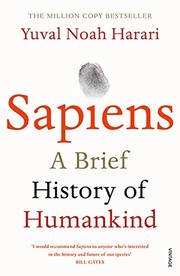
by Yuval Noah Harari
“This preparation enabled breakthrough moments like challenging Yuval Noah Harari on why Sapiens succeeded despite lacking character-driven storytelling.”
podcast
- People I Mostly AdmireBy guest
“Steve Levitt ends his five-year podcast People I Mostly Admire to focus on education reform through Levitt Lab schools in Arizona, Boston, and LA.”
company
- Levitt LabBy guest
“Steve Levitt ends his five-year podcast People I Mostly Admire to focus on education reform through Levitt Lab schools in Arizona, Boston, and LA.”
More from Freakonomics Radio
We summarize every new episode. Want them in your inbox?
Amazon Was Supposed to Kill the Bookstore. James Daunt Had Other Plans | Better in Person
685. How to Survive the A.I. Shock
How to Run an Institution in an Anti-Institution Era | Better in Person
How to Return Stolen Art (Update)
“I Trust Almost Anyone More Than Myself” | Better in Person
Similar Episodes
Related episodes from other podcasts

The Mel Robbins Podcast
Dec 18
What Nobody Tells You About Grief and Loss

Deep Questions with Cal Newport
Aug 10
How Do I Finish Meaningful Projects? | Monday Advice

Investing for Beginners
Aug 3
Birdseye View ASTS: Moonshot Potential vs. Financial Reality

The Vergecast
Mar 3
The 6G, modular, robot phones of the future

Modern Wisdom
Feb 21
#1062 - Dave Evans - It’s time to rethink your entire life plan
Explore Related Topics
This podcast is featured in Best Finance Podcasts (2026) — ranked and reviewed with AI summaries.
Read this week's AI & Machine Learning Podcast Insights — cross-podcast analysis updated weekly.
You're clearly into Freakonomics Radio.
Every Monday, we deliver AI summaries of the latest episodes from Freakonomics Radio and 192+ other podcasts. Free for one show.
Start My Monday DigestNo credit card · Unsubscribe anytime