The History of Batman
Episode
14 min
Read time
2 min
Topics
Health & Wellness, Fundraising & VC, Design & UX
AI-Generated Summary
Key Takeaways
- ✓Character Design by Committee: Bill Finger's revisions transformed Bob Kane's original red-tights, domino-mask concept into the dark-caped figure recognized today. Studying how collaborative creative pushback shaped Batman's final design reveals that initial concepts rarely survive intact — iteration produces stronger results than first drafts.
- ✓Name Construction Strategy: Bruce Wayne's name was deliberately engineered from two historical figures — Robert the Bruce (Scottish king, Battle of Bannockburn 1314) and Mad Anthony Wayne (Revolutionary War officer). Layering noble lineage with fearless recklessness into a single name built subconscious character credibility before readers saw one panel.
- ✓Villain Preservation Pays Off: The Joker was originally scripted to die in his debut issue. A last-minute editorial decision to keep him alive created Batman's most valuable narrative asset. Detective Comics issue 27 later sold for $2.3M, and Batman number one reportedly fetched $6M privately in 2026.
- ✓Tonal Flexibility Drives Longevity: Batman survived eight decades by deliberately cycling between dark detective, campy TV hero, and grounded realist across comics, the 1966 Adam West series, Frank Miller's 1986 Dark Knight Returns, and Christopher Nolan's billion-dollar film trilogy — proving adaptable tone sustains franchises longer than fixed characterization.
What It Covers
Batman debuted in Detective Comics issue 27 on March 30, 1939, created by Bill Finger and Bob Kane, evolving from a red-tighted sketch into an 85-year cultural icon worth millions in original comic sales.
Key Questions Answered
- •Character Design by Committee: Bill Finger's revisions transformed Bob Kane's original red-tights, domino-mask concept into the dark-caped figure recognized today. Studying how collaborative creative pushback shaped Batman's final design reveals that initial concepts rarely survive intact — iteration produces stronger results than first drafts.
- •Name Construction Strategy: Bruce Wayne's name was deliberately engineered from two historical figures — Robert the Bruce (Scottish king, Battle of Bannockburn 1314) and Mad Anthony Wayne (Revolutionary War officer). Layering noble lineage with fearless recklessness into a single name built subconscious character credibility before readers saw one panel.
- •Villain Preservation Pays Off: The Joker was originally scripted to die in his debut issue. A last-minute editorial decision to keep him alive created Batman's most valuable narrative asset. Detective Comics issue 27 later sold for $2.3M, and Batman number one reportedly fetched $6M privately in 2026.
- •Tonal Flexibility Drives Longevity: Batman survived eight decades by deliberately cycling between dark detective, campy TV hero, and grounded realist across comics, the 1966 Adam West series, Frank Miller's 1986 Dark Knight Returns, and Christopher Nolan's billion-dollar film trilogy — proving adaptable tone sustains franchises longer than fixed characterization.
Notable Moment
DC Comics mandated that Batman could never kill enemies or use guns — a corporate rule later retrofitted into Bruce Wayne's psychological backstory, demonstrating how external constraints can become a character's defining moral architecture.
Episode Transcript
In 1939, Detective Comics introduced a new superhero. He was just a man with no superpowers. He had only the mind of a detective and a whole lot of money. He's a silent guardian watching over the people of Gotham City, protecting the good and punishing the evil. He isn't the comic book hero we deserve, but he is the one we need. Learn more about the history of Batman on this episode of Everything Everywhere Daily. This episode is sponsored by What Could Go Right? The news has a way of making it feel like everything is getting worse. But what if that isn't the whole story? What Could Go Right is a podcast that challenges the constant narrative of doom by asking a simple but powerful question. What could go right? Hosted by Zachary Carabell, each episode takes on a major issue shaping our world. Can we achieve superabundance without triggering AI doom? Will artificial intelligence and drones really bring about the apocalypse? Is there value in admitting what we simply don't know? Through conversations with leading thinkers, policy makers, scientists, and cultural voices, what could go right explores not only what is going wrong, but the progress already being made and why it matters. When the people building the world's most powerful technology are just as worried about it as the rest of us, is there still hope for a positive outcome? Go and listen to the full episode to hear more revelations from Sebastian Mallaby and Zachary Carabell about the future of artificial intelligence and motivations of the men driving its development. Listen to what could go right on Apple Podcasts, Spotify, or wherever you listen to podcasts. New episodes drop every Wednesday. This episode is sponsored by Mint Mobile. There are things in life that you do not want to be transparent, like your swimsuit or your search history. But when it comes to your wireless bill, transparency is everything. That's why Mint Mobile's wireless plans have no gimmicks and no gotchas, just high speed data and reliable coverage on the T Mobile five g network. And right now, all plans are $15 a month, even the unlimited plan. It works on your current phone, your current phone number, and you can keep all of your contacts. That's why I recommend Mint Mobile. To get your new wireless plan for just $15 a month, go to mintmobile.com/eed. That's mintmobile.com/eed. Cut your wireless bill to $15 a month at mintmobile.com/eed. That's it. There's no catch. $45 upfront payment required equivalent to $15 a month. New customers on first three month plan only. Speed slower above 40 gigabyte on unlimited plan. Additional taxes, fees, and restrictions apply. See Mint Mobile for details. Few fictional characters have remained as popular, adaptable, and recognizable as Batman. The origins of Batman begin with the success of another comic book hero, Superman. Superman was released in Action Comics number one in 1938, and the character became extremely popular. Superman was the …
Get the full transcript (2,490 words) + summary by email — free
One-time email with the complete transcript and AI summary of this episode. No account needed.
One email, no spam. We’ll also show you what SignalCast does.

You just read a 3-minute summary of a 11-minute episode.
Get Everything Everywhere Daily summarized like this every Monday — plus up to 2 more podcasts, free.
Pick Your Podcasts — FreeKeep Reading


Books, tools, and gear mentioned in this episode
SignalCast may earn commission on purchases via these links. As an Amazon Associate, SignalCast earns from qualifying purchases.
Books
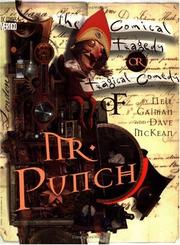
by DC Comics
“Batman debuted in Detective Comics issue 27 on March 30, 1939, created by Bill Finger and Bob Kane”
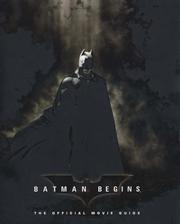
by DC Comics
“Batman number one reportedly fetched $6M privately in 2026”
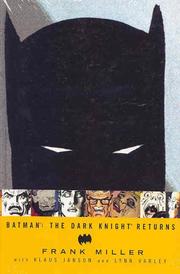
by Frank Miller
“Batman survived eight decades by deliberately cycling between dark detective, campy TV hero, and grounded realist across comics, the 1966 Adam West series, Frank Miller's 1986 Dark Knight Returns”
More from Everything Everywhere Daily
We summarize every new episode. Want them in your inbox?
Similar Episodes
Related episodes from other podcasts

The Jordan Harbinger Show
Jul 7
1354: Arthur Brand | Recovering the World's Stolen Masterpieces

Up First (NPR)
Jun 28
The secret life of a stolen Van Gogh

The Prof G Pod
Jun 19
The Week: SpaceX, Iran, and the World's First Trillionaire
The Prof G Pod
May 14
We Legalized Sports Gambling. Now We're Paying for It — ft. Jonathan D. Cohen

Radiolab
May 8
The Bad Show
Explore Related Topics
This podcast is featured in Best History Podcasts (2026) — ranked and reviewed with AI summaries.
Read this week's Health & Longevity Podcast Insights — cross-podcast analysis updated weekly.
You're clearly into Everything Everywhere Daily.
Every Monday, we deliver AI summaries of the latest episodes from Everything Everywhere Daily and 192+ other podcasts. Free for one show.
Start My Monday DigestNo credit card · Unsubscribe anytime