The Dark Origins of Fairy Tales, Part 2
Episode
14 min
Read time
2 min
Topics
Philosophy & Wisdom, History
AI-Generated Summary
Key Takeaways
- ✓Cinderella's true source: Disney's 1950 Cinderella follows Charles Perrault's 1697 French version, not the Brothers Grimm tale most people assume. The Grimm version, Aschenputtel, features the stepmother mutilating her daughters' feet to fit the slipper, and doves gouging out the stepsisters' eyes as punishment.
- ✓Pinocchio's original fate: Carlo Collodi's 1881 serialized Italian story has Pinocchio kill Jiminy Cricket with a hammer in an early scene, then later gets hanged from a tree and slowly suffocates to death — consequences Disney replaced with an odyssey-style adventure retaining only the donkey transformation and whale sequences.
- ✓Peter Pan's hidden darkness: J.M. Barrie's 1904 original play reveals Peter Pan actively kills Lost Boys who grow too old, ensuring his gang maintains eternal youth through murder. Disney's 1953 adaptation removes this entirely, reframing Peter's refusal to grow up as whimsical rather than violently self-preserving.
- ✓Fairy tales as social warnings: Pre-Disney fairy tales functioned as cautionary tools reflecting harsh historical realities, not children's entertainment. Recognizing this distinction helps modern readers understand that graphic violence in original versions served deliberate moral and social instruction purposes, not shock value.
What It Covers
Everything Everywhere Daily examines the dark origins behind three Disney animated films — Cinderella, Pinocchio, and Peter Pan — contrasting sanitized 1940s–1953 adaptations against their significantly more violent and disturbing source material spanning ancient Greece to 1904 Scotland.
Key Questions Answered
- •Cinderella's true source: Disney's 1950 Cinderella follows Charles Perrault's 1697 French version, not the Brothers Grimm tale most people assume. The Grimm version, Aschenputtel, features the stepmother mutilating her daughters' feet to fit the slipper, and doves gouging out the stepsisters' eyes as punishment.
- •Pinocchio's original fate: Carlo Collodi's 1881 serialized Italian story has Pinocchio kill Jiminy Cricket with a hammer in an early scene, then later gets hanged from a tree and slowly suffocates to death — consequences Disney replaced with an odyssey-style adventure retaining only the donkey transformation and whale sequences.
- •Peter Pan's hidden darkness: J.M. Barrie's 1904 original play reveals Peter Pan actively kills Lost Boys who grow too old, ensuring his gang maintains eternal youth through murder. Disney's 1953 adaptation removes this entirely, reframing Peter's refusal to grow up as whimsical rather than violently self-preserving.
- •Fairy tales as social warnings: Pre-Disney fairy tales functioned as cautionary tools reflecting harsh historical realities, not children's entertainment. Recognizing this distinction helps modern readers understand that graphic violence in original versions served deliberate moral and social instruction purposes, not shock value.
Notable Moment
The Cinderella story traces back to ancient Greece in the first century, following a slave named Rodopis who marries the king of Egypt — the same core narrative of misfortune-to-royalty persisting across two thousand years of retellings.
Episode Transcript
Walt Disney Animation Studios has crafted dozens of the most popular children's movies ever made. These stories shimmer with whimsical magic, showcase bold characters, and bursts with joyous conclusions where the hero triumphs and everyone celebrates a happily ever after. However, the true stories lurking behind these films are far darker than you'd ever imagined. Stay tuned for the second installment of true stories behind popular fairy tales on this episode of Everything Everywhere Daily. This episode is sponsored by Audible. It's time to believe in the Hail Mary. One of the most talked about science fiction adventures of the decade, Project Hail Mary by Andy Weir, is now on the big screen. And there's never been a better moment to experience the audiobook that started it all. Rylan Grace is humanity's last hope. Alone in space with no memory of how he got there, he must solve an impossible scientific mystery before the earth is wiped out forever. What follows is a smart, thrilling, and surprisingly emotional journey that blends hard science with nonstop suspense. Fans favorite narrator, Ray Porter, delivers an unforgettable performance balancing humor, heart, and escalating tension as the stakes grow higher with every chapter. Part scientific puzzle, part interstellar adventure, Project Hail Mary is a story about curiosity, ingenuity, and survival against impossible odds. Now that the blockbuster movie has finally arrived in theaters, there's never been a better time to start listening to the universally acclaimed audiobook. Project Hail Mary. Listen, watch, save the world. Start listening today at audible.com/hailmary. This episode is sponsored by ButcherBox. Spring is right around the corner, and for many of you, that means firing up the grill and having cookouts. If you're going to barbecue, do so only with the best meats and seafoods. For over a decade, ButcherBox has led the industry with antibiotic and hormone free meat and seafood, independently verified. Because when it comes to fueling your body, quality isn't extra, it's everything. Clean whole protein means better support for strength, metabolism, and that steady all day energy. And those of you who are longtime listeners know that I'm a longtime ButcherBox customer, and I've used it for everything from steaks to ground beef for my Scotch eggs and meat donuts. As an exclusive offer, new listeners can get their choice between chicken breast or top sirloin for a year or ground beef for life. Plus $20 off when you go to butcherbox.com/everything. That's right. Your choice of chicken breast or top sirloin for a year or ground beef for life, plus $20 off your first box and free shipping always. That's butcher box dot com slash everything. Don't forget to use the link so they know I sent you. A while back, I had an episode on the true stories behind popular Disney animated films, covering the fairy tales that inspired Snow White, The Little Mermaid, and Sleeping Beauty. However, these are far from the only fairy tales to have been adapted by Disney. …
Get the full transcript (2,536 words) + summary by email — free
One-time email with the complete transcript and AI summary of this episode. No account needed.
One email, no spam. We’ll also show you what SignalCast does.

You just read a 3-minute summary of a 11-minute episode.
Get Everything Everywhere Daily summarized like this every Monday — plus up to 2 more podcasts, free.
Pick Your Podcasts — FreeKeep Reading
More from Everything Everywhere Daily
The New Madrid Earthquakes
Sep 23 · 15 min

10% Happier with Dan Harris
Comedian Josh Johnson On: Handling News Cycle Anxiety, His Insane Work Ethic, and Why AI is BS
Sep 18
More from Everything Everywhere Daily
Machu Picchu
Sep 22 · 15 min

The Prof G Pod
The Week: AI Is Getting Smarter. Are We?
Sep 11
Books, tools, and gear mentioned in this episode
SignalCast may earn commission on purchases via these links. As an Amazon Associate, SignalCast earns from qualifying purchases.
Books
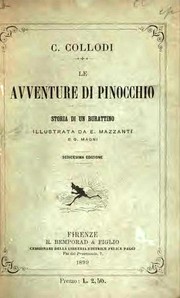
by Carlo Collodi
“Carlo Collodi's 1881 serialized Italian story has Pinocchio kill Jiminy Cricket with a hammer in an early scene, then later gets hanged from a tree and slowly suffocates to death.”

by J.M. Barrie
“J.M. Barrie's 1904 original play reveals Peter Pan actively kills Lost Boys who grow too old, ensuring his gang maintains eternal youth through murder.”

by Brothers Grimm
“The Grimm version, Aschenputtel, features the stepmother mutilating her daughters' feet to fit the slipper, and doves gouging out the stepsisters' eyes as punishment.”
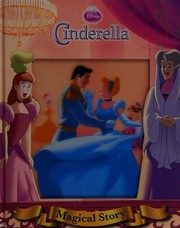
by Charles Perrault
“Disney's 1950 Cinderella follows Charles Perrault's 1697 French version, not the Brothers Grimm tale most people assume.”
Tools
“SPONSORS: Audible at audible.com/hailmary”
company
“SPONSORS: ButcherBox at butcherbox.com/everything”
More from Everything Everywhere Daily
We summarize every new episode. Want them in your inbox?
Similar Episodes
Related episodes from other podcasts

10% Happier with Dan Harris
Sep 18
Comedian Josh Johnson On: Handling News Cycle Anxiety, His Insane Work Ethic, and Why AI is BS

The Prof G Pod
Sep 11
The Week: AI Is Getting Smarter. Are We?

No Priors: Artificial Intelligence | Technology | Startups
Sep 10
Coinbase’s Everything Exchange: Agentic Finance, Stablecoins, and Tokenization with CEO Brian Armstrong

WorkLife with Adam Grant
Sep 8
How to say no | from WorkLife with Adam Grant

Modern Wisdom
Sep 7
Why You Feel Everything So Deeply (and how to survive it) - Dr Sasha Hamdani - #1147
Explore Related Topics
This podcast is featured in Best History Podcasts (2026) — ranked and reviewed with AI summaries.
You're clearly into Everything Everywhere Daily.
Every Monday, we deliver AI summaries of the latest episodes from Everything Everywhere Daily and 192+ other podcasts. Free for one show.
Start My Monday DigestNo credit card · Unsubscribe anytime