P.T. Barnum: The Greatest American Showman
Episode
14 min
Read time
2 min
Topics
Career Growth, Relationships, History
AI-Generated Summary
Key Takeaways
- ✓Risk-based promotion: Barnum secured Jenny Lind's 150-show U.S. tour without ever hearing her sing, putting up his home and museums as collateral. The gamble returned roughly $500,000 (~$19.3 million today), demonstrating that reputation alone can underwrite major financial commitments.
- ✓Manufactured demand: Barnum deliberately hired poor rooftop performers at his Manhattan museum to drive crowds inside seeking relief from the noise. Pairing this with rotating attractions and floodlit banners tripled foot traffic, doubling gross earnings within three years of ownership.
- ✓Competitor merger over rivalry: Facing a strong rival circus, Barnum chose partnership over competition, merging with James Bailey in 1881. The resulting Barnum & Bailey Circus became a dominant entertainment force, with one attraction — elephant Jumbo — grossing $336,000 (~$10 million today) in six weeks.
- ✓Reputation vs. reality gap: The popular film *The Greatest Showman* presents a fictionalized, flattering portrait of Barnum. Historically, he exploited disabled performers in human zoos and showed no remorse after the death of Joyce Heth, a paralyzed enslaved woman he purchased and exhibited.
What It Covers
P.T. Barnum's rise from Connecticut newspaper publisher to 19th-century entertainment mogul, covering his museums, the Jenny Lind tour earning him $500,000, the Barnum & Bailey Circus, and his controversial exploitation of performers.
Key Questions Answered
- •Risk-based promotion: Barnum secured Jenny Lind's 150-show U.S. tour without ever hearing her sing, putting up his home and museums as collateral. The gamble returned roughly $500,000 (~$19.3 million today), demonstrating that reputation alone can underwrite major financial commitments.
- •Manufactured demand: Barnum deliberately hired poor rooftop performers at his Manhattan museum to drive crowds inside seeking relief from the noise. Pairing this with rotating attractions and floodlit banners tripled foot traffic, doubling gross earnings within three years of ownership.
- •Competitor merger over rivalry: Facing a strong rival circus, Barnum chose partnership over competition, merging with James Bailey in 1881. The resulting Barnum & Bailey Circus became a dominant entertainment force, with one attraction — elephant Jumbo — grossing $336,000 (~$10 million today) in six weeks.
- •Reputation vs. reality gap: The popular film *The Greatest Showman* presents a fictionalized, flattering portrait of Barnum. Historically, he exploited disabled performers in human zoos and showed no remorse after the death of Joyce Heth, a paralyzed enslaved woman he purchased and exhibited.
Notable Moment
After Barnum published a candid autobiography detailing how he deliberately deceived audiences for profit, public backlash was severe — his own written admissions of systematic trickery turned his paying customers against him.
Episode Transcript
P. T. Barnum was one of the most famous entertainers of the nineteenth century. A man who turned curiosity, spectacle, and promotion into an art form and money. He built museums, launched tours, entered politics, created legends, and helped define the modern circus. His life was filled with ambition, controversy, genius, and a fair amount of exaggeration. Learn more about PT Barnum, the self proclaimed prince of humbugs on this episode of Everything Everywhere Daily. This episode is sponsored by Quince. I recently moved into a new larger place, and I face the challenge of decorating it. I, of course, am turning to Quince to help get the job done. In addition to clothes, Quince offers stylish home furnishings that makes my place look great at affordable prices. And I've also recently picked up a second cashmere sweater that I've talked about before just because I like it so much. The great thing about Quince is that their prices are 50 to 60% lower than those of similar brands. How? Quince works directly with ethical factories and cuts out the middleman. So you're paying for quality, not brand markup. Everything is designed to last and makes getting dressed and decorating your home easy. Refresh your everyday with luxury you'll actually use. Head to quince.com/daily for free shipping on your order and three hundred sixty five day returns. Now available in Canada too. That's quince.com/daily for free shipping and three sixty five day returns. Quince.com/daily. This episode is sponsored by Mint Mobile. Most of you might have something that you're saving up for. Maybe it's the trip of a lifetime, your children, your retirement, or maybe even something nice for yourself. And if you're looking for some extra money, the easiest thing you can do is to cancel your current mobile plan and switch to Mint Mobile. With Mint Mobile, you can get high speed data and unlimited talk and text delivered on the nation's largest five gs network starting at only $15 a month. Use your own phone and number, activate with eSIM in minutes, and start saving immediately. No long term contracts and no hassle. That's why I recommend Mint Mobile. If you like your money, Mint Mobile is for you. Shop plans at mintmobile.com/eed. That's mintmobile.com/eed. Upfront payment of $45 for three month five gigabyte plan required equivalent to $15 a month. New customer offer for first three months only, then full price plan options available. Taxes and fees extra. See Mint Mobile for details. P. T. Barnum was born Phineas Taylor Barnum on 07/05/1810 in Bethel, Connecticut to Philo and Irene Barnum. Phineas was his father's sixth child and had 10 siblings, including older half siblings from his father's first marriage. Phineas grew up in a conservative area where most values were set by the local congregational church. To entertain himself, Phineas often engaged in practical jokes, a hobby that he shared with his grandfather. In school, Phineas was perceived as a good student, although he did …
Get the full transcript (2,472 words) + summary by email — free
One-time email with the complete transcript and AI summary of this episode. No account needed.
One email, no spam. We’ll also show you what SignalCast does.

You just read a 3-minute summary of a 11-minute episode.
Get Everything Everywhere Daily summarized like this every Monday — plus up to 2 more podcasts, free.
Pick Your Podcasts — FreeKeep Reading


Books, tools, and gear mentioned in this episode
SignalCast may earn commission on purchases via these links. As an Amazon Associate, SignalCast earns from qualifying purchases.
Books
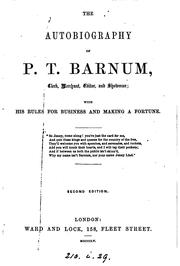 P.T. Barnum's AutobiographyBy guest
by P.T. Barnum
“After Barnum published a candid autobiography detailing how he deliberately deceived audiences for profit, public backlash was severe.”
More from Everything Everywhere Daily
We summarize every new episode. Want them in your inbox?
Similar Episodes
Related episodes from other podcasts

The Prof G Pod
Jul 23
Inside the Anti-Social Century — with Derek Thompson

The Founders Podcast
Jun 20
#422 Joseph Pulitzer

The Journal
Mar 16
The Ticketmaster Breakup Trial Just Got Messier

BioCentury This Week
Mar 14
Ep. 354 - East-West Summit Takeaways
BioCentury This Week
Mar 9
Ep. 353 - Prasad Departure and Future of Fibrosis Therapies
Explore Related Topics
This podcast is featured in Best History Podcasts (2026) — ranked and reviewed with AI summaries.
You're clearly into Everything Everywhere Daily.
Every Monday, we deliver AI summaries of the latest episodes from Everything Everywhere Daily and 192+ other podcasts. Free for one show.
Start My Monday DigestNo credit card · Unsubscribe anytime