Why Longer Prison Sentences Don’t Work
Episode
66 min
Read time
2 min
Topics
Productivity, Investing, Fundraising & VC
AI-Generated Summary
Key Takeaways
- ✓Certainty vs. severity of punishment: Criminals with short time horizons — thinking days or weeks ahead, not years — are unresponsive to longer sentences but highly responsive to increased probability of arrest. Shifting criminal justice resources from extending sentences toward improving clearance rates and police presence produces measurably larger reductions in crime, particularly violent and property offenses, at lower cost to taxpayers.
- ✓DNA databases as deterrence tools: Entering first-time offenders into law enforcement DNA databases reduces recidivism by approximately 40%, based on Danish natural experiment data comparing otherwise identical offenders just before and after database expansion. The mechanism is purely deterrence — raising the perceived probability of being caught if reoffending — without changing sentence length or punishment severity at all.
- ✓Ban the Box backfires for Black applicants: Removing criminal history checkboxes from job applications causes employers to statistically discriminate, reducing callback rates for young Black men with limited education by roughly 5%. Field experiments in New York City and New Jersey confirm the racial gap widens post-policy. People with actual criminal records show no employment benefit, making the policy net harmful.
- ✓First-offense diversion cuts recidivism by 50%: Natural experiments comparing defendants whose first nonviolent felony charges were dropped versus prosecuted show a roughly 50% reduction in reoffending among those who avoided conviction. Arrest, booking, and case proceedings alone function as sufficient deterrence for a meaningful share of first-time offenders, making criminal records unnecessary and counterproductive for this group.
- ✓Street lighting reduces crime measurably: A randomized trial in New York City public housing found ambient lighting improvements reduced crime by approximately 10%. Daylight saving time data corroborates this — shifting daylight to evening hours reduces crime during that hour. Overlaying high-crime area maps with poor-lighting maps gives city officials a low-cost, data-driven tool for targeted infrastructure investment.
What It Covers
Economist Jennifer Doleac, author of *The Science of Second Chances*, explains why longer prison sentences fail to deter crime, why swift and certain punishment outperforms severe punishment, and how policies like Ban the Box produce racially discriminatory unintended consequences — drawing on natural experiments and randomized trials across U.S. states and Denmark.
Key Questions Answered
- •Certainty vs. severity of punishment: Criminals with short time horizons — thinking days or weeks ahead, not years — are unresponsive to longer sentences but highly responsive to increased probability of arrest. Shifting criminal justice resources from extending sentences toward improving clearance rates and police presence produces measurably larger reductions in crime, particularly violent and property offenses, at lower cost to taxpayers.
- •DNA databases as deterrence tools: Entering first-time offenders into law enforcement DNA databases reduces recidivism by approximately 40%, based on Danish natural experiment data comparing otherwise identical offenders just before and after database expansion. The mechanism is purely deterrence — raising the perceived probability of being caught if reoffending — without changing sentence length or punishment severity at all.
- •Ban the Box backfires for Black applicants: Removing criminal history checkboxes from job applications causes employers to statistically discriminate, reducing callback rates for young Black men with limited education by roughly 5%. Field experiments in New York City and New Jersey confirm the racial gap widens post-policy. People with actual criminal records show no employment benefit, making the policy net harmful.
- •First-offense diversion cuts recidivism by 50%: Natural experiments comparing defendants whose first nonviolent felony charges were dropped versus prosecuted show a roughly 50% reduction in reoffending among those who avoided conviction. Arrest, booking, and case proceedings alone function as sufficient deterrence for a meaningful share of first-time offenders, making criminal records unnecessary and counterproductive for this group.
- •Street lighting reduces crime measurably: A randomized trial in New York City public housing found ambient lighting improvements reduced crime by approximately 10%. Daylight saving time data corroborates this — shifting daylight to evening hours reduces crime during that hour. Overlaying high-crime area maps with poor-lighting maps gives city officials a low-cost, data-driven tool for targeted infrastructure investment.
- •Electronic monitoring outperforms incarceration on cost and recidivism: Using electronic monitoring — house arrest with GPS tracking — as a partial or full alternative to prison sentences reduces reoffending while costing less than incarceration. The First Step Act created federal authority to expand early release to home confinement, and the current Bureau of Prisons leadership is working toward full implementation of this underutilized provision.
Notable Moment
Doleac describes reading Michelle Alexander's anniversary edition of *The New Jim Crow*, where Alexander responds to the question of what should be done about mass incarceration by stating that providing solutions is not her job. Doleac frames this as a missed opportunity that motivated her to write an entirely solutions-focused book instead.
Episode Transcript
Hey. It's Sterling k Brown from the Hulu original series Paradise. The next chapter begins as Xavier's search for his wife takes him above ground, and what he finds will change everything. It was never just about the bunker. Tune in and discover the truth lies outside. Paradise, the official podcast is now streaming, and stream Paradise on Hulu and Hulu on Disney plus. Welcome to another episode of Conversations with Coleman. My guest today is Jennifer Dolyack. Jennifer is an economist whose research focuses on crime and criminal justice policy. Her new book is called The Science of Second Chances, a Revolution in Criminal Justice. In this episode, we talk about why economists tend to produce the best research about crime. We talk about whether people commit crime because of human nature or because of social and economic causes. We talk about Michelle Alexander's famous book, The New Jim Crow, and What It Gets Wrong. We talk about why hiring more policemen is a much better way to reduce crime than doling out longer prison sentences. We talk about why Ban the Box doesn't work and much more. So without further ado, Jennifer Dolyak. Okay, Jennifer Dolyak. Thanks so much for coming on my show. Thank you so much for having me. As I was just telling you before we started, I've been following your work for a very long time. You are an economist who studies crime, and a lot of people might wonder, okay, why would an economist study crime? Aren't economists people who study the stock market and and, GDP and economic growth? So what first of all, why would an economist study crime, and what special tools do you bring to the study of crime as an economist that other, people who study crime don't bring? Yeah. So economists, it turns out, study lots and lots of things that the general public don't realize we're interested in, everything from education to health care to crime and criminal justice policy, all the way to monetary policy and GDP, which I think are the traditional econ, ideas that people know of. I would put what the economics lens brings to this conversation into three buckets. So one is that economists love to think about incentives and how people respond to incentives. And that, is really relevant throughout the criminal justice system. So judges are responding to incentives, police officers, prosecutors, potential criminals, victims, witnesses, everyone in the the choices that they're making and and, in their day to day behavior, they're responding to incentives. And the the theoretical lens that economists bring to the problem of how to change behavior is if we can figure out what what incentives people are responding to, we can figure out how to change those incentives so that we change the behavior. So that's bucket one. The second is that economists are more obsessed than most social scientists with distinguishing correlation from causation. So we think a lot about either running …
Get the full transcript (11,045 words) + summary by email — free
One-time email with the complete transcript and AI summary of this episode. No account needed.
One email, no spam. We’ll also show you what SignalCast does.

You just read a 3-minute summary of a 63-minute episode.
Get Conversations with Coleman summarized like this every Monday — plus up to 2 more podcasts, free.
Pick Your Podcasts — FreeKeep Reading
More from Conversations with Coleman
Konstantin Kisin: France’s Chaos Is Coming for Britain
Oct 23 · 59 min

10% Happier with Dan Harris
The Science Of Building The Life You Want | Arthur Brooks
Sep 7
More from Conversations with Coleman
Do Great Men Actually Matter? With Jared Diamond
Oct 19 · 45 min

Odd Lots
How Franchise Restaurants Opened the Door to the Gig Economy
Jul 24
Books, tools, and gear mentioned in this episode
SignalCast may earn commission on purchases via these links. As an Amazon Associate, SignalCast earns from qualifying purchases.
Books
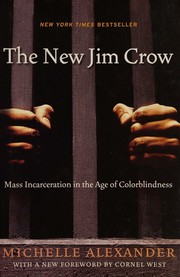 The New Jim CrowBy guest
by Michelle Alexander
“Doleac describes reading Michelle Alexander's anniversary edition of *The New Jim Crow*, where Alexander responds to the question of what should be done about mass incarceration...”
- The Science of Second ChancesBy guest
by Jennifer Doleac
“Economist Jennifer Doleac, author of *The Science of Second Chances*, explains why longer prison sentences fail to deter crime...”
More from Conversations with Coleman
We summarize every new episode. Want them in your inbox?
Konstantin Kisin: France’s Chaos Is Coming for Britain
Do Great Men Actually Matter? With Jared Diamond
The Bible Story Every Atheist Should Read, with Megan Phelps-Roper
Inside Israel’s War Room: What Really Happened After October 7
The Real Reason the Black Family Fell Apart
Similar Episodes
Related episodes from other podcasts

10% Happier with Dan Harris
Sep 7
The Science Of Building The Life You Want | Arthur Brooks

Odd Lots
Jul 24
How Franchise Restaurants Opened the Door to the Gig Economy

The School of Greatness
Jun 19
The Secret Skill of People Who Never Feel Lonely | Charles Duhigg

The Proof
Jun 9
Nutrition for satiety and weight loss | Dr Federica Amati
The Proof
Jan 26
The science of fertility: Hormones, inflammation, and what you can control | Dr Natalie Crawford
Explore Related Topics
This podcast is featured in Best Philosophy Podcasts (2026) — ranked and reviewed with AI summaries.
Read this week's Investing & Markets Podcast Insights — cross-podcast analysis updated weekly.
You're clearly into Conversations with Coleman.
Every Monday, we deliver AI summaries of the latest episodes from Conversations with Coleman and 192+ other podcasts. Free for one show.
Start My Monday DigestNo credit card · Unsubscribe anytime