How He’ll Hit $500K by 30 (Coast FI Plan)
Episode
42 min
Read time
2 min
Topics
Career Growth, Personal Finance, Investing
AI-Generated Summary
Key Takeaways
- ✓Coast FI math: Targeting $500,000 by 30 is more psychologically achievable than building a $5,000,000 portfolio over 20 years, yet produces the same retirement outcome. Evan invests $3,300 per month at a 7% projected growth rate, currently tracking toward $564,000 at age 32 without income increases factored in.
- ✓Housing as the primary lever: Evan spends under $40,000 annually on a sub-$100,000 salary by splitting $1,195 monthly rent in a 650-square-foot Philadelphia apartment. Housing cost is the single variable that most directly controls savings rate, and Philadelphia offers a rare combination of solid engineering salaries alongside genuinely affordable rental options.
- ✓Roth-first allocation strategy: Evan directs 100% of discretionary contributions into Roth IRA and Roth 401(k), holding FXAIX exclusively. The rationale is that early career years are the optimal "first in" window for Roth contributions, locking in tax-free growth before income and tax brackets rise, while retaining flexibility against future tax rate changes.
- ✓Raise negotiation timing: Salary increases are most effectively secured by approaching a manager six or more months before review cycles, asking explicitly what milestones unlock promotion eligibility. Budget decisions for raises are often finalized months in advance, so early conversations dramatically increase the probability of an approved off-cycle or annual increase.
- ✓Praise folder for salary leverage: Maintaining a dedicated folder of positive feedback emails from colleagues and managers builds a concrete, printable case for raise requests. Presenting documented evidence of contributions shifts the conversation from a subjective ask to a data-supported negotiation, a tactic credited to personal finance author Erin Lowry of Broke Millennial.
What It Covers
Mechanical engineer Evan Lawler, age 25, outlines his Coast FI strategy targeting $500,000 in retirement accounts by age 30, which projects to $5.2–5.3 million by age 65 using a 7% growth rate, enabling roughly $200,000 annual retirement income via the 4% rule.
Key Questions Answered
- •Coast FI math: Targeting $500,000 by 30 is more psychologically achievable than building a $5,000,000 portfolio over 20 years, yet produces the same retirement outcome. Evan invests $3,300 per month at a 7% projected growth rate, currently tracking toward $564,000 at age 32 without income increases factored in.
- •Housing as the primary lever: Evan spends under $40,000 annually on a sub-$100,000 salary by splitting $1,195 monthly rent in a 650-square-foot Philadelphia apartment. Housing cost is the single variable that most directly controls savings rate, and Philadelphia offers a rare combination of solid engineering salaries alongside genuinely affordable rental options.
- •Roth-first allocation strategy: Evan directs 100% of discretionary contributions into Roth IRA and Roth 401(k), holding FXAIX exclusively. The rationale is that early career years are the optimal "first in" window for Roth contributions, locking in tax-free growth before income and tax brackets rise, while retaining flexibility against future tax rate changes.
- •Raise negotiation timing: Salary increases are most effectively secured by approaching a manager six or more months before review cycles, asking explicitly what milestones unlock promotion eligibility. Budget decisions for raises are often finalized months in advance, so early conversations dramatically increase the probability of an approved off-cycle or annual increase.
- •Praise folder for salary leverage: Maintaining a dedicated folder of positive feedback emails from colleagues and managers builds a concrete, printable case for raise requests. Presenting documented evidence of contributions shifts the conversation from a subjective ask to a data-supported negotiation, a tactic credited to personal finance author Erin Lowry of Broke Millennial.
Notable Moment
Evan acknowledges he has deliberately excluded salary growth and side hustle income from his Coast FI projections entirely. The hosts argue this conservative modeling almost certainly understates his trajectory, with one betting he reaches $500,000 by 28 rather than 30.
Episode Transcript
Mindy and I are so grateful for the following sponsors who make BiggerPockets money possible. Tax season is one of the only times all year when most people actually look at their full financial picture, including income, spending, savings, investments, the whole thing. And if you're like most folks, it can be a little eye opening. That's why I like Monarch. It helps you see exactly where your money is going and more importantly, where your tax refund can make the biggest impact. Because the goal isn't just to look backward, it's to actually make progress. Simplify your finances with Monarch. Monarch is the all in one personal finance tool designed to make your life easier. It brings your entire financial life, including budgeting, accounts and investments, net worth, and future planning together in one dashboard on your phone or your laptop. Feel aware and in control of your finances this tax season and get 50% off your Monarch subscription with the code pockets. What I personally like is that Monarch keeps you focused on achieving, not just tracking. You can see your budgets, debt payoff, savings goals, and net worth all in one place. So every decision actually moves the needle. Achieve your financial goals for good with Monarch, the all in one tool that makes money management simple. Use the code pockets at monarch.com for half off your first year. That's 50% off at monarch.com code pockets. When I evaluate debt funds, I look for things like first position loans, personal guarantees, deep experience by the fund operator, low fund leverage, fast liquidity, and consistent returns. These are some of the reasons why I'm excited to partner with Pine Financial Group. Their fund six offers investors exposure to real estate credit, largely for construction and rehab, with loans originated by an experienced originator with over $1,000,000,000 in origination volume. They offer investors an 8% preferred return paid monthly and a seventy thirty l p g p split of everything over 10% paid annually. The lockup period is nine months with liquidity available within ninety days after that nine month commitment. The fund is open to accredited investors only. The fund's minimum investment is typically a $100,000. The Pine Financial is able to reduce that minimum for Bigger Pockets Money listeners to a minimum of 25,000. Full disclosure, I am personally invested in this fund through my self directed IRA. Pine Financial is sponsoring this message and our podcast. Go to biggerpocketsmoney.com/pine,pine. Please note that returns are not guaranteed and may vary based on fund performance. I love math, said no one ever. Nobody starts a business thinking, you know what would make this more fun? Calculating quarterly estimated taxes. But somehow, every small business owner ends up doing it. Your dreams of creating, selling, and growing get replaced by late nights chasing receipts, juggling invoices, and wondering if that bad sushi lunch with Scott counts as a write off. Change all that with Found. Found is a business …
Get the full transcript (9,207 words) + summary by email — free
One-time email with the complete transcript and AI summary of this episode. No account needed.
One email, no spam. We’ll also show you what SignalCast does.

You just read a 3-minute summary of a 39-minute episode.
Get BiggerPockets Money Podcast summarized like this every Monday — plus up to 2 more podcasts, free.
Pick Your Podcasts — FreeKeep Reading
More from BiggerPockets Money Podcast
How She Built a $1 Million Net Worth and Quit Her Job Before 35
Sep 11 · 51 min

Investing for Beginners
AAR56 - Engineering POV on Building Margin Into Personal Finance
Jun 30
More from BiggerPockets Money Podcast
How to Buy a Franchise: What You Need to Know Before Investing
Sep 8 · 50 min

Cognitive Revolution
AI:AM #4: Cameron on Model Consciousness, Duvenaud's Gradual Disempowerment, swyx's AI-Eng Alpha
Jun 27
Books, tools, and gear mentioned in this episode
SignalCast may earn commission on purchases via these links. As an Amazon Associate, SignalCast earns from qualifying purchases.
Books
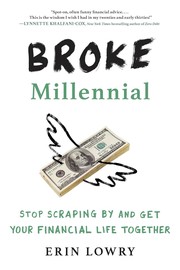
by Erin Lowry
“a tactic credited to personal finance author Erin Lowry of Broke Millennial”
Tools
- FXAIXRecommended
by Fidelity
“Evan directs 100% of discretionary contributions into Roth IRA and Roth 401(k), holding FXAIX exclusively.”
More from BiggerPockets Money Podcast
We summarize every new episode. Want them in your inbox?
How She Built a $1 Million Net Worth and Quit Her Job Before 35
How to Buy a Franchise: What You Need to Know Before Investing
How to Buy a Franchise: What You Need to Know Before Investing
Both Own Liquor Stores. One Makes $300K. The Other Makes $2.1M. What Went Wrong?
Both Own Liquor Stores. One Makes $300K. The Other Makes $2.5M. What Went Wrong?
Similar Episodes
Related episodes from other podcasts

Investing for Beginners
Jun 30
AAR56 - Engineering POV on Building Margin Into Personal Finance

Cognitive Revolution
Jun 27
AI:AM #4: Cameron on Model Consciousness, Duvenaud's Gradual Disempowerment, swyx's AI-Eng Alpha
Investing for Beginners
Jun 23
AAR55 - 5 Years in Engineering: 5 Things I Learned About Building Wealth

No Priors: Artificial Intelligence | Technology | Startups
Jun 4
The Rise of the Full-Stack Builder and Hyper-Leveraged Generalist with Microsoft CEO Satya Nadella

The Breakdown
Mar 10
Bitcoin’s Halving Cycle Isn’t What You Think | The Breakdown
Explore Related Topics
This podcast is featured in Best Finance Podcasts (2026) — ranked and reviewed with AI summaries.
Read this week's Investing & Markets Podcast Insights — cross-podcast analysis updated weekly.
You're clearly into BiggerPockets Money Podcast.
Every Monday, we deliver AI summaries of the latest episodes from BiggerPockets Money Podcast and 192+ other podcasts. Free for one show.
Start My Monday DigestNo credit card · Unsubscribe anytime